


How to Choose a Math App for Your Kid

In this article
Short answer: Pick a math app the way you would pick a book: does it actually teach the thing, and does it leave your child calm when it ends? The rest is packaging. Below is a plain checklist you can use on any app in a few minutes, followed by the red flags that are worth walking away from. One disclosure up front: we make a math app ourselves, so read the checklist first and judge us by it.
We are a tiny studio. We built the handwriting recognizer in our own app, which means we have installed and quietly deleted a lot of kids apps, so a fair amount of this comes from sitting next to real kids, not from marketing copy. None of it requires our app to be useful.
What actually matters in a kids math app
Most of the good signals are things you can check in the first few minutes, often before you even hand the device to your child. Open the app, poke around, and look for these.
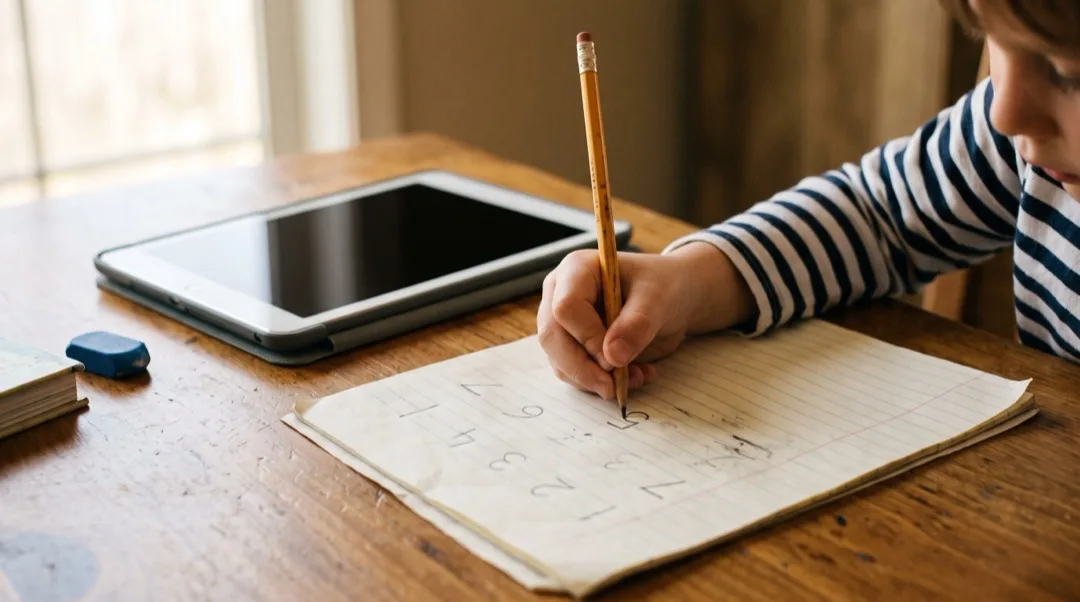
- It teaches, it doesn't just entertain. After a round, could your child do the same thing on paper? A good app builds a real skill (counting, number shapes, grouping) rather than rewarding taps with noise and confetti. Entertainment is fine, but name it for what it is.
- It is calm and finite. A session should have an obvious end. "You finished, well done, see you tomorrow" is healthier than an endless feed that never gives your child a natural stopping point.
- No ads. Full stop. A children's app with ads is showing your child things you did not choose and cannot see. This is the single fastest filter.
- No pestering to spend. If there is a purchase, it should sit quietly behind a parent gate, not pop up mid-game to interrupt a five-year-old.
- It respects privacy. Look at the App Store or Google Play privacy label. The best answer for a young child is "no data collected" or close to it. Be wary of apps that hoover up identifiers and location.
- Age-appropriate difficulty. It should meet your child near where they are and step up gently. Too hard breeds "I'm bad at math"; too easy is just clicking.
- It works offline. Handy on planes and in cars, and a quiet sign the app is not built to phone a server about your child constantly.
- There is a real human behind it. Email them a question before you buy. A reply from an actual person is a good sign; silence, or an obvious support bot, is a smaller one.
Red flags worth walking away from
Some patterns are borrowed from adult games and gambling, and they have no business in an app aimed at a six-year-old. Any one of these is a reason to close the app and look elsewhere.
- Ads inside a children's app, especially video ads or ones that are hard to close.
- Fake countdown timers and "offer ends in 4:59" urgency. Real learning is not on a clock, and manufactured panic aimed at a child is a dark pattern.
- Loot boxes, spinning wheels, or gacha mechanics where a purchase gives a random reward. This is gambling framing dressed up for kids.
- Nagging to rate or review, particularly pop-ups mid-task that a young child will tap through without understanding.
- Heavy data collection: requests for contacts, precise location, or advertising identifiers that a counting game has no need for.
- No visible maker. If you cannot find who made it or reach a person, that absence tells you something.
Are math apps good for kids at all?
They can be, in small doses, as one part of a wider diet. An app is good at patient repetition and instant, non-judgmental feedback, which is genuinely useful for number recognition and early facts. It is no substitute for counting real steps, laying the table, sharing out grapes, and talking about numbers out loud. Treat an app as one tool on the shelf, not the whole shelf. If you want screen-free ideas, our note on ways to practice numbers at home has some.

How much screen time is reasonable?
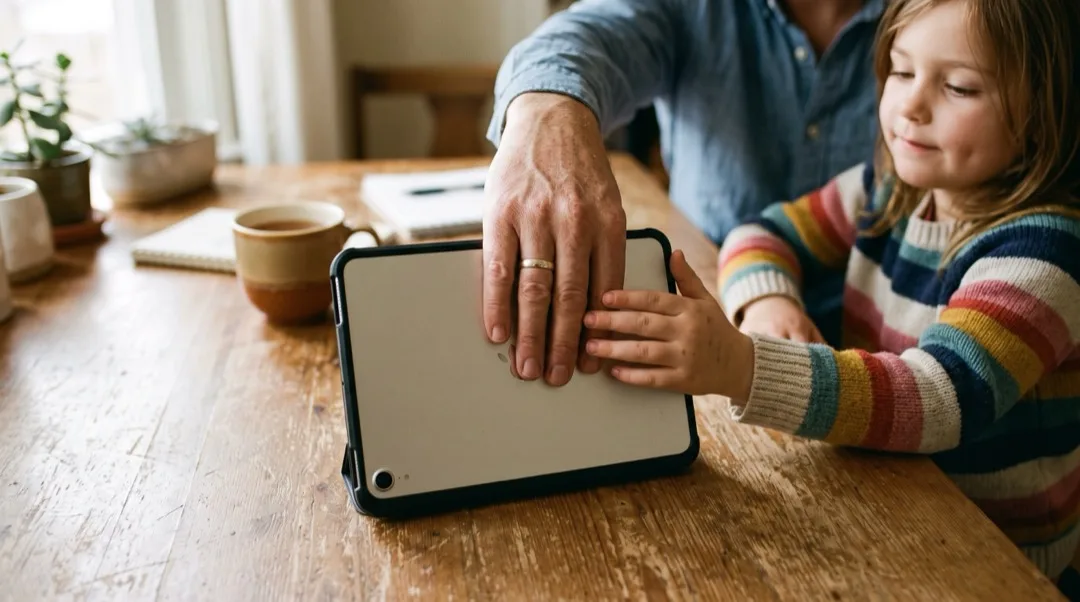
There is no single magic number, and it varies by child and family. The broad public-health advice leans toward quality and co-viewing over strict minutes for this age. The NHS and the American Academy of Pediatrics both steer parents toward consistent limits, screen-free meals and bedtimes, and watching or playing alongside young children rather than fixating on an exact count. For a math app, a short daily session that ends cleanly tends to work better than a long one, and a calm, finite app makes that far easier to hold to.
So, which one should you pick?
Run any candidate through the checklist above and trust what you see, not the store description. If two apps both pass, pick the one your child enjoys, because an app they will actually open beats a "better" one they avoid. And you are allowed to change your mind: uninstall the moment an app starts nagging, showing ads, or leaving your child wound up at the end.
Here is our bias, stated plainly. We make 99 Math Animals, so we are not neutral. We built it to pass this exact checklist: no ads, no third-party trackers, purchases behind a parent gate, and a real person (one of us) answers email. You can read the full stance, including what we do not do, on our about page. We would rather you use the checklist to choose well, even if that means choosing someone else.
Questions parents ask
What should I look for in a kids learning app?
That it teaches a real skill (not just rewards taps), ends cleanly instead of running forever, carries no ads, does not nag your child to spend, collects little or no data, and is made by someone you can actually reach. If it passes those, the specifics of theme and characters are down to what your child enjoys.
Are math apps actually good for kids?
They can help, in small doses, as one part of a wider mix. Apps are good at patient repetition and instant feedback for number recognition and early facts. They do not replace counting real things, cooking, and talking about numbers out loud. Think of an app as one tool, not the whole toolbox.
How much time on a math app is reasonable?
It varies by child, and there is no single right number. Public-health advice for this age leans toward quality, consistent limits, and playing alongside your child rather than an exact minute count. A short daily session that has a clear ending usually works better than a long open-ended one.