


Ways to Practice Numbers at Home
In this article
Short answer: The most useful number practice at home is short, playful, and made from things you already have. You do not need worksheets, flash cards, or a plan. You need a handful of buttons, a flight of stairs, and a few spare minutes. Little and often beats one long lesson, and following your child's interest beats pushing your own.
Most children between roughly ages 4 and 7 are learning to count objects, to match a spoken number to a written digit, and to notice that numbers are everywhere. It varies a lot from child to child, and that is normal. The activities below are meant to fit into a normal day, not to replace it.
What actually helps: little and often
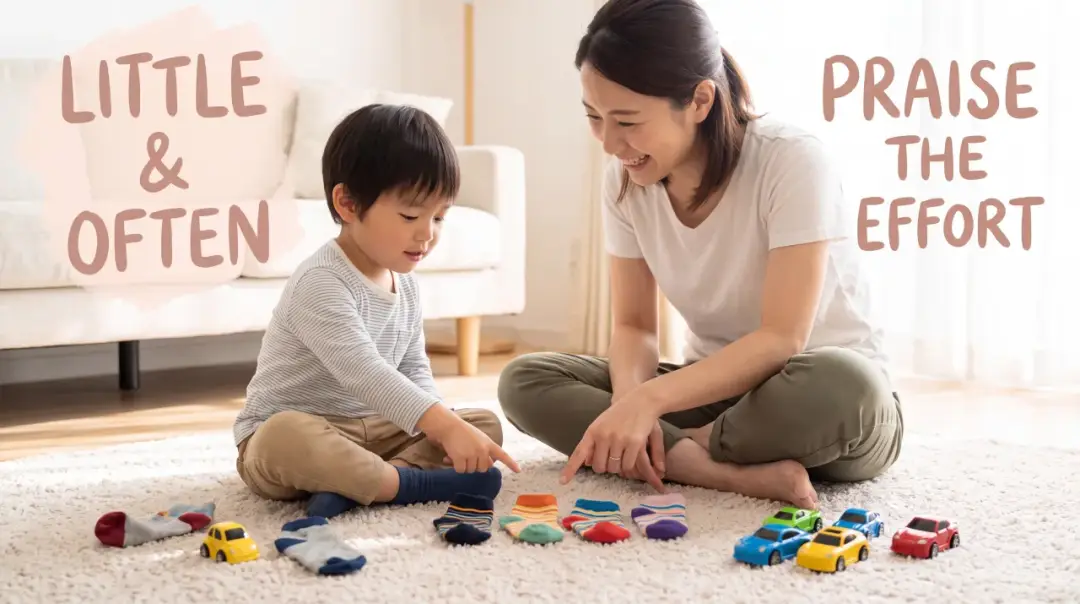
Two minutes of counting at breakfast, most days, does more than a tense half-hour on a Sunday. Children learn numbers by using them in real situations, over and over, in low stakes. So the goal is not to teach a session. The goal is to sprinkle counting through the day and keep it light. If your child loses interest after four grapes, stop at four grapes. That is a win, not a failure.
Keep it pressure-free. Praise the effort and the trying ("you counted every single step, nice") rather than only the right answer. If a number comes out wrong, you can just say it back correctly and move on, no drama. Getting it wrong is how the counting settles in.
Counting the things already on the table
Everyday objects are the best manipulatives you will ever own, because your child already cares about them. Try any of these, one at a time:
- Count the snack. Grapes, crackers, raisins, peas. "How many are left after you eat two?" is subtraction without the word.
- Count the stairs on the way up, out loud, together. Later, start from the third step and keep going, which is harder than it sounds.
- Count toys into the box at tidy-up time. Sorting five cars, then five blocks, teaches groups.
- Set the table. Four people means four forks, four cups, four plates. This is one-to-one matching, quietly.
- Count the buttons on a shirt, the wheels on the toy cars, the petals on a flower in the garden.
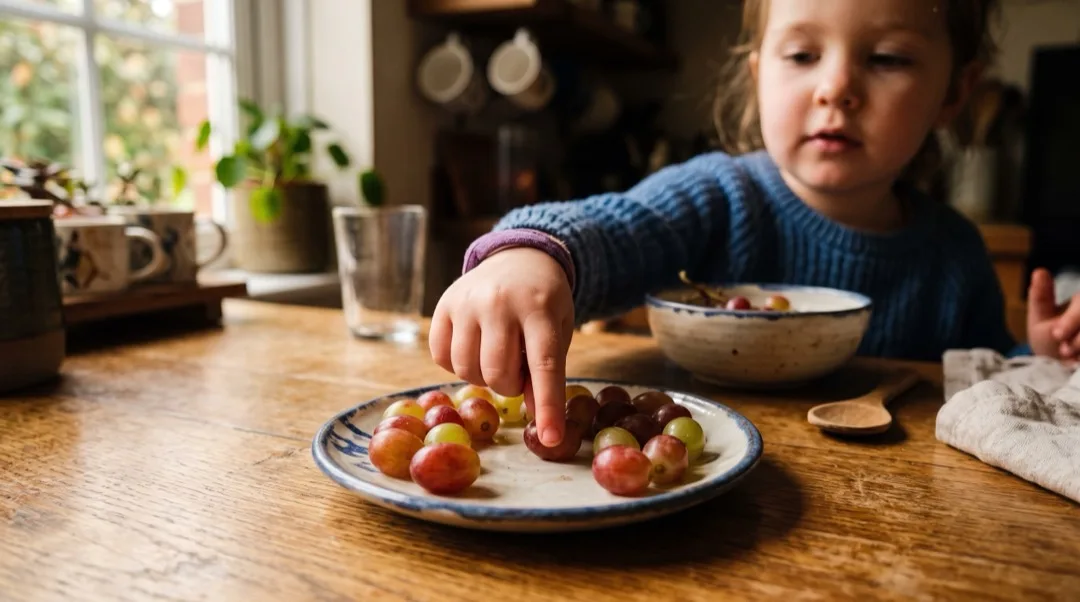
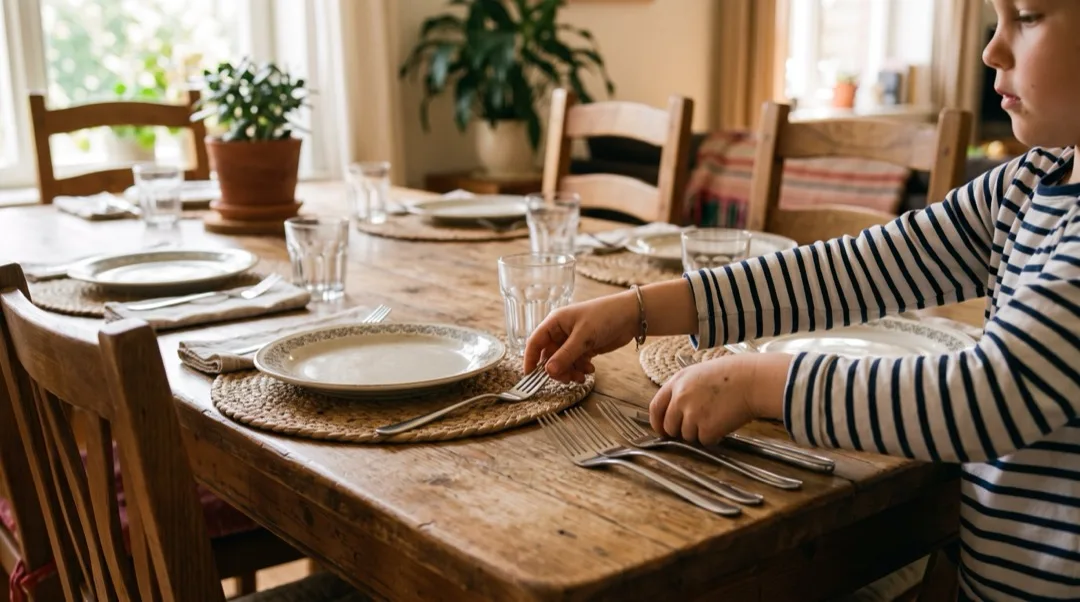
We make a counting app, and we still count buttons at our own kitchen tables. The physical version is not a downgrade. Holding the objects, moving them, and running out of them is exactly how the idea of "five" becomes real.
Number hunts and games around the house
Once your child knows that the squiggle "7" means seven, spotting numbers becomes a game. Turn the house and the walk into a hunt:
- Spot numbers on the walk: house numbers, bus numbers, road signs, price tags. "Can you find a 3?"
- Read the numbers on the microwave, the clock, the TV remote, the lift buttons.
- Play card games. Snap, Go Fish, and War (sometimes called "higher card wins") all drill number recognition and which number is bigger, painlessly.
- Roll a dice for a board game and let your child count the spaces. Two dice adds a small, real addition problem.
- Make a hopscotch grid with chalk or masking tape, or a number line along the hallway floor, and call out numbers to jump to.
A strip of tape on the floor with the numbers 1 to 10 (or 1 to 20) is one of the cheapest, most flexible tools there is. Children can jump forward three, hop back two, or stand on the number you say. It turns counting into a whole-body game, which younger children especially like.
Cooking and counting in the kitchen
The kitchen is full of numbers doing real work, so cooking together is number practice that ends in a snack. Let your child:
- Count out the ingredients: three eggs, two cups of flour, a pinch of salt.
- Set the timer and watch it count down.
- Share things out fairly: "eight strawberries, two of us, how many each?" is division before anyone calls it that.
- Cut a sandwich or a pizza into halves and quarters, which is a gentle first look at fractions.
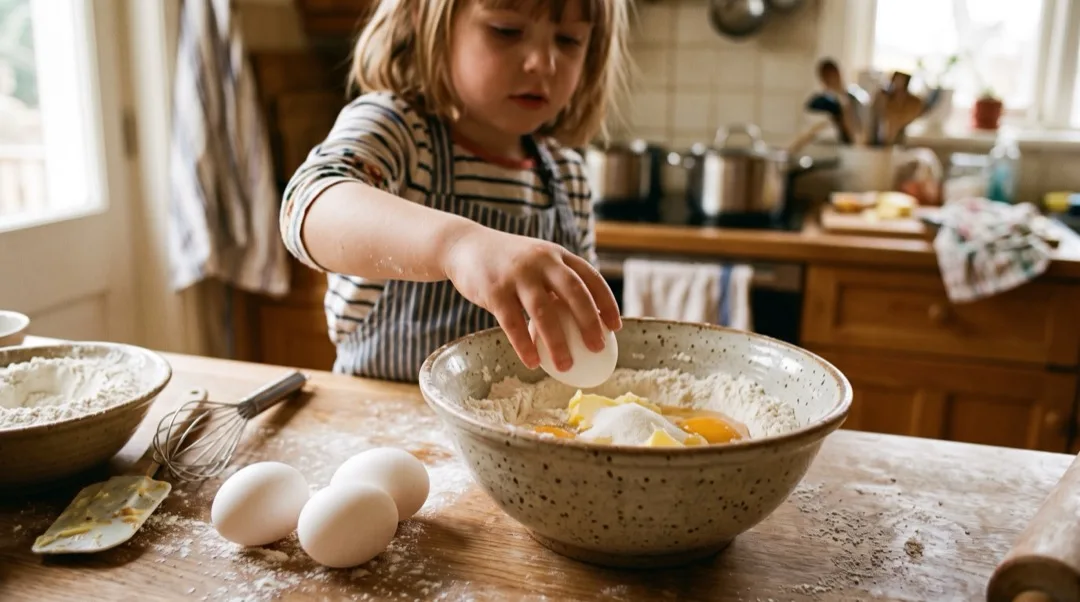
None of this needs a lesson plan. You are cooking anyway. You are just saying the numbers out loud and handing your child the counting job.
Where do screens and apps fit in?
An app is one tool among many, and it works best in small doses alongside hands-on play, not instead of it. A good number app can give a child a friendly, patient place to practice recognizing digits or counting, and it will not sigh when they get it wrong for the tenth time. That is a genuine strength. But a screen cannot let a child feel five grapes in their hand or run out of stairs to count, and that physical, messy experience is doing a lot of the real work at this age.
So we would not tell you screens are bad, and we would not tell you an app replaces the kitchen table. Use it the way you would use a picture book: a nice ingredient, in reasonable amounts, mixed in with everything else. If you want help picking one, we wrote a plain guide to choosing a math app for your kid.
Keeping it playful, not drilled
The fastest way to make a child dislike numbers is to make number time feel like a test. A few things keep it fun:
- Follow their lead. If they want to count dinosaurs for the tenth day running, count dinosaurs.
- Stop while they still want more. Ending on a high note keeps them coming back.
- Let them be the teacher sometimes. "How many spoons do we need?" gives them the job, not you.
- Make small deliberate mistakes and let them catch you. "One, two, four?" and being corrected is very satisfying for a five-year-old.
- Praise effort over correctness. "You worked that out" lands better than "you're so smart."
If you also want to practice writing the digits, not just counting them, that is its own gentle skill, and we cover it in how to teach a child to write numbers.
There is no single right amount of number practice, and there is no schedule you are behind on. A few playful minutes woven into an ordinary day, most days, is plenty. The buttons on the table are doing more than they look.
Questions parents ask
How can I help my child with numbers at home without worksheets?
Count real things through the day: snacks, stairs, toys, forks on the table. Play card and dice games, and spot numbers on signs when you are out. Short and playful, a few minutes at a time, does more than sit-down drills.
How much number practice should a young child do each day?
It varies, and there is no set amount. A few minutes woven into normal activities, most days, is plenty for most children around ages 4 to 7. Stop while they are still enjoying it, and follow their interest rather than a schedule.
Are counting apps good or bad for kids?
Neither, really. An app is one useful tool among many and works best in small doses alongside hands-on play. It gives patient, repeatable practice, but it cannot replace holding and moving real objects, which matters a lot at this age.