


When Do Kids Learn Times Tables?
In this article
Short answer: Most children meet multiplication somewhere between ages 7 and 9, and become fairly fluent with their tables a year or two after that. But the honest answer is that it depends on where you live. The UK introduces times tables notably earlier than the United States, and even within one country the timing varies from child to child. So if your seven-year-old is not reciting the six times table yet, that is normal.
Below is the usual timeline, the order that tends to work, and how to help at home without turning the kitchen table into a test. We build a small counting app for young kids, so we have watched a lot of children go from counting apples one by one to suddenly seeing four groups of three. That jump matters more than speed, and we will come back to it.
What age do kids learn multiplication?
In the United States, multiplication is typically introduced in third grade, around ages 8 to 9. The Common Core math standards put the concept of multiplication and division in Grade 3, with fluency for small factors expected by the end of that year and larger multi-digit work coming in Grades 4 and 5. "Fluent" here means quick and accurate, not just able to work it out slowly.
In England, it starts earlier. The UK National Curriculum introduces the 2, 5 and 10 times tables in Year 2 (ages 6 to 7), and expects children to know all tables up to 12 by 12 by the end of Year 4 (around age 9). England also runs a formal Multiplication Tables Check near the end of Year 4, usually when children are 8 or 9. So a British child and an American child of the same age may be at quite different points, and both are on track for their own system.
What comes before memorizing: readiness
Times tables are memory work, but they sit on top of an idea. A child who drills answers without the idea can get stuck, because they have nothing to fall back on when they forget. So before the flashcards, it helps if a child can do three things.
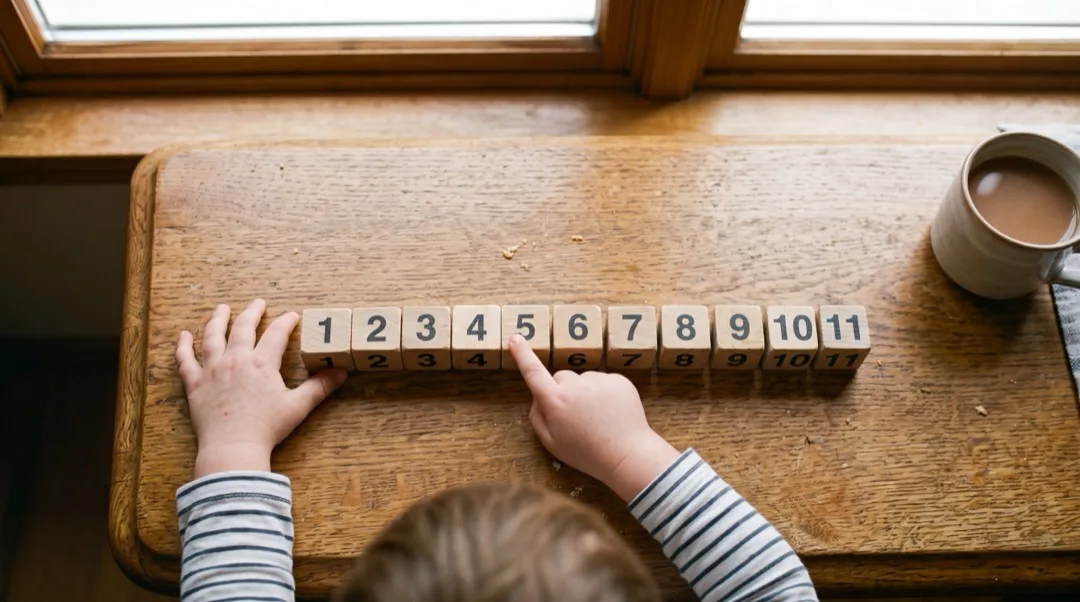
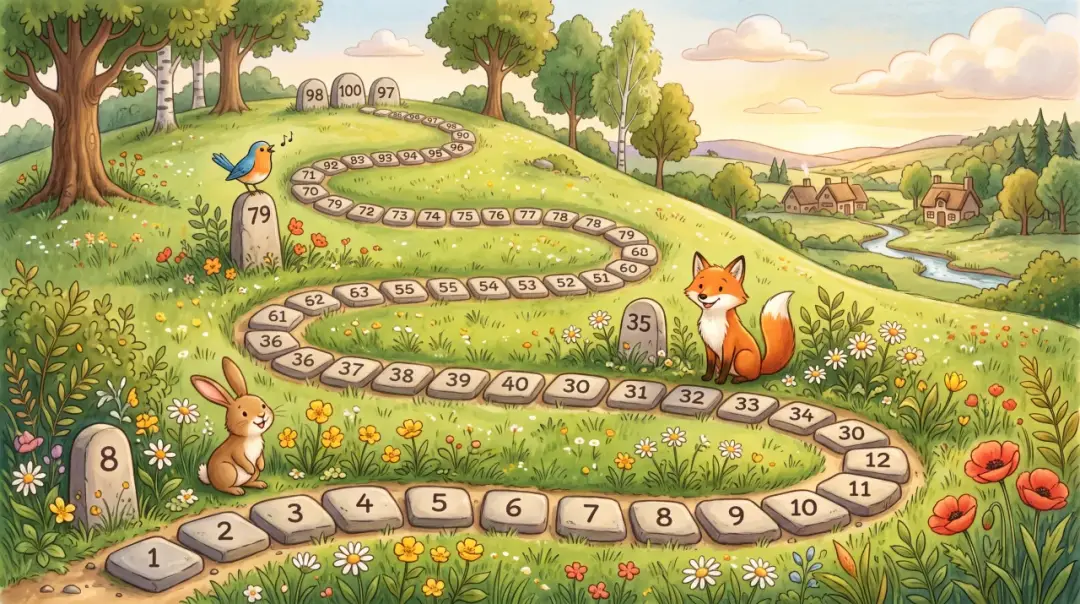
- Skip-count out loud: 2, 4, 6, 8, and 5, 10, 15, 20. This is the skeleton of the 2s and 5s tables.
- See equal groups. Four plates with three grapes each is four groups of three, which is 4 times 3. This is what multiplication actually means.
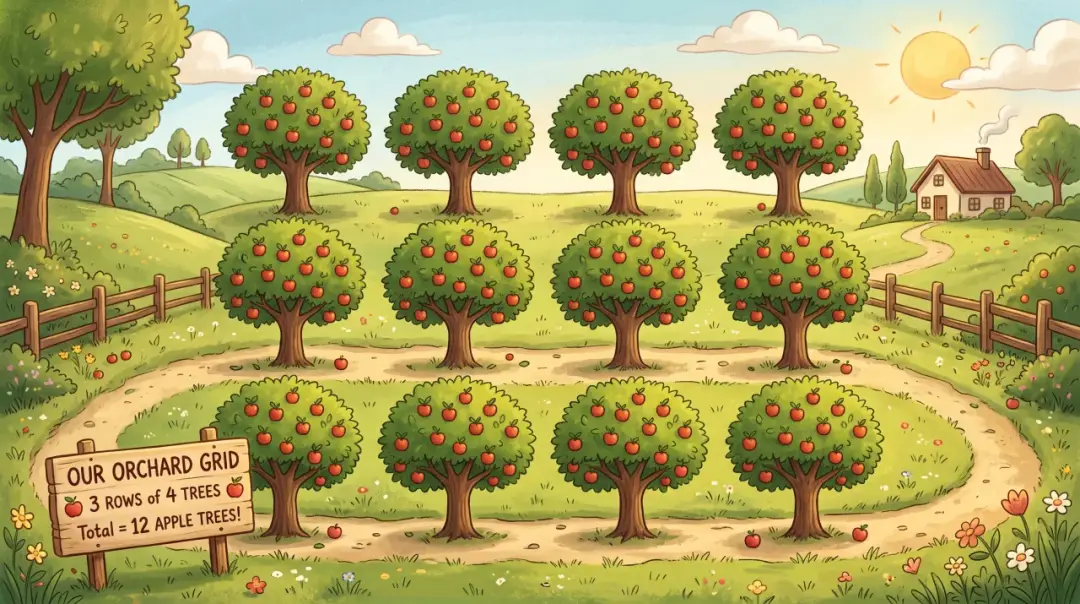
- Read an array. Three rows of four dots is the same as four columns of three. Seeing that a grid can be counted two ways is the seed of why 3 times 4 equals 4 times 3.


The organizations that study math teaching, including the National Council of Teachers of Mathematics, put understanding and recall together rather than treating memorization as step one. A child who understands groups and arrays will memorize faster and forget less.
What order should kids learn times tables in?
You do not have to march from the 1s to the 12s in order. Teachers usually start with the tables that lean on skip-counting a child already has, then use those to reach the harder ones. A common order:
- 2s, 10s, then 5s first. These follow patterns kids can already hear, so they build confidence.
- 1s and 0s are quick rules more than tables (anything times 1 is itself; anything times 0 is 0).
- 4s and 3s next, often by doubling: the 4s are the 2s doubled.
- Squares (3x3, 4x4, and so on) can be fun to learn as their own small club.
- 6s, 7s, 8s, 9s last, because they are the ones most children find hardest. The 9s have a neat finger trick and a digit-sum pattern worth showing.
- Save 11s and 12s for the end if your school includes them.
One quiet reassurance for a struggling child: because 3 times 8 equals 8 times 3, learning one table gives you half of another for free. There are far fewer genuinely new facts than the wall chart suggests.
How to help your child learn times tables at home
The method that works is dull to describe and effective in practice: little and often, low pressure, understanding and recall side by side. A few minutes most days beats a long, tense session once a week.
- Keep sessions short. Five minutes is plenty for this age. Stop before it stops being fun.
- Fold it into real life. Count the legs on the chairs, share out grapes, work out how many wheels on three cars. Multiplication is everywhere once you look.
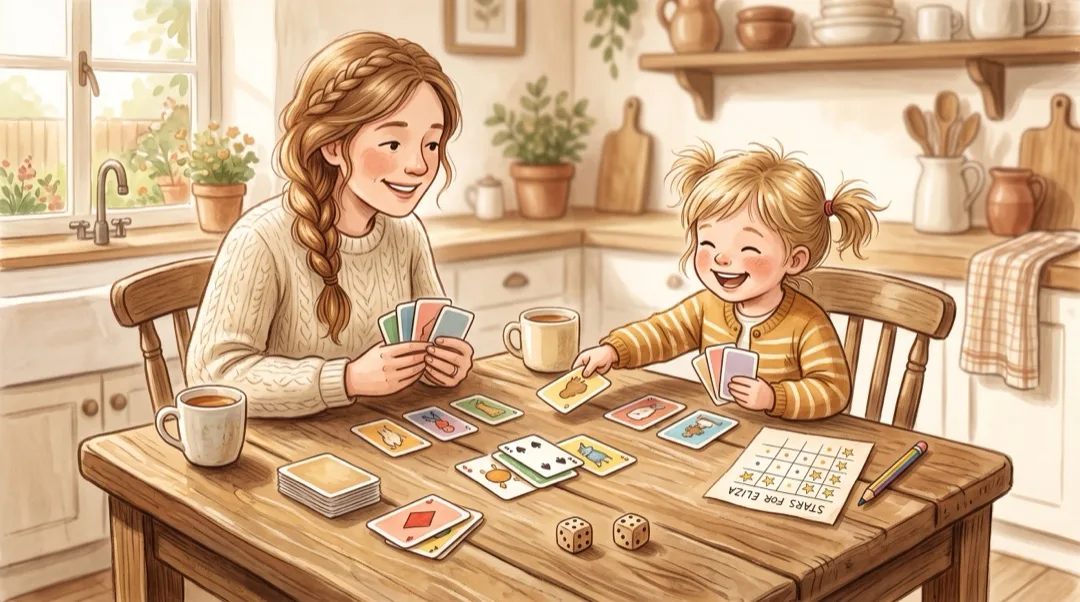
- Play, do not test. Games, card matching, and dice beat rapid-fire quizzing. Pressure and speed drills can build math anxiety, which is the opposite of what you want.
- Let them work it out at first. If they forget 6 times 7, encourage them to reach it from 5 times 7 plus 7. Recall gets faster with use; the fallback keeps them from panicking.
- Praise effort and strategy, not just being fast. A child who says how they figured it out is learning more than one who just blurts the answer.
That is the short version. The long version — how recall actually works, the five-minute routine, the tricks that earn their keep and the games that replace speed drills — is its own guide: how to memorize times tables, the calm way.
Where a counting app fits, honestly
We should be plain about our own app here, because most math apps overpromise. Our app, 99 Math Animals, covers early multiplication as groups: counting equal sets of animals or fruit, which is the readiness idea described above. It does not drill the full times tables up to 12 by 12, and it is not a substitute for the practice a child does at school or with you. If your goal is fast recall of the whole grid, that is memory work best done with games, real-life counting, and short daily practice, whatever tool you use.
An app can help with the early part: seeing four groups of three and understanding what multiplication means before the memorizing starts. That is the part we care about. If you are choosing any app for this, we wrote a separate honest guide on how to choose a math app for your kid, and the counting foundations that come first are covered in when kids learn to count to 100.
Questions parents ask
What times tables should a 7-year-old know?
It depends on the country. In England a child at the end of Year 2 (age 6 to 7) is usually working on the 2, 5 and 10 times tables. In the US, formal multiplication often has not started yet at 7 and begins in third grade. Both are normal. Skip-counting in 2s, 5s and 10s is a fine goal at this age.
What times tables should an 8-year-old know?
Again it varies. English schools expect all tables up to 12 by 12 by the end of Year 4 (about age 9), so many 8-year-olds are partway through them. In the US, 8 is around when multiplication is introduced in third grade, so an 8-year-old there may just be starting. Comfort with the 2s, 5s and 10s, and a solid grasp of what multiplication means, is a reasonable expectation either way.
Is it bad if my child memorizes the answers slowly?
No. Recall speeds up with regular, low-pressure use, and a child who can work an answer out from a fact they know is in good shape. Slow but understood beats fast but fragile. If you are worried about a persistent struggle, ask their teacher, who can compare against the class and the curriculum.