


How to Teach a Child to Write Numbers
In this article
Short answer: Start with the shapes, not the neatness. Show your child how each number is formed (where the pencil starts and which way it travels), practice in short bursts, and keep it playful. Most children write recognizable numbers somewhere between ages 4 and 6, and the range is wide. If your child is slower or faster than a friend's, that on its own tells you very little.
We build the handwriting recognizer inside our counting app, the part that reads a digit a child draws with a finger. So we have watched a lot of four-year-olds draw a 3, or a 5, or a very hopeful 8. The clearest thing we have learned: how a number is formed matters more than how tidy it looks. A wobbly 2 drawn with the right motion becomes a clean 2 with practice. A neat-looking number drawn from the bottom up, or built out of disconnected scribbles, tends to stay hard for the child, because the habit underneath is awkward.
What age do kids write numbers?
There is no single global age, and school systems disagree, so treat any number you read (including ours) as a rough middle, not a deadline. Broadly, many children start making recognizable digits between about 4 and 6, often after they can already draw them by copying. Fine-motor control, interest, and how much they have handled pencils all move the timeline.
For a general picture of developmental milestones, the CDC's Learn the Signs. Act Early. program and the UK's NHS are calm, reputable starting points. They will not give you a rigid "write numbers by age X" rule, and that absence is honest: it varies a lot. If your child is at school and you are unsure whether they are on track, their teacher sees dozens of children the same age and is the fastest person to ask.
Is my child ready? Readiness signs
Writing numbers sits on top of some earlier skills. You are looking for the building blocks, not perfection. A child is usually ready to start when they can do most of the following, at least roughly:
- Hold a crayon or chunky pencil and make marks on purpose (not just bang it around).
- Copy simple lines: a vertical line down, a horizontal line across, and a diagonal.
- Draw a rough circle, even a lumpy one, and close it up.
- Show interest in letters or numbers, pointing at them or asking what they say.
- Sit and focus on a small drawing task for a couple of minutes.
If lines and circles are still hard, that is where to spend your energy first: coloring, tracing paths, drawing shapes, playdough, threading beads. Those build the hand before the pencil ever needs to make a 6. Skipping ahead to numbers when the hand is not ready usually just creates frustration for both of you.
Which numbers to start with, and why
Start with the numbers made of straight lines and simple strokes, then add the curvy ones. A sensible order for many children:
- 1 first: one straight line down. It is the easiest win and builds confidence.
- 7 and 4 next: mostly straight lines and corners.
- 3, 2, and 5: introduce curves and changes of direction.
- 6, 9, 8, and 0: the loopy ones, which need more control to close cleanly.
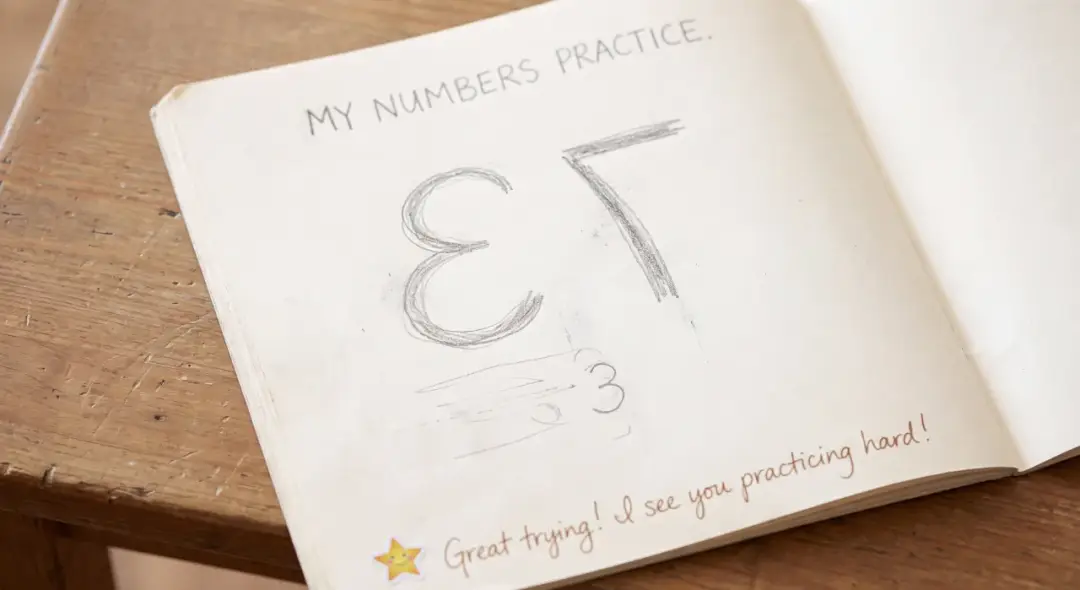
The number 8 is genuinely hard, and it is normal for it to arrive last and stay messy for a while. So is the 2, which asks a young hand to curve, cross, and go straight in one move. If those two lag behind the rest, that is expected, not a warning sign. Reversals (a backward 3 or a mirror-image 5) are also extremely common in this age range and usually fade on their own. We wrote more about that in a separate piece.
How to teach number formation (multisensory tips)
Number formation just means the path the pencil takes: where it starts, which direction it goes, and in what order. Teaching the path, out loud and with the whole body, works better than handing over a worksheet and hoping. A few things that tend to help:
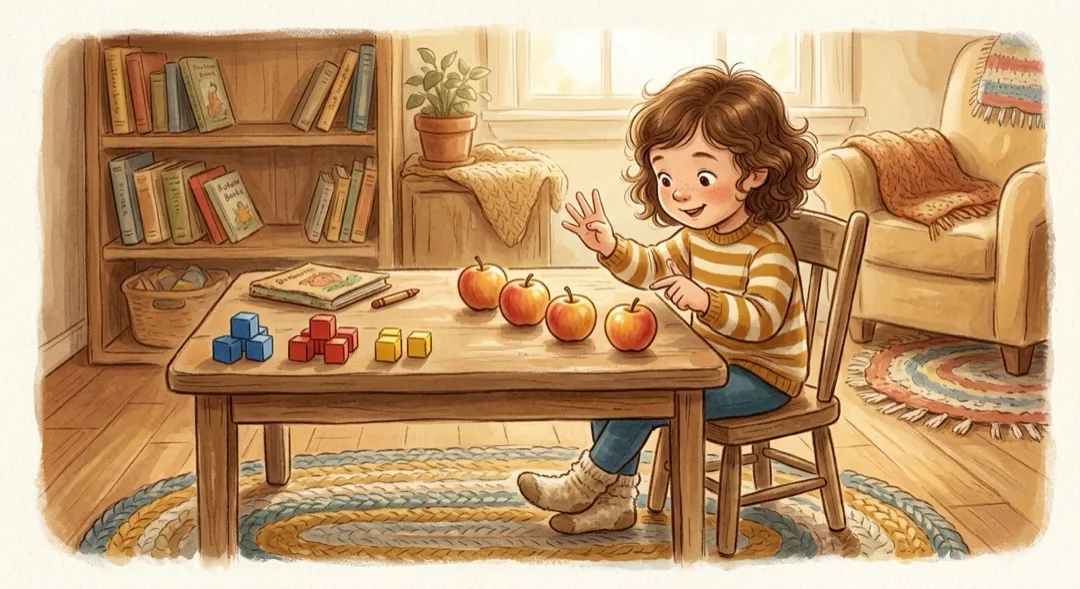
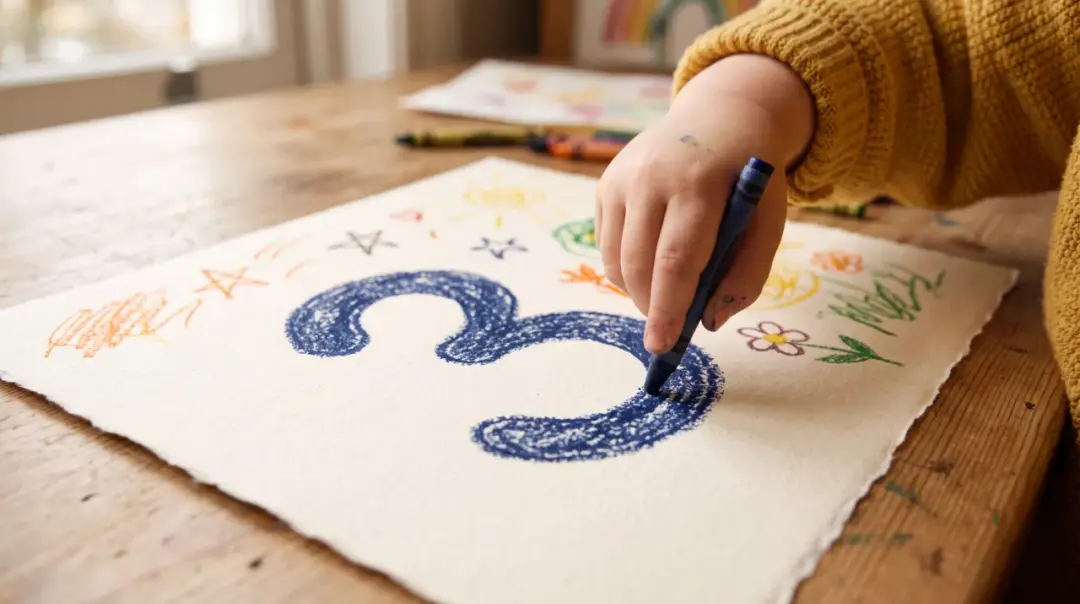
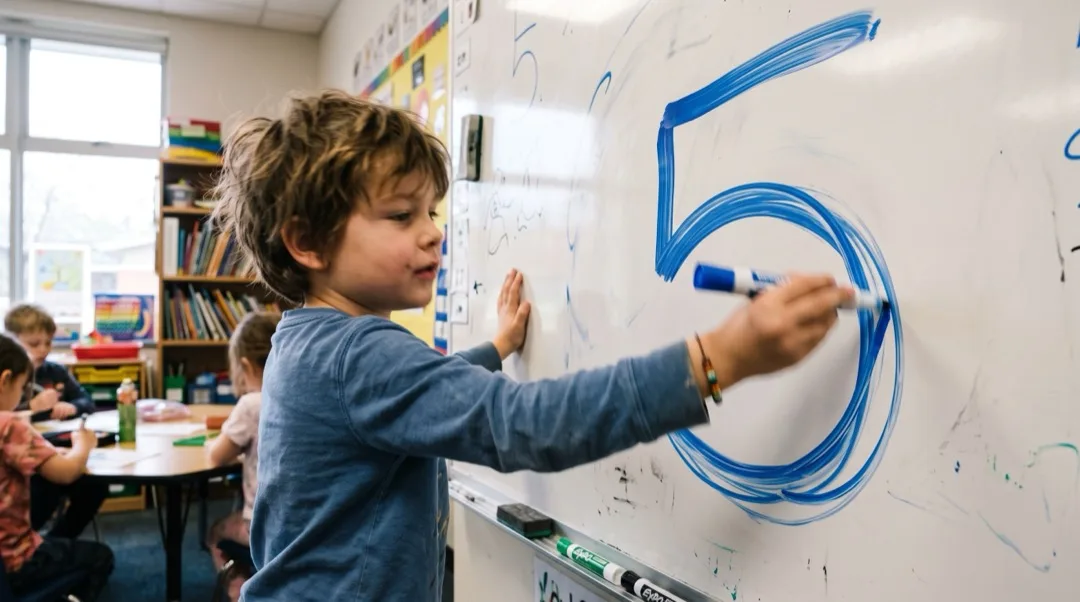
- Go big first. Draw the number huge on paper, a whiteboard, or in the air with a whole-arm sweep. Big arm movements are easier for a young child than tiny finger ones, and the motion transfers down to pencil size later.
- Sky-writing. Have them trace the number in the air with a pointed finger while you both say the movement.
- Say the formation cue. Give each number a little verbal script, like "1 is straight down," or "round and round for 0." Saying it while drawing links the words to the motion.
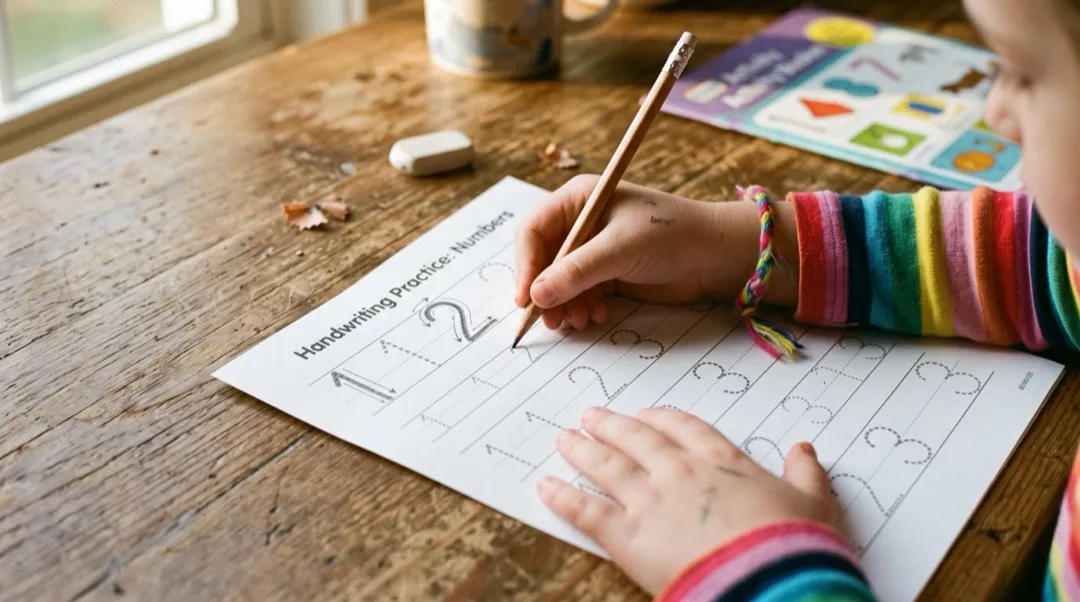
- Trace, then fade, then freehand. Start with a solid number to trace, then dots to join, then a faint copy to trace, then a blank space where they make their own. Remove the support gradually.
- Use texture. A finger in a tray of salt or sand, or drawing on a foggy window, adds feeling to the movement and makes it memorable.
- Draw with a purpose. Numbering the pages of a homemade book, or writing how many crackers everyone gets, beats a page of the same digit repeated twenty times.

Help for a child who can't write numbers yet
First, breathe. "Can't yet" is the normal state for a lot of four and five year olds, and pushing harder is usually the wrong lever. Try these before you worry:
- Drop back a step. If numbers are a struggle, spend a week on lines, circles, and shapes instead, then return.
- Shrink the target. Work on one number, the easiest one, until it feels good. One solid 1 is real progress.
- Check the grip and the tool. A chunky triangular crayon or pencil is easier for small hands than a thin one. Comfort matters.
- Separate the skills. Let them tell you the answer out loud while you do the writing sometimes, so a wobbly hand doesn't block the math.
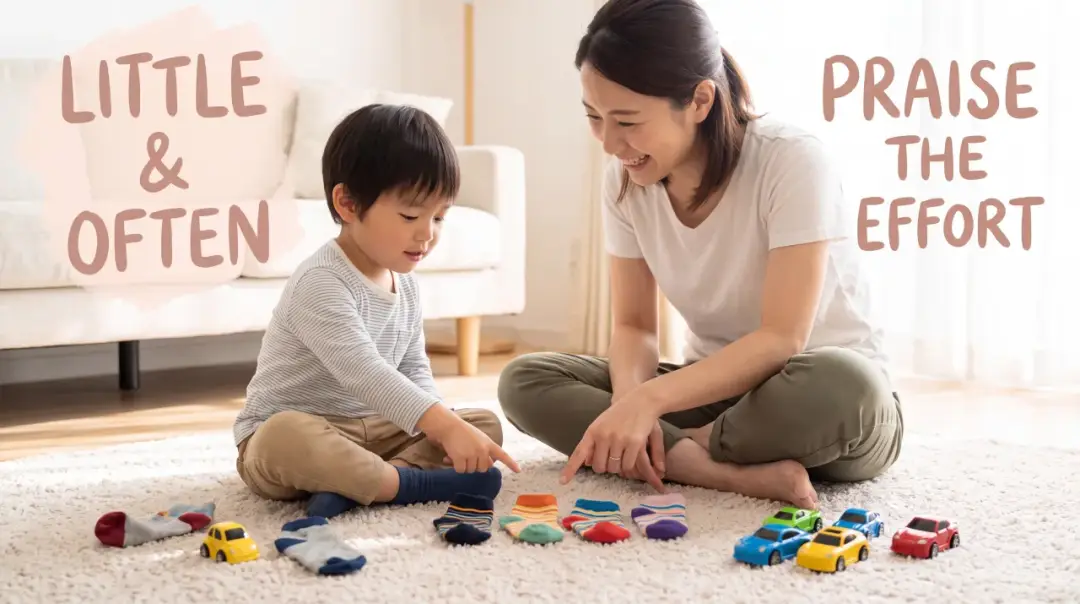
- Lower the stakes. No red pen, no "do it again." Praise the effort and the correct motion, not the neatness.
Some children find the physical act of writing genuinely hard even when they clearly understand numbers. If that gap is wide and persistent, or your child is at school and the teacher shares your concern, it is worth mentioning to their teacher or your GP or pediatrician. Understood.org has plain, parent-friendly explanations of learning and motor differences. We are the makers of a math app, so this is where our expertise stops and theirs begins.
Does writing numbers by hand actually help?
Honestly: it might, but the evidence is softer than headlines suggest. Some research points to benefits from handwriting over typing for learning and memory, and the idea that forming a shape by hand helps you learn it is plausible and widely held. But most of that work is about letters and reading, not digits, and the findings are mixed rather than settled. We do not fully know how much it matters for numbers specifically.
So we would not tell you handwriting is proven to beat a screen for math. What we would say, from watching children draw digits every day, is that forming a number by hand seems to make the child slow down and pay attention to its shape in a way that passive recognition does not. That is a reasonable, modest reason to include some handwriting, alongside plenty of counting, talking, and playing with quantities. It does not have to be either-or.
Questions parents ask
What age should a child be able to write numbers?
Most children write recognizable numbers somewhere between about 4 and 6, but it varies a lot and there is no single global age. School systems differ, and interest and fine-motor skills matter more than the calendar. If your child is at school and you are unsure, their teacher is the best person to ask.
Which numbers should I teach first?
Start with the ones made from straight lines: 1, then 7 and 4. Add the curvy ones (3, 2, 5) next, and save the loopy numbers (6, 9, 8, 0) for last. The 8 and the 2 are genuinely hard and often arrive last, which is completely normal.
Is it bad if my child writes numbers backwards?
No. Reversals like a backward 3 or a mirror-image 5 are very common up to around age 7 and usually fade on their own as writing becomes more automatic. If they persist well past that, or come with other worries, mention it to your child's teacher.