


Why Do Kids Write Numbers Backwards (And When Not to Worry)
In this article
Short answer: writing numbers backwards is a normal, extremely common part of learning to write, for most children up to about age 7 (and sometimes into 8). It is not a sign of low intelligence, and on its own it is not a sign of dyslexia. Young hands and brains are still working out which way the marks are supposed to face, and that takes a few years to settle.
If your five- or six-year-old flips a 3, writes a mirror-image 7, or turns a 9 the wrong way, you are watching ordinary development, not a problem. Below is why it happens, which digits get reversed most, what gently helps, and the small number of situations where it is worth a calm word with a teacher or doctor.
Is it normal for a 6-year-old to write numbers backwards?
Yes. Reversals are expected while children are learning to form numbers and letters, and they are still common in kindergarten and the first year or two of formal school. There is no single global age when they should stop, but many children largely grow out of them by around age 7, with some still reversing here and there into age 8. It varies a lot from child to child, and an occasional flipped digit past that age is not automatically a concern.
The US Centers for Disease Control keeps a plain-language list of typical milestones in its Learn the Signs. Act Early. program, and the UK's NHS has guidance on child development if you want a general reference point. The honest summary from both directions: early writing is messy for years, and reversals are part of the mess.
Are number reversals a sign of dyslexia?
This is the myth worth busting plainly: reversing numbers or letters, by itself, is not a sign of dyslexia. It is one of the most persistent parenting worries about handwriting, and it is mostly wrong. Dyslexia is a difference in how the brain processes the sounds in words and connects them to written language. It is not primarily a problem of seeing or writing things backwards.
The learning-differences nonprofit Understood.org makes this point directly: reversing letters and numbers is common in young children and is not, on its own, evidence of dyslexia. Plenty of kids who reverse digits at 6 read perfectly well, and plenty of kids with dyslexia never had notable reversals. The reason the myth sticks is that both are common in early childhood, so they get seen together and assumed to be linked. They usually are not.
Which numbers do kids reverse most?
Some digits get flipped far more than others, mostly the ones that start on the right or have a strong left/right asymmetry. In our own data, the usual suspects are:
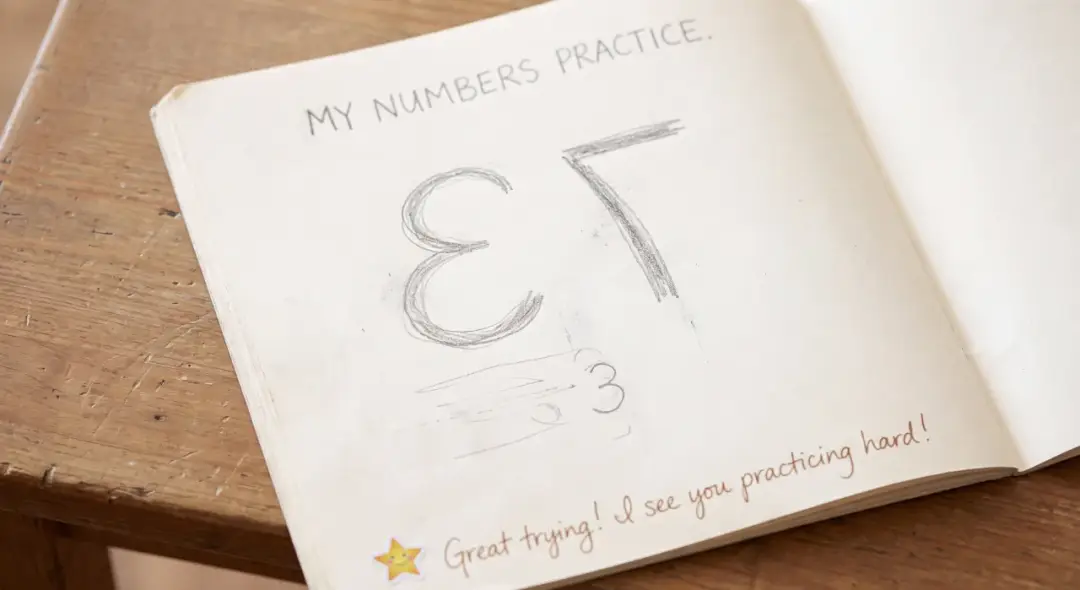
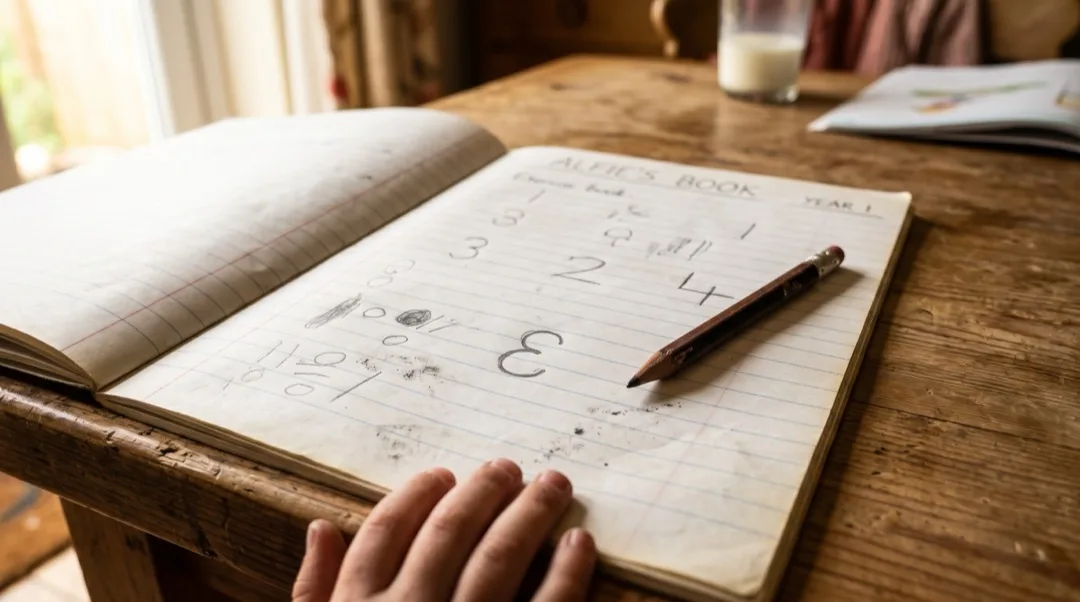
- 3: the two curves face the wrong way, so it becomes a mirror of an E-ish shape.
- 5: the top bar and belly get reversed, a very frequent one.
- 7: flipped horizontally, sometimes rotated too.
- 9: the loop lands on the wrong side, and it can also get confused with a 6.
- 2: the starting curve turns the opposite direction.
Symmetrical or simple digits like 1, 8, and 0 rarely get reversed, because there is not really a wrong way to face them. If your child mostly flips 3, 5, 7, 9, and 2, that pattern is completely typical, not a red flag.
Why does it happen?
Writing a number correctly means knowing not just its shape but its direction: where to start, which way to curve, which side the tail goes. That sense of direction (spatial and left/right orientation) is one of the last pieces of early writing to lock in. A young child can hold a clear picture of a 3 in their head and still send the pencil the wrong way, because the shape and the direction are stored a bit separately at this age.
It is worth saying what this is not. It is not a vision problem: kids who reverse digits usually see them fine and can often spot the reversal in someone else's writing. It is not a sign of low intelligence. And it is not stubbornness or carelessness. It is a normal stage in wiring up handwriting, and it fades as that wiring matures, for most kids without any special intervention at all.
What gently helps?
You do not need to drill this out of a child, and pressure tends to backfire. What helps most is calm, low-stakes repetition with a good model to copy. A few things that work in practice:
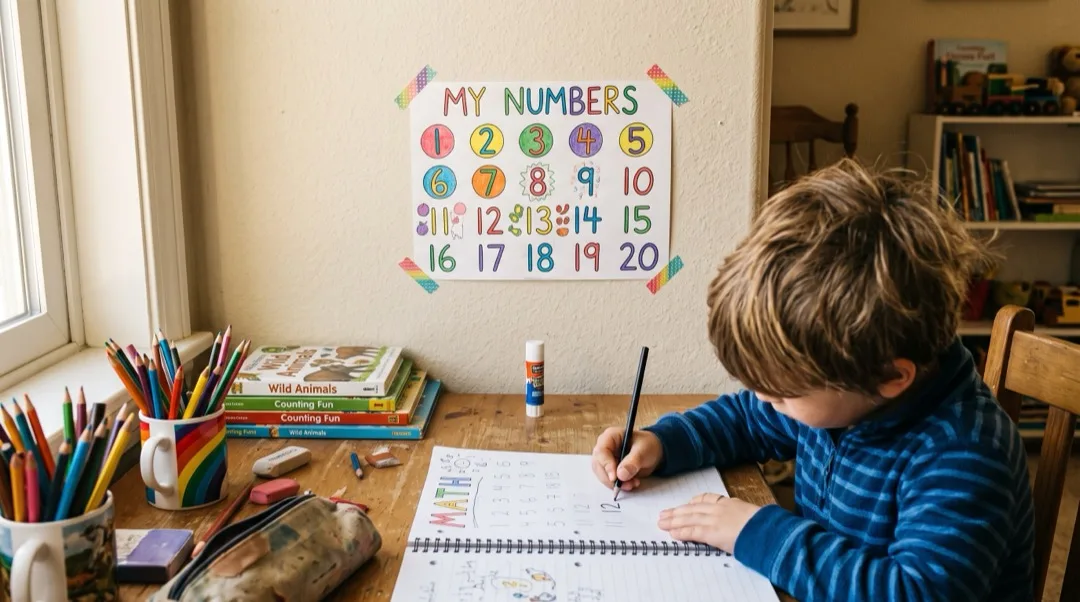
- Give a clear model. Write the number next to theirs, or use a number line or chart on the wall they can glance at while they write.
- Use a verbal cue for tricky ones. A short spoken rule (for example, "start at the top for a 3") gives the hand a direction to follow.
- Point out the start point. Many reversals come from starting in the wrong place, so a dot to start on can fix the direction before the pencil even moves.
- Let them trace and copy, then fade the support. Tracing, then copying, then writing from memory is a gentle on-ramp.
- Keep it warm. Notice the correct ones out loud more than the flipped ones.
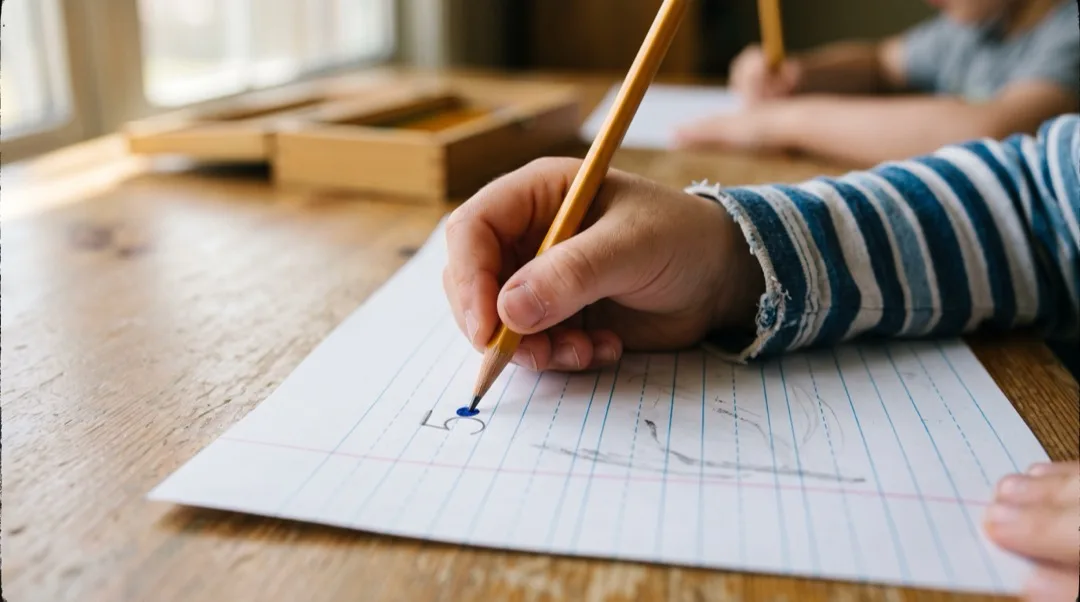
Just as important is what not to do. Try not to erase their work in frustration, cross it out hard, or make a child feel that a flipped number means they are bad at math. Shame does not speed up a developmental process, and it can quietly turn a child off numbers for years. A neutral "ooh, that 5 is facing backwards, want to try it facing the other way?" is plenty.
When should I worry about reversals?
Reversals on their own, in a child under about 7, are not a reason to worry at all. The picture changes only a little, and only when a few things line up together. It is worth a calm, non-alarmed conversation with your child's teacher, or your GP or pediatrician, if reversals are still frequent well past age 7 or 8 AND they come alongside other struggles: real difficulty learning to read, persistent letter reversals too, trouble remembering number or letter shapes, or a lot of frustration and avoidance around writing.
Even then, the message is not "something is wrong." It is that a teacher sees hundreds of children at this age and can tell you whether your child is well within the normal range or might benefit from a closer look. This is a question to ask, not a diagnosis to make at the kitchen table. Please do not use the list above as a self-diagnosis checklist. It is a prompt to ask someone who can actually assess your child in person.
Questions parents ask
At what age should a child stop writing numbers backwards?
There is no single cutoff, and it varies. Most children largely stop reversing numbers by around age 7, with some still doing it occasionally into age 8. An occasional flipped digit after that is usually still fine. Frequent reversals well past 7 or 8, especially with reading struggles, are worth mentioning to a teacher.
Does writing numbers backwards mean my child has dyslexia?
No, not on its own. Reversing numbers and letters is common in young children and is not by itself a sign of dyslexia, which is mainly about processing the sounds in words rather than writing things backwards. If you are worried, a teacher or doctor can help you look at the whole picture.
How can I help my child stop reversing numbers?
Give a clear model to copy, mark where each number starts, use a short spoken cue for tricky digits like 3 and 5, and let them trace then copy then write from memory. Keep it warm and low-pressure. Most of all, avoid shaming or erasing their work in anger, since that does not speed things up and can put them off.