


When Do Kids Learn to Count to 100?
In this article
Short answer: Most children can recite the numbers to 100 somewhere around age 6, and often into the first year or two of school. But that is a wide, soft range, not a deadline. Some children get there at 5, some at 7, and both are normal. The bigger thing to know is that saying the numbers and understanding the numbers are two different skills, and the first one usually shows up long before the second.
We build a small counting app, so we spend a lot of time watching this exact stretch of childhood. Below is the honest version: the difference between reciting and understanding, rough ages for each stage, why school expectations differ between countries, and when it is worth a quiet word with a teacher.
Rote counting vs meaningful counting: what's the difference?
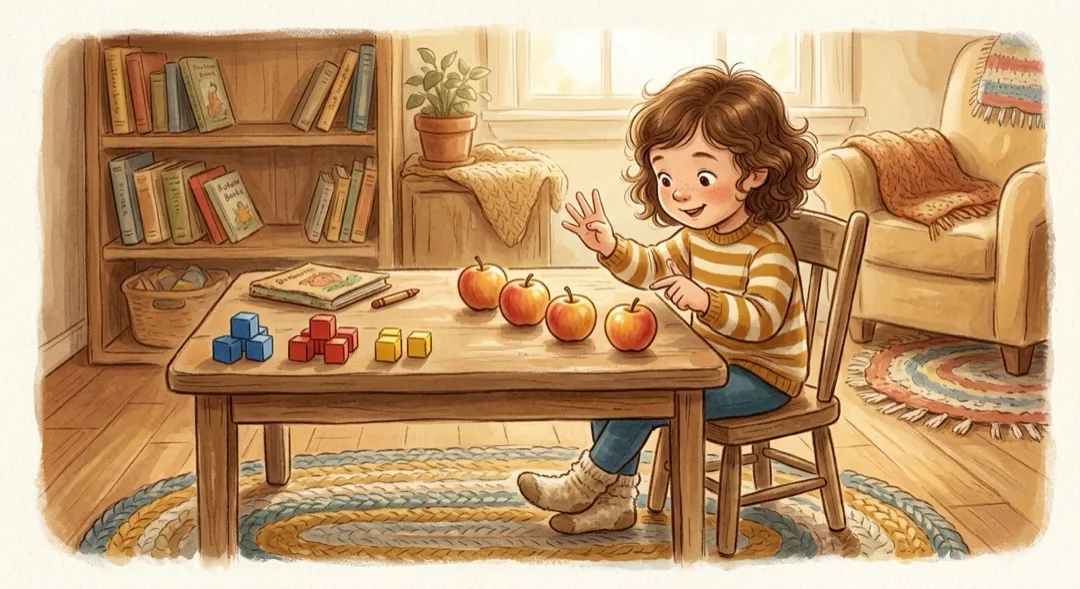
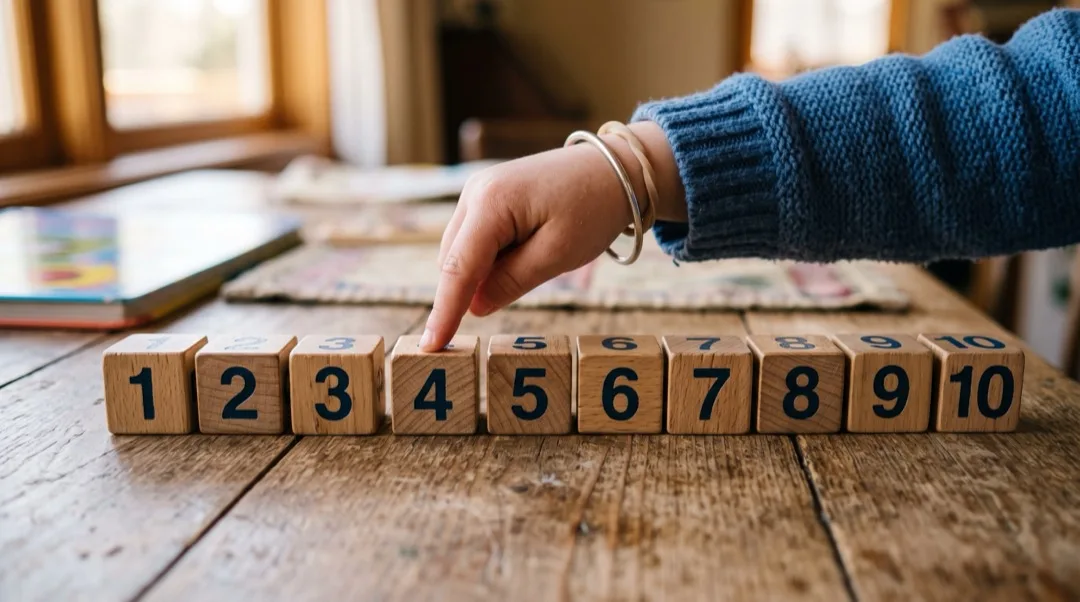
"Rote" counting is reciting the number words in order, like a song: one, two, three, all the way up. "Meaningful" counting is knowing that those words map onto real amounts, that the last number you say is how many there are, and that the number is the same no matter which order you touch the objects in. That mapping is called one-to-one correspondence, and it is the harder skill by a distance.
A child can very happily chant to 100 and still, if you put out seven buttons, count "one, two, three, five, eight" while their finger skips and doubles back. That is not a mistake to worry about. It is the normal gap between the tune and the meaning, and it closes with practice on small amounts, not with racing to a bigger number.
The US math standards make this split explicit: kindergarten children are expected both to count to 100 by ones and tens and, separately, to count objects and say "how many" up to 20. You can see both listed in the counting and cardinality strand of the Common Core math standards. The two live side by side on purpose.
Rough ages: counting to 10, 20, 50, and 100
Every child is on their own clock, so treat these as loose averages for most children, not targets:
- Around age 2 to 3: many children start reciting a few number words in order, often to 5 or 10, though not always in the right order and not yet tied to counting objects.
- Around age 4: counting aloud to 10 is common, and children begin counting small groups of objects with more accuracy.
- Around age 5: reciting to 20, and often to 30 or beyond, with growing one-to-one correspondence on amounts up to about 10 or 20.
- Around age 6: reciting to 100 by ones, usually alongside the start of counting by tens (10, 20, 30) and by fives.
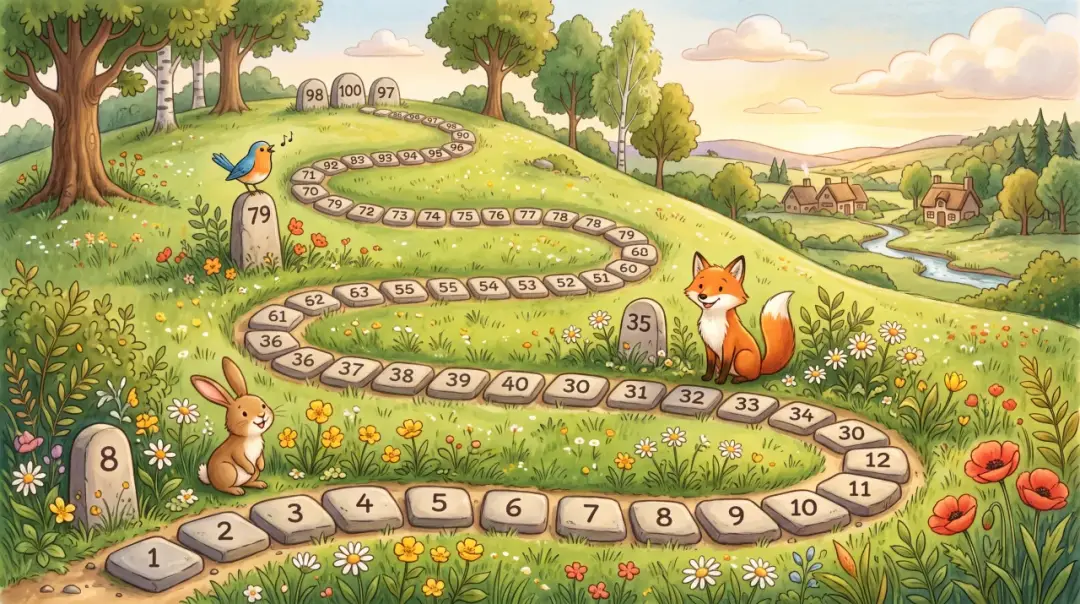
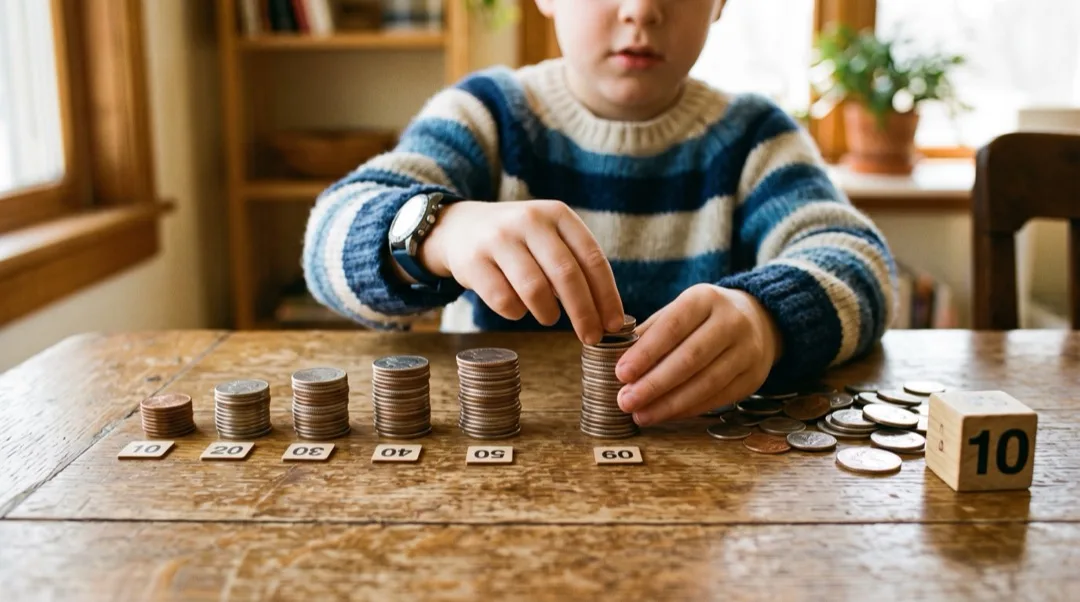
- Counting by tens tends to arrive with the 100 milestone, because getting to 100 the slow way is long, and the pattern of tens is what makes the whole hundred feel manageable.
The US CDC's "Learn the Signs. Act Early." milestones are a useful public reference point for the earlier ages, and they are careful to describe what most children do rather than a pass or fail. You can read them at the CDC milestone pages. For general child development, the UK's NHS is a good plain-language source.
Why does the "right" age depend on the country?
There isn't one global age, partly because school starts and curricula differ. In the US, counting to 100 sits in kindergarten, which children typically enter at 5. In England, the national curriculum expects children to count to and across 100 in Year 1, at roughly age 5 to 6. Different starting ages and different sequencing mean a child who looks "behind" one country's chart can be right on track for another's.
So if you are comparing your child against a milestone you read online, check whose milestone it is. A US kindergarten target and a UK Reception target are not the same, and neither is a rule of nature.
My 5-year-old can't count to 100. Is that normal?
Usually, yes. At 5, many children are comfortably reciting to 20 or 30 and are still building the run up to 100. Reciting all the way to 100 at 5 is lovely but ahead of the curve, not the baseline. The numbers in the teens and the decade jumps (the leap from 29 to 30, or 39 to 40) are the classic sticking points, and they take time and repetition.
What matters more than the ceiling is whether the understanding underneath is growing: can your child count out a real handful of objects and land on the right total, share snacks fairly, or tell you which of two small piles is more. That number sense is the thing that actually carries forward into arithmetic. Reciting to 100 without it is a party trick; the counting of real things is the learning.
If you would like a fuller picture of typical learning differences and how they show up, Understood.org has calm, parent-facing explainers. And the single most useful move is almost always to ask the person who sees your child learn every day.
How to help without turning it into a test
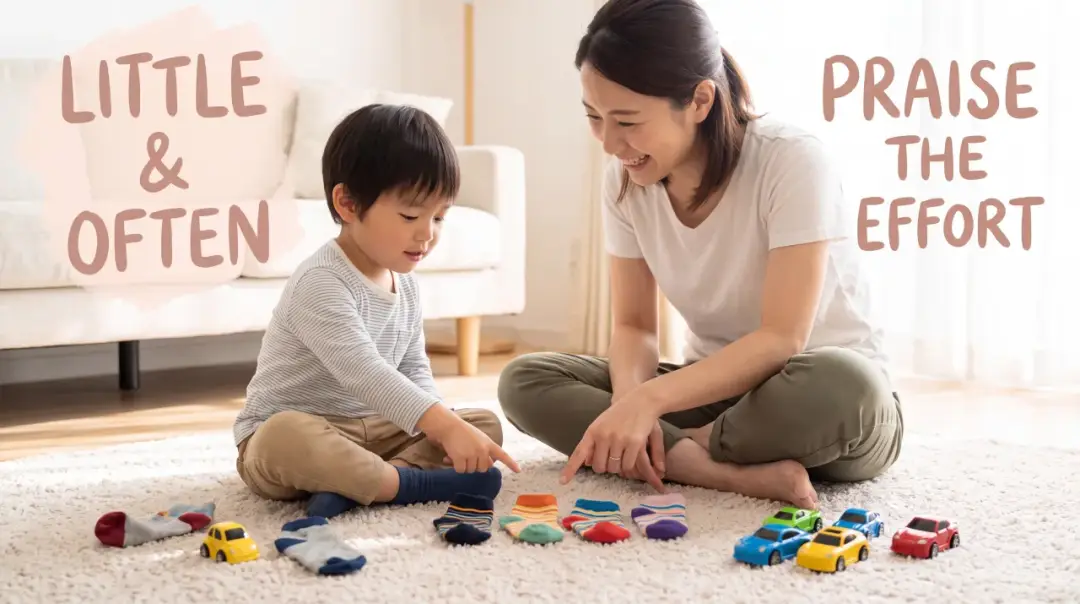
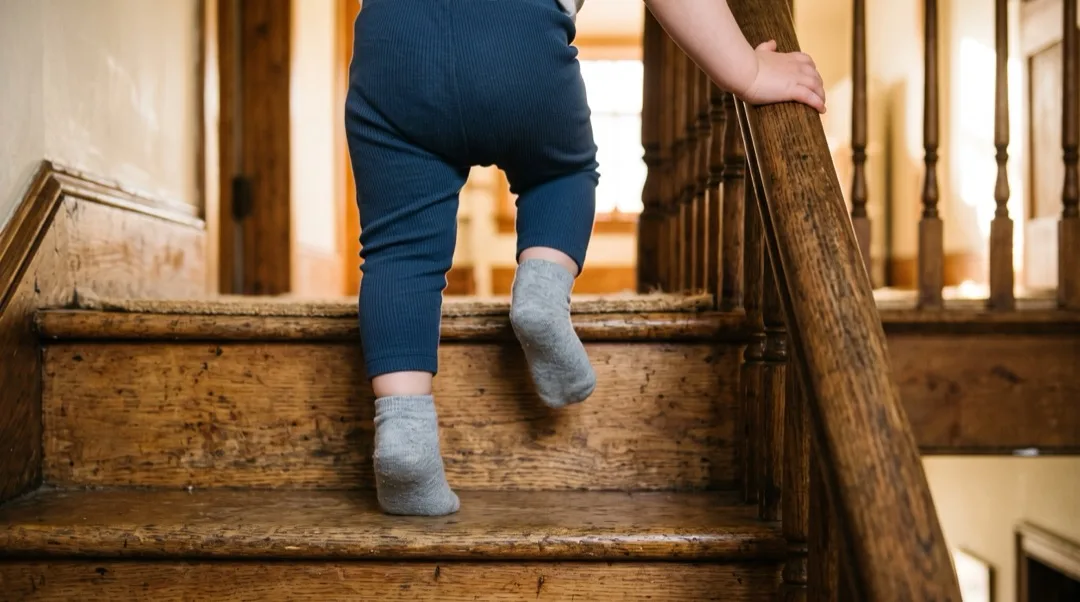
The reciting takes care of itself with exposure: counting stairs, counting grapes, counting how many more sleeps. The understanding grows best on small amounts your child can actually see and touch, in the 1 to 20 range, before the numbers get big. Keep it short, keep it a game, and let the accurate counting of real objects lead. The big number will follow.
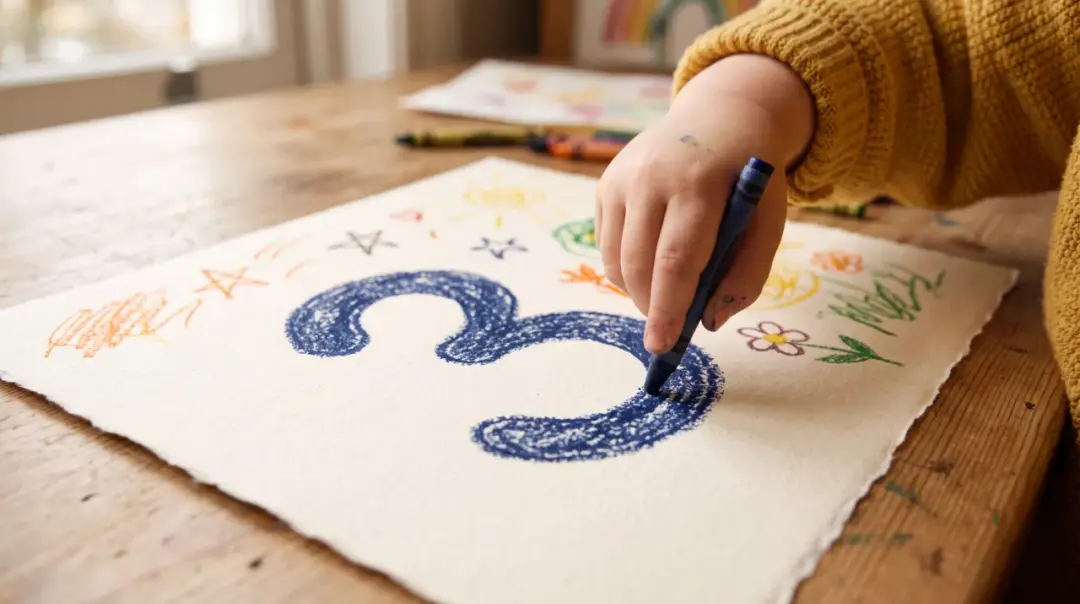
This is exactly the range our own app lives in. 99 Math Animals sits deliberately on the numbers 1 to 99, because that is where one-to-one correspondence and place-value sense are being built, and children count the animals on screen and then draw the answer digit by hand. We built the handwriting recognizer, so we have genuinely watched a lot of four- and five-year-olds count seven creatures, pause, and draw a wobbly 7, which is the moment the tune finally meets the meaning.
Whatever tools you use or don't, the shape is the same: reciting first, understanding a beat later, both on a generous timeline. If your child is chanting numbers and counting a few real things, they are doing the work, even if 100 is still a way off.
Questions parents ask
What age can a child count to 100?
Most children can recite the numbers to 100 around age 6, often in the first year or two of school. There is wide normal variation, so anywhere from about 5 to 7 is common, and reciting comes before truly understanding the amounts.
Is reciting to 100 the same as understanding numbers?
No. Reciting is memorizing the number words in order, like a song. Understanding means knowing those words map onto real amounts (one-to-one correspondence) and that the last number counted tells you how many. Children usually recite well before they understand, and that gap is normal.
When do kids learn to count to 20?
Many children recite to 20 around age 5, though some earlier and some later. Counting objects accurately up to 20, rather than just saying the words, often lags a bit behind the reciting and keeps developing through kindergarten.