


Blank multiplication grid
The empty companion to the reference chart. Page two fills in the 1, 2, 5 and 10 rows and columns — the facts most children already own — which turns 100 unknown squares into the 36 that actually have to be learned.
How to use it
Print page two first. Watching the easy rows land as a cross through the grid is the point of it: what looks like a hundred facts to memorise is mostly facts your child can already reach, and the frightening part is a block of 36 in the middle. Fill it diagonally rather than row by row if you can — 6 x 7 and 7 x 6 are the same square twice, and a child who notices that has just halved the work again. A punched pocket and a dry-wipe pen turn either page into a hundred goes.
Every page in this pack
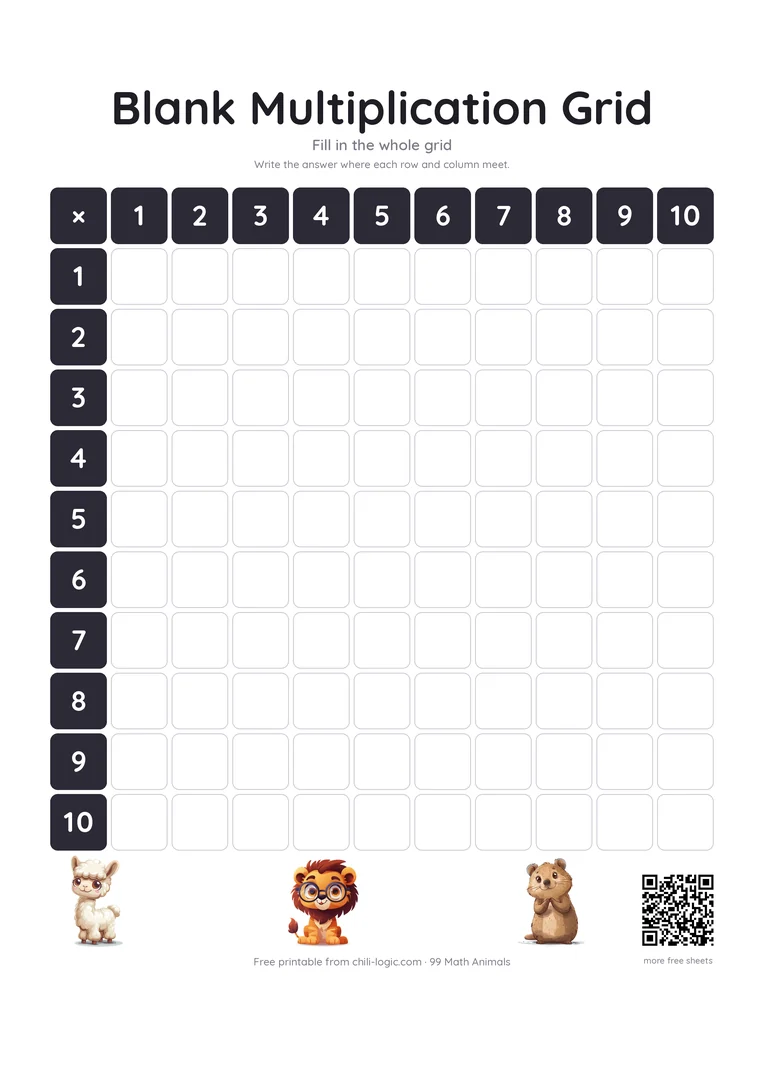
The whole grid
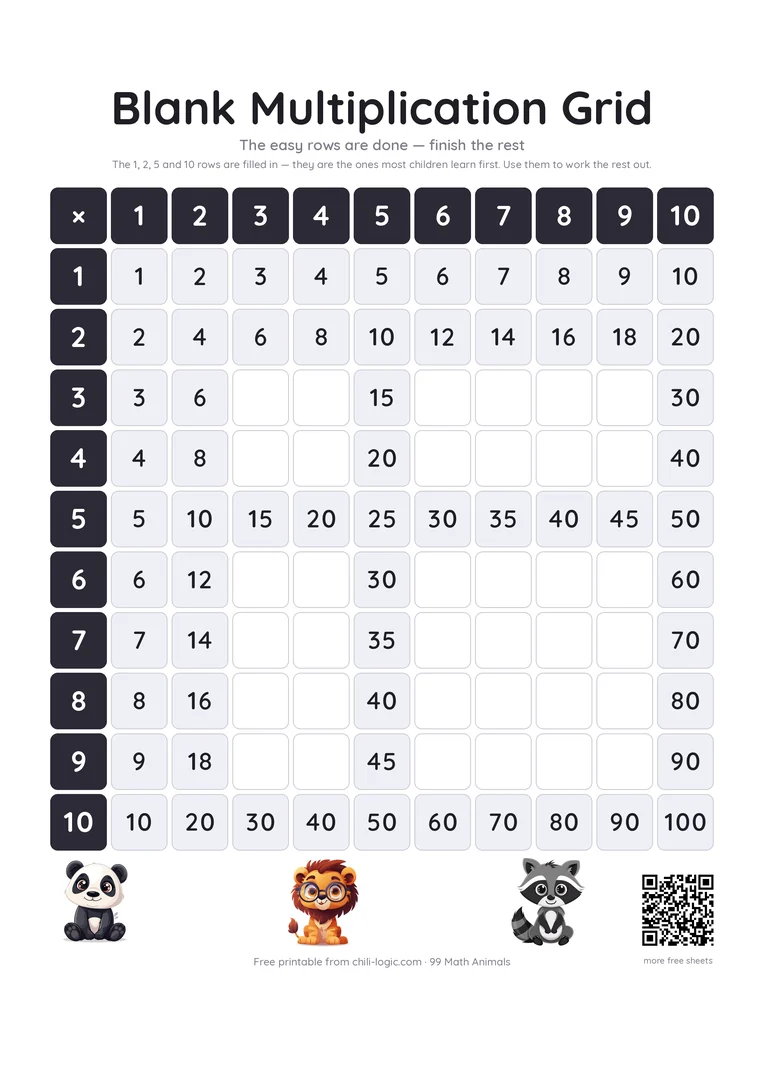
Easy rows filled in
Printing notes
- Print at 100%, not "fit to page" — scaling shrinks the digits and the whole point is that your child writes them at a steady size.
- Black-and-white and draft mode are fine. Nothing on these sheets depends on colour.
- Slide a sheet into a punched pocket and a dry-wipe pen turns one page into a hundred goes.
Where this sheet fits
The thinking behind it
When Do Kids Learn Times Tables? — Read the full guide