


Trace the numbers 1–20
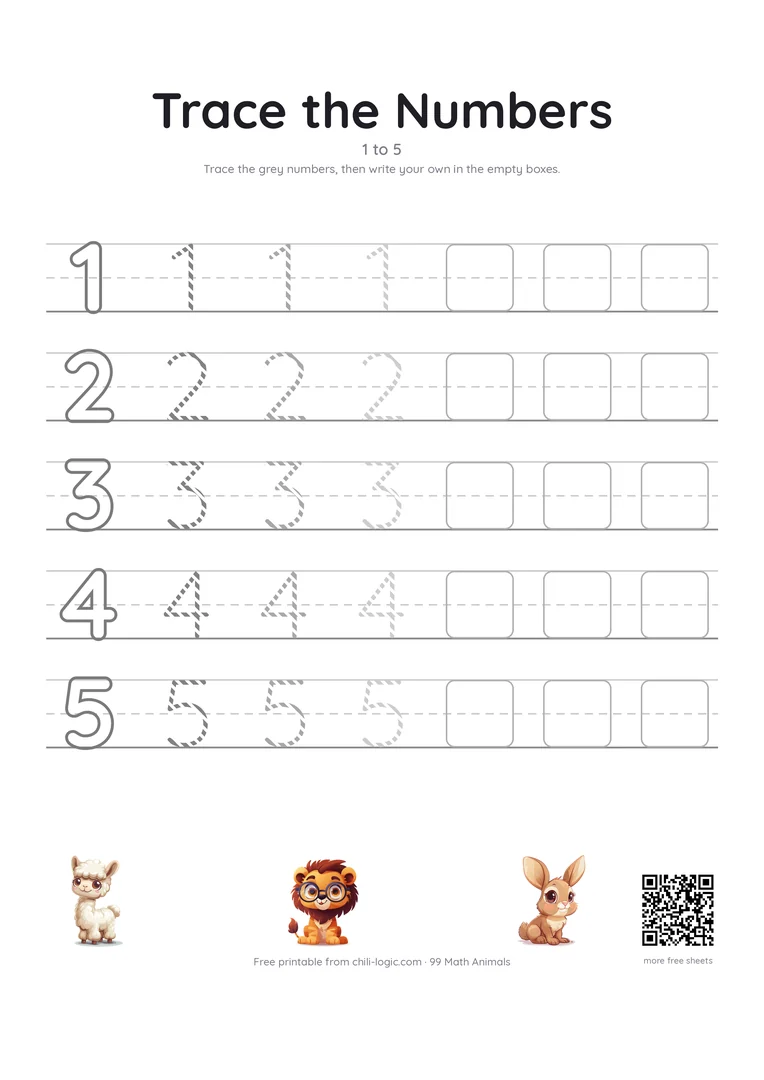
Each row starts with an outlined model, then three dashed copies that fade as they go, then empty boxes with the guide lines still running through them. Support falls away a little at a time instead of all at once.
Sheets we drew for our own testers, in the same hand the app uses. Print, put a pencil next to it, done.
No sign-up and no email — the PDFs download straight from this page.
Each row starts with an outlined model, then three dashed copies that fade as they go, then empty boxes with the guide lines still running through them. Support falls away a little at a time instead of all at once.
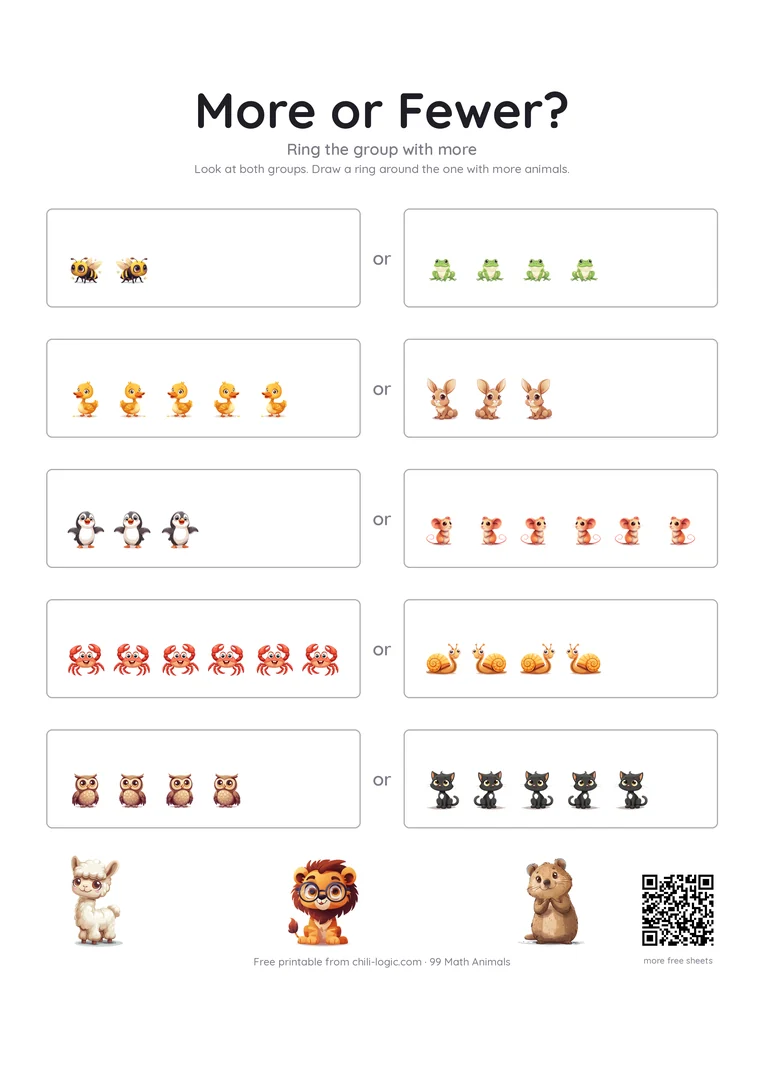
Two groups of animals, side by side, and one question: which has more? Comparing comes before counting — a child sees that six beats three long before they can say why.
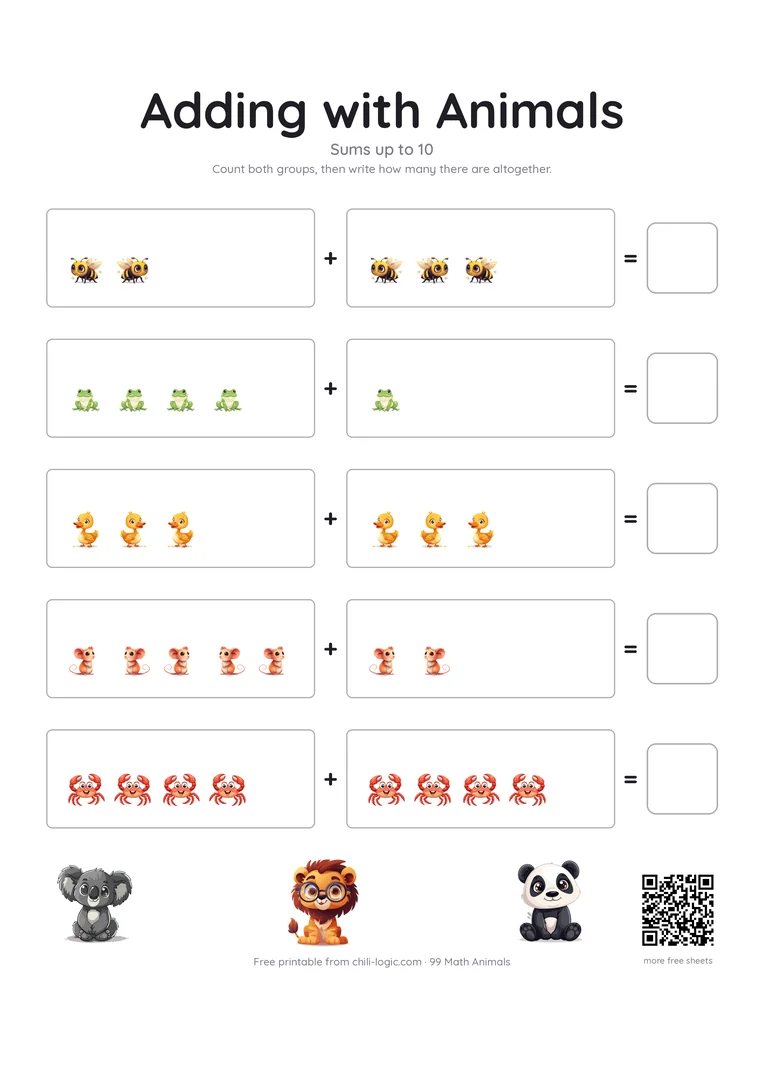
Two groups, a plus, a box. The groups stay in separate panels because that is the thing being learned: two collections become one number.
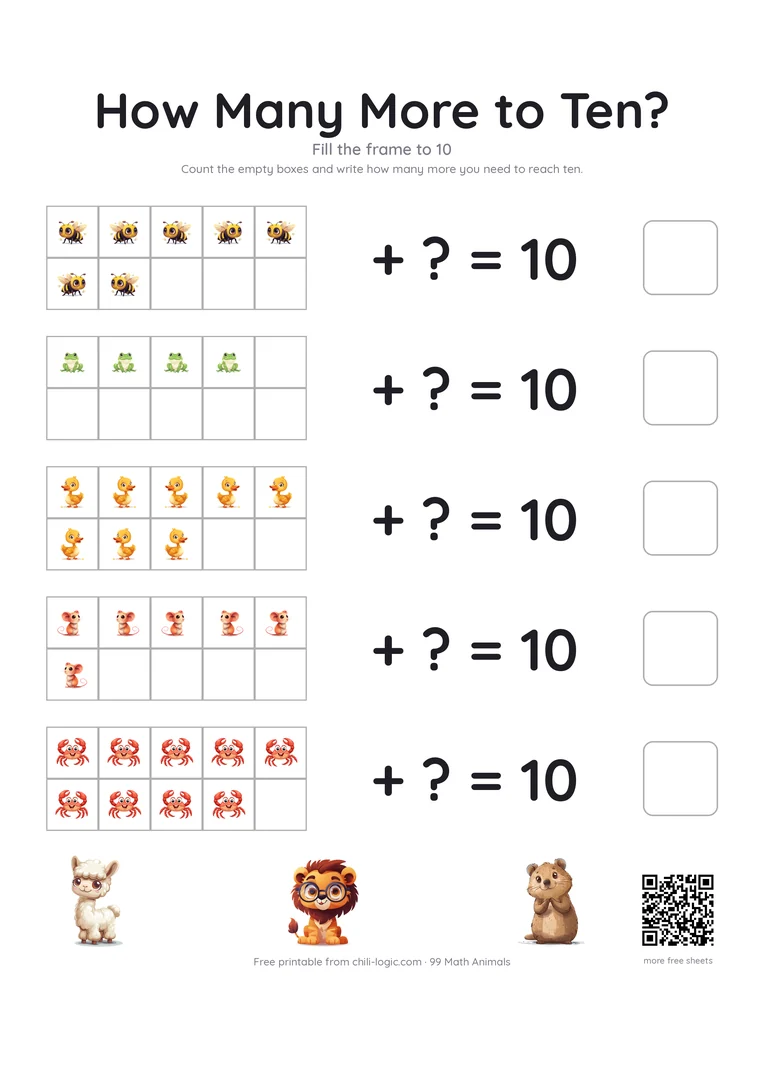
A ten-frame, not a row. Two rows of five is the arrangement that makes "three empty" visible without counting them — which is the whole point.
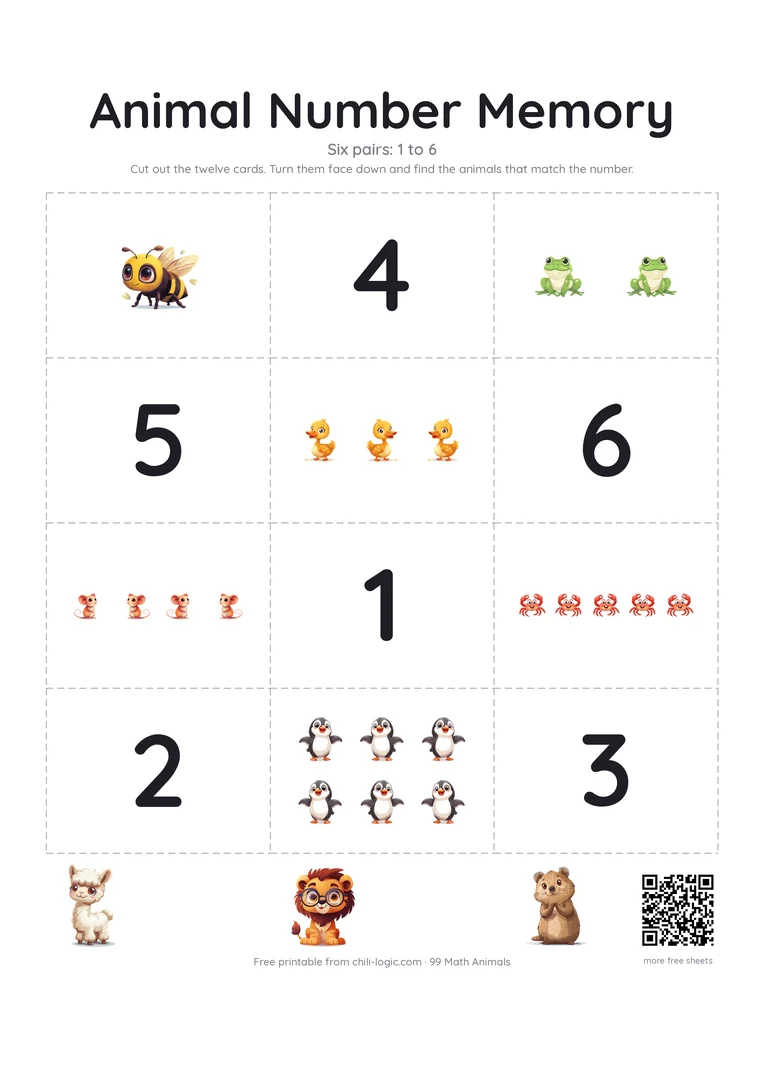
Twelve cards to cut out: six groups of animals, six numbers. Every pair is a set and the digit that counts it — the same skill as the worksheets, except a child wins sometimes and a parent plays instead of marking.
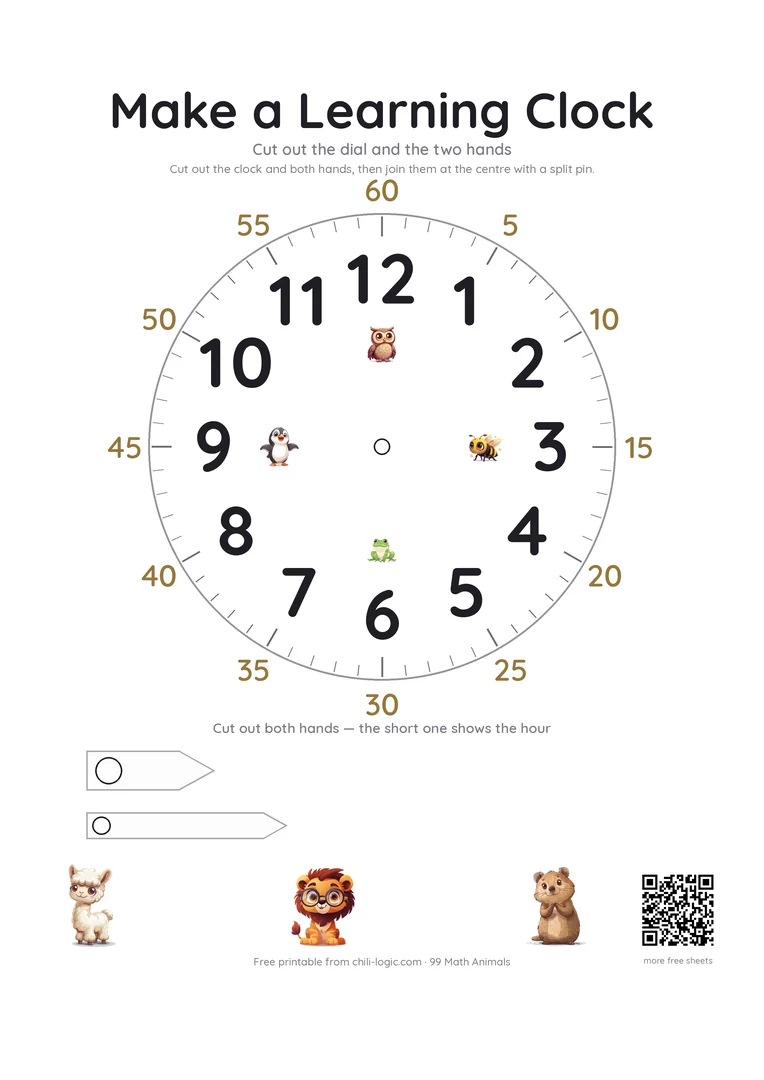
A dial and two hands to cut out and pin together, so the hands actually turn. Both rings are printed — hours inside, minutes outside — because "the 3 means fifteen" is the step children get stuck on, and a bare face hides it.
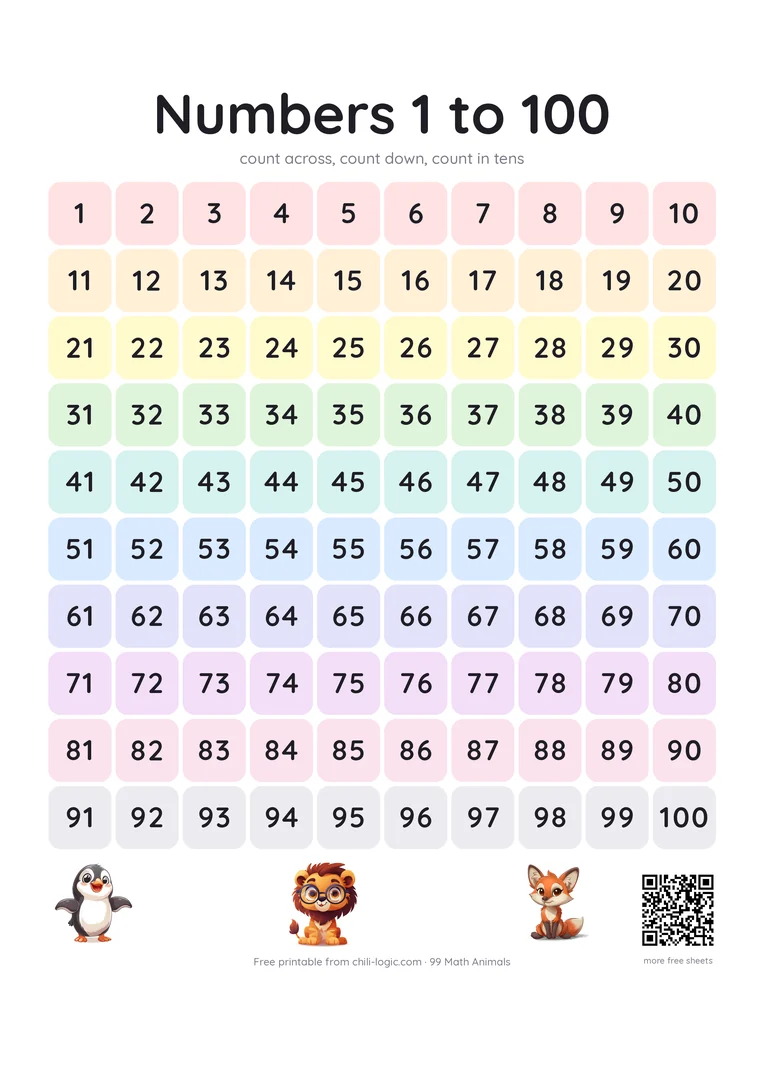
Ten rows of ten, one colour per row. Count across, count down, count in tens — the tens pattern is visible as a column before anyone has to explain it.
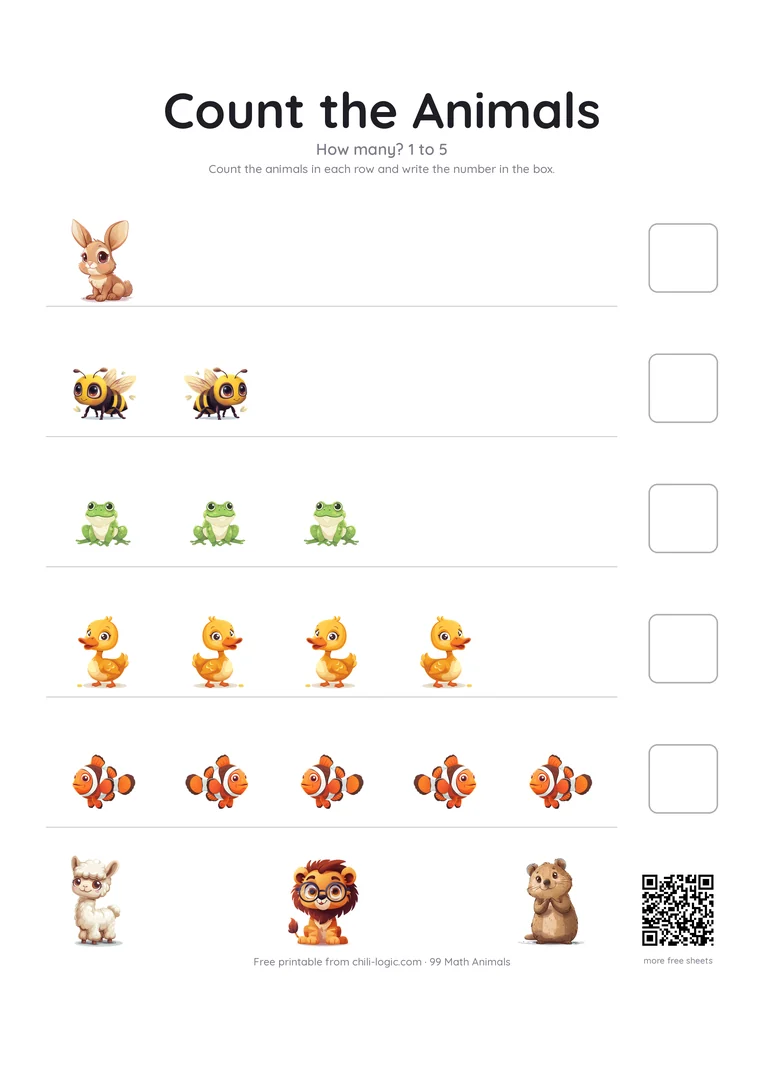
A row of animals, a box at the end, one number to write. The row gets longer as the count goes up, so the quantity is something a child can see before they can count it.
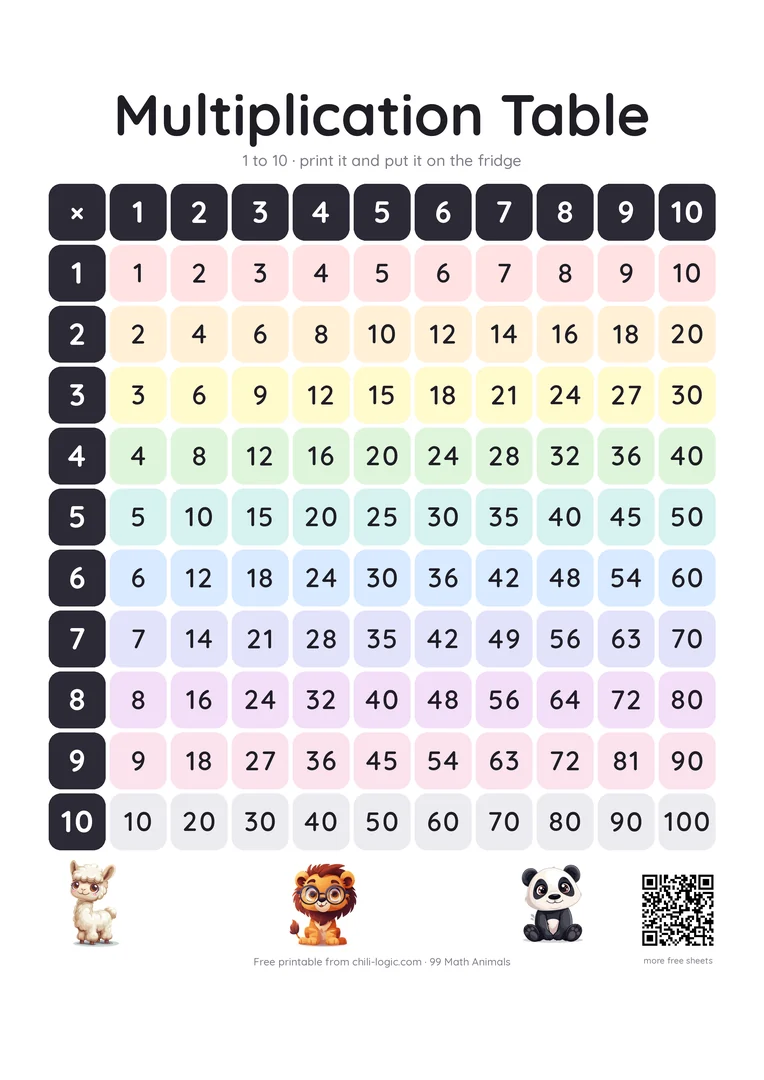
The whole grid on one page, a colour per row, big enough to read from across the kitchen. Made for the fridge door rather than for a test.
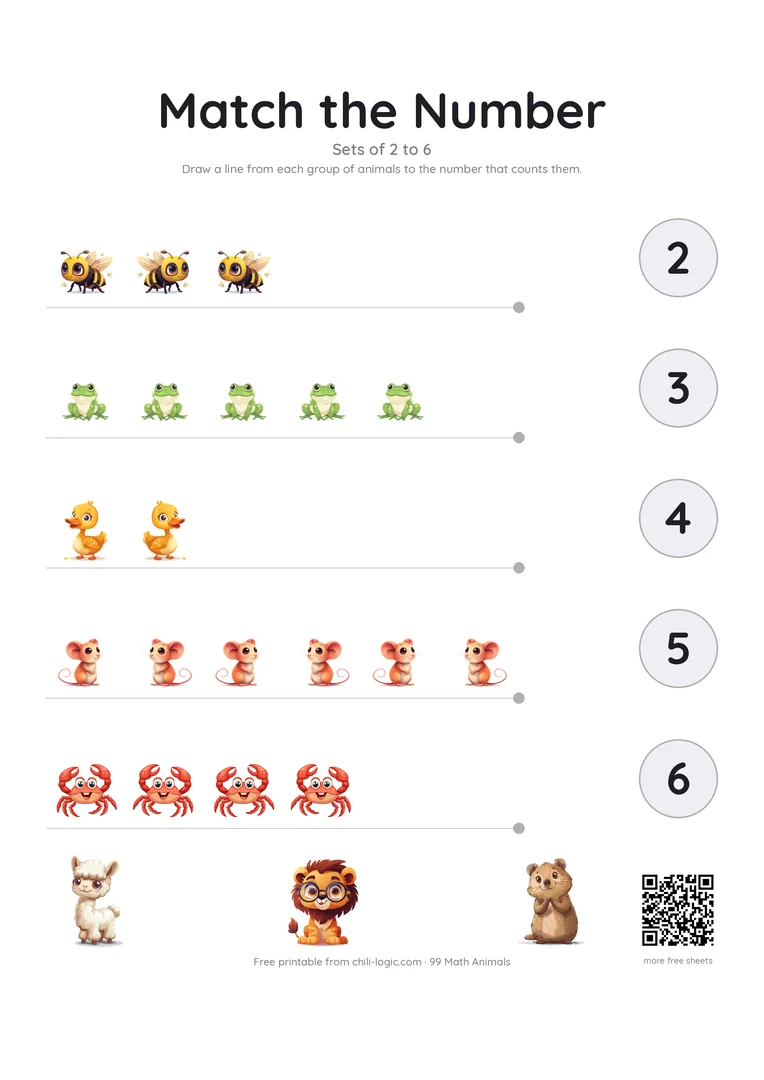
Groups of animals down one side, numbers down the other, joined with a pencil line. The numbers are deliberately out of step with the rows, so the page cannot be finished by ruling five straight lines across it.
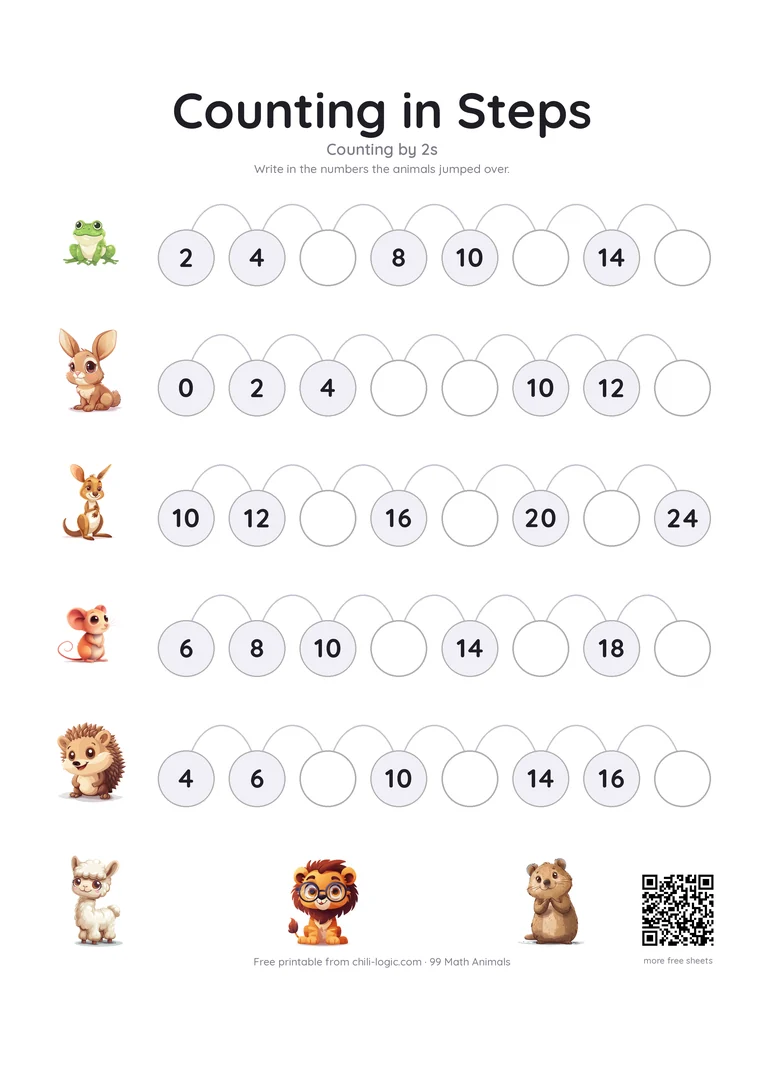
Three pages of stepping-stone tracks — twos, fives and tens — with an arc drawn over every hop. The arc is the point: it shows that each step is the same distance, which a row of numbers with holes in it does not.
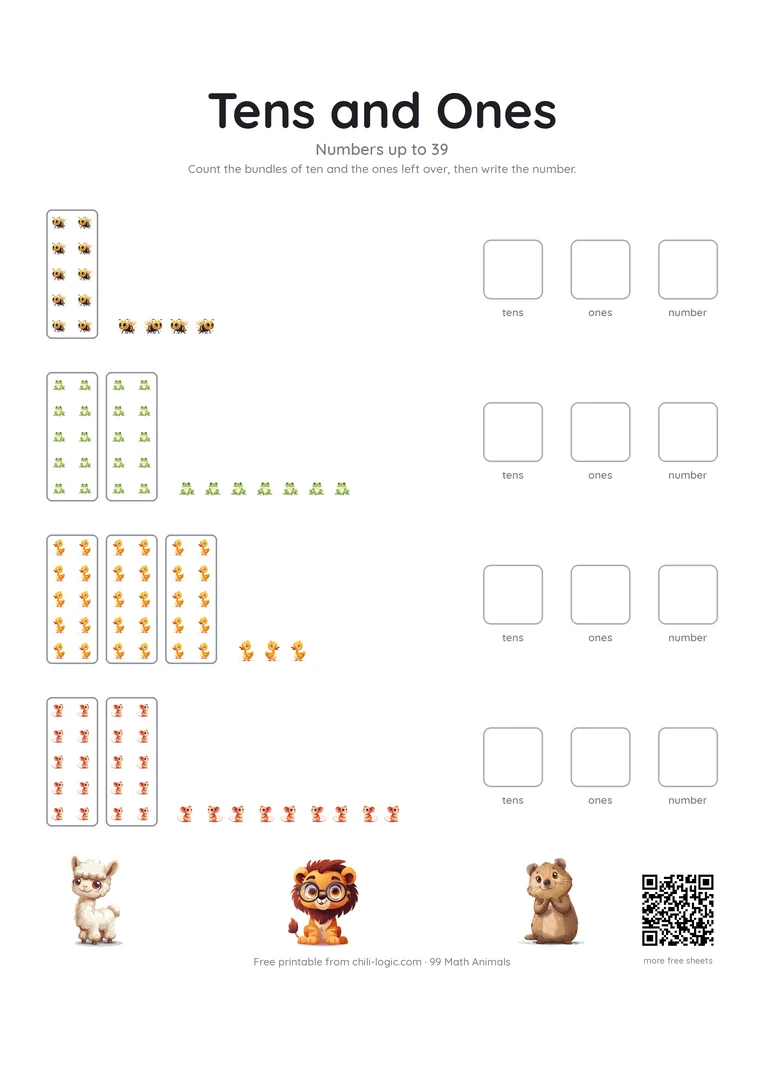
A ten is drawn as ten animals inside a frame; the leftovers stand loose beside it. Three pages, and the third one drops the pictures entirely — which is the page most printables leave out and the one that shows whether place value has actually landed.
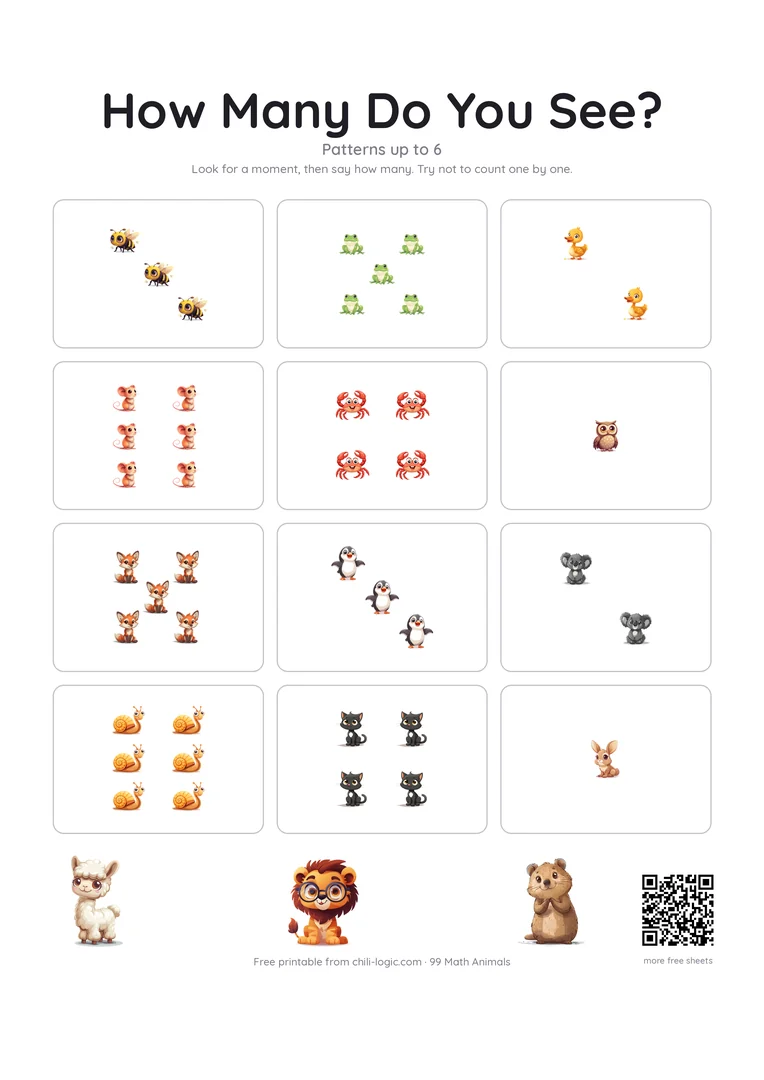
Twenty-four cards to cut out and flash. Page one uses dice faces, page two a five-and-some frame — the two arrangements a child has already met, because recognising a quantity needs something familiar to recognise.
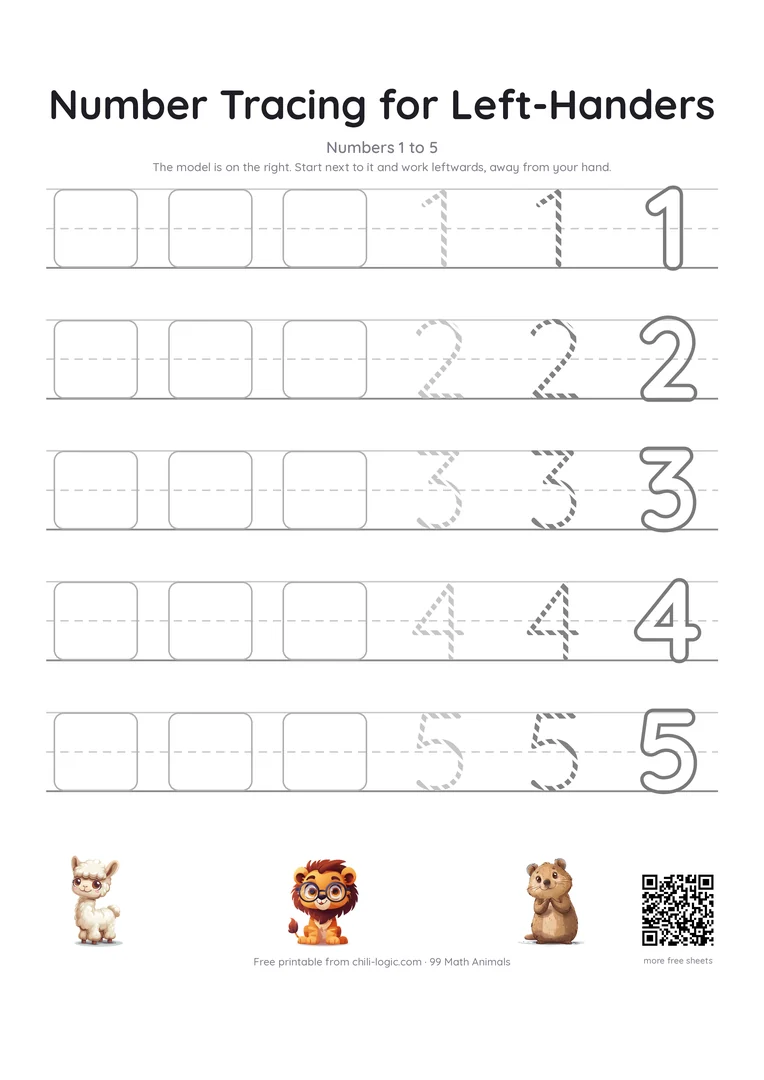
The row is mirrored. The model sits at the right-hand end, every practice slot is to its left, and the trail fades as it goes — so the reference is always on the side the writing hand has not reached. A left hand covers what it has just passed, which on an ordinary sheet is the model.
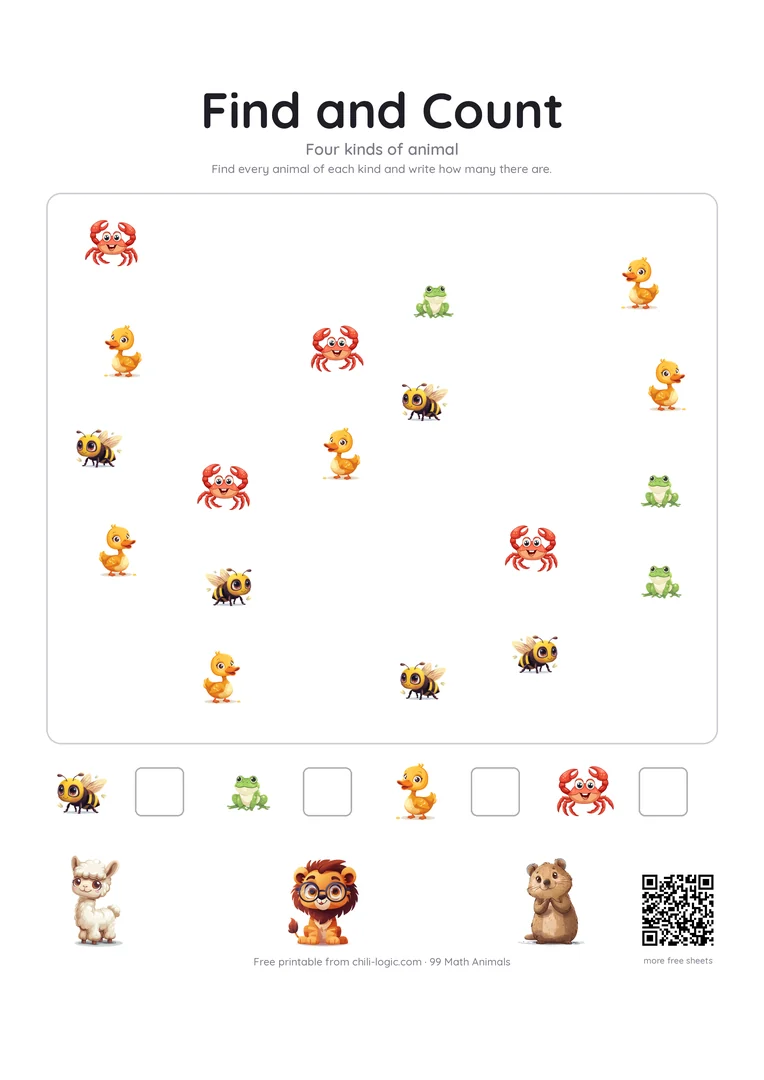
Mixed animals scattered across the page, and a box for each kind underneath. Unlike a tidy row, the set has to be built before it can be counted — and then kept track of, which is where children who count perfectly still get the wrong answer.
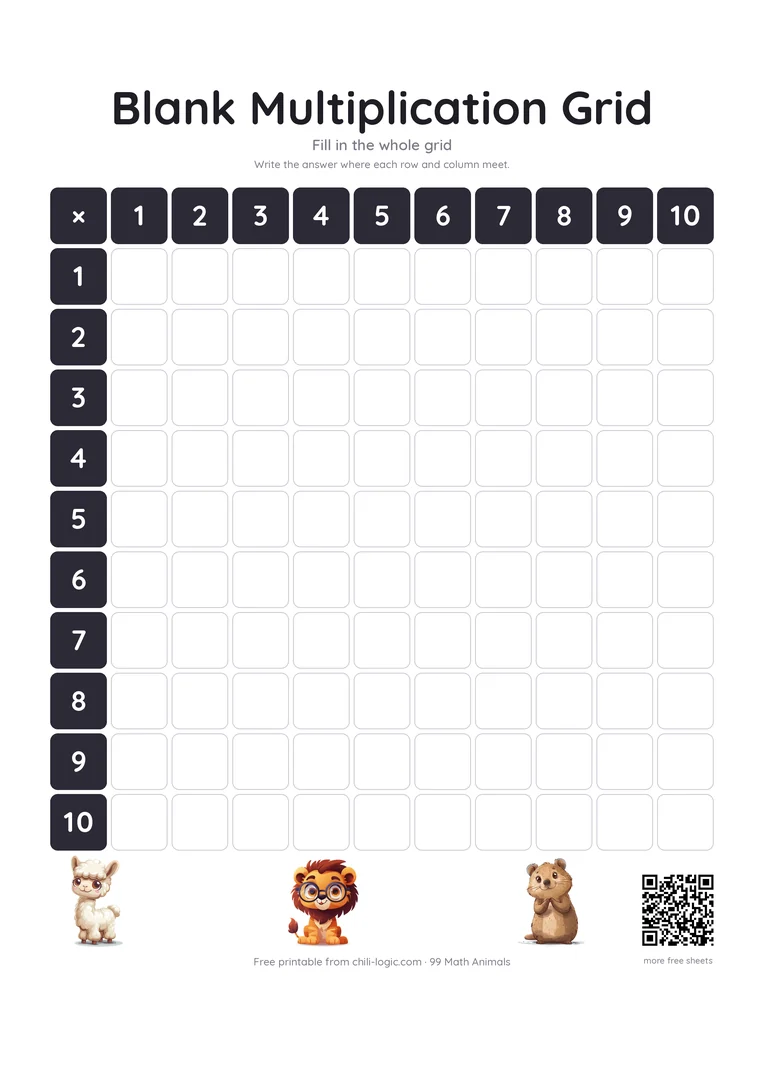
The empty companion to the reference chart. Page two fills in the 1, 2, 5 and 10 rows and columns — the facts most children already own — which turns 100 unknown squares into the 36 that actually have to be learned.
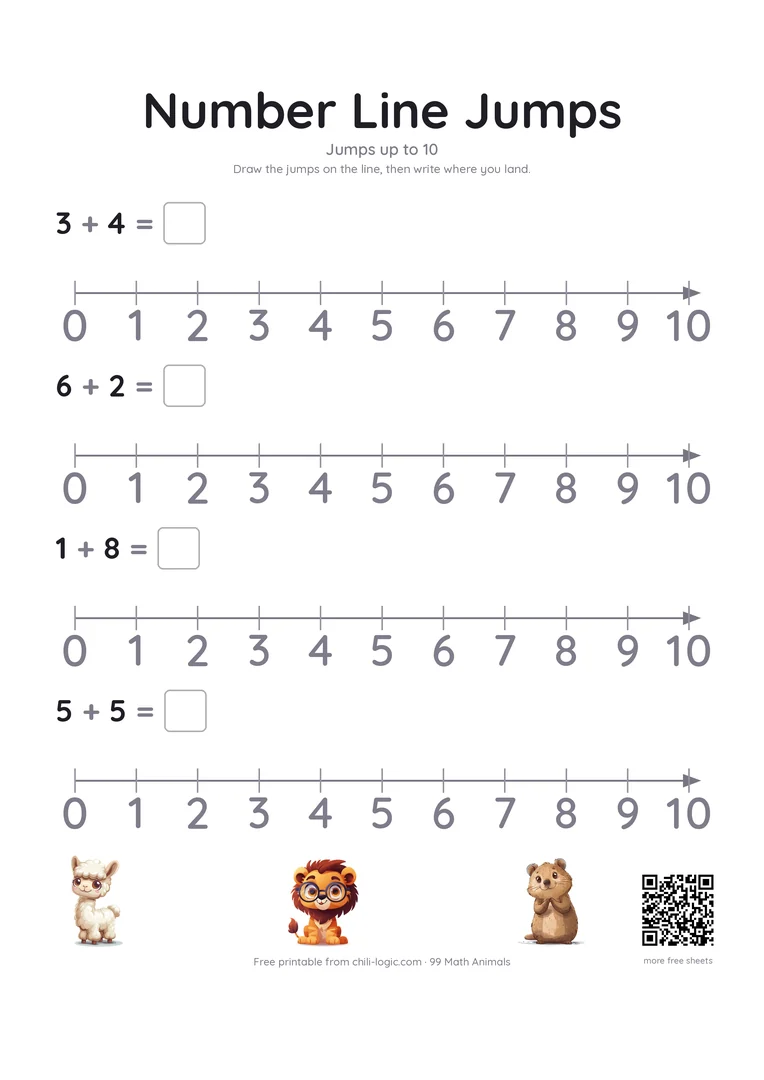
The line is left empty and your child draws the hops. A sheet with the arcs already printed asks them to read someone else's picture — and reading a number line is far easier than building one.
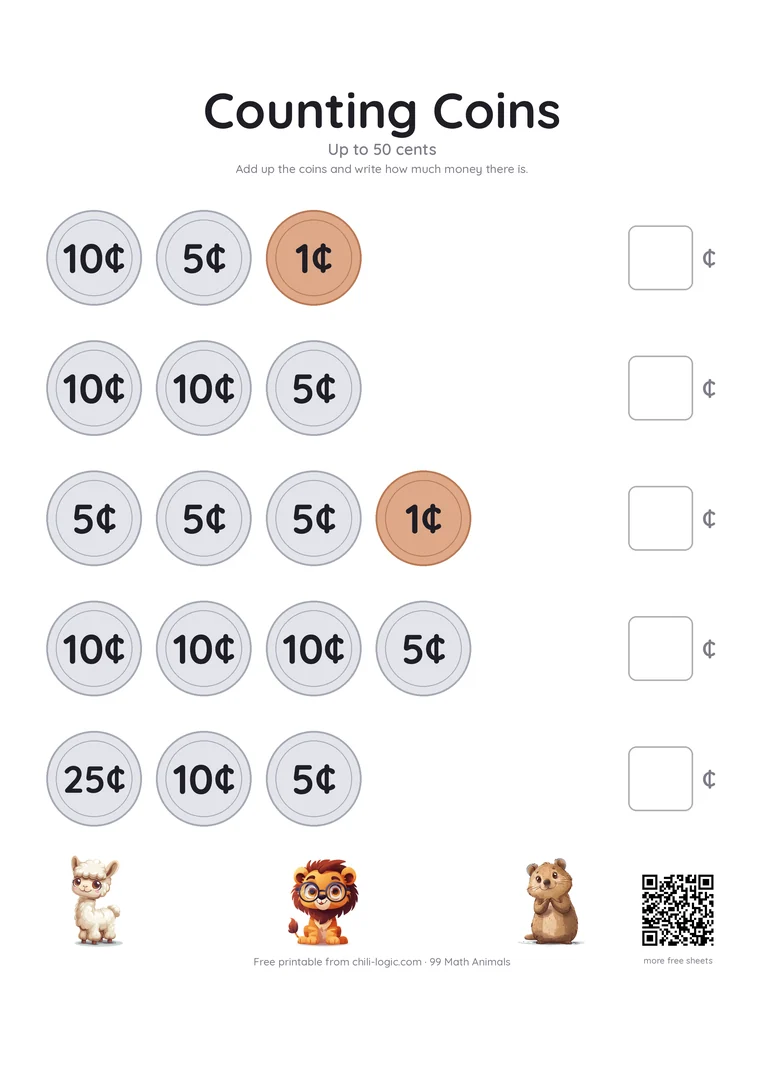
Real US denominations — pennies, nickels, dimes and quarters — laid out in rows to add up. Each page keeps to one unit, because mixing dollars and cents into a single answer needs decimals, which are years away.
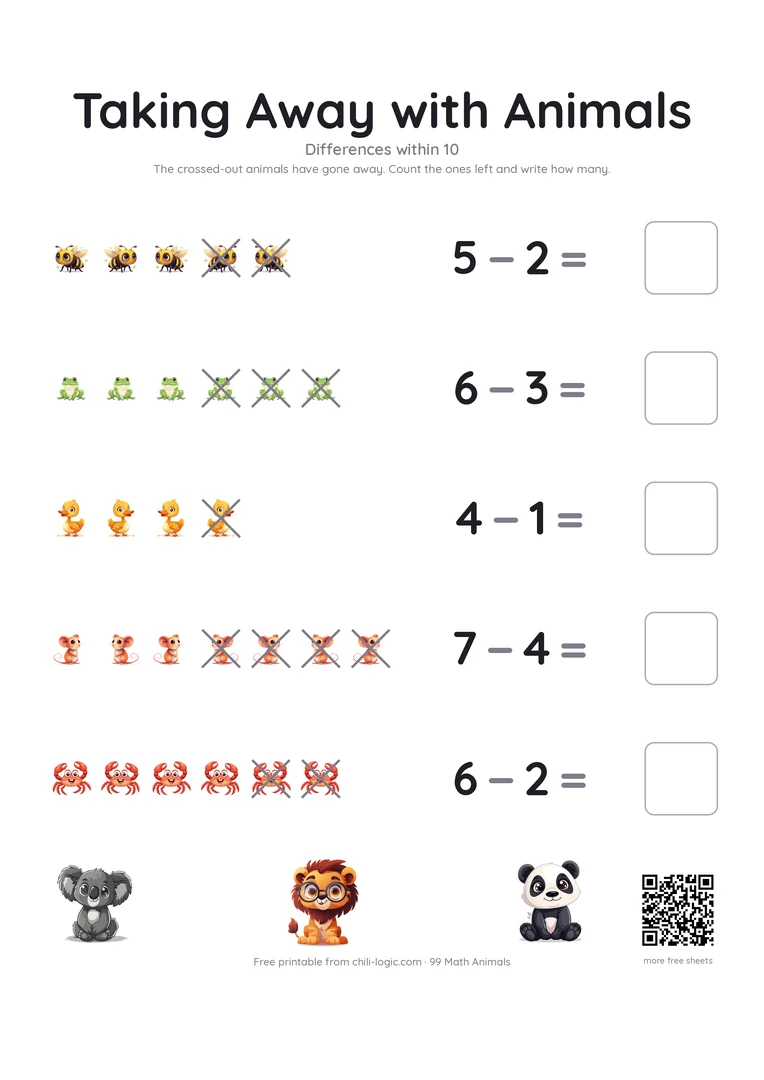
One group with part of it crossed out, and the equation beside it. The animals that went away stay on the page, so the answer can be counted rather than recalled.
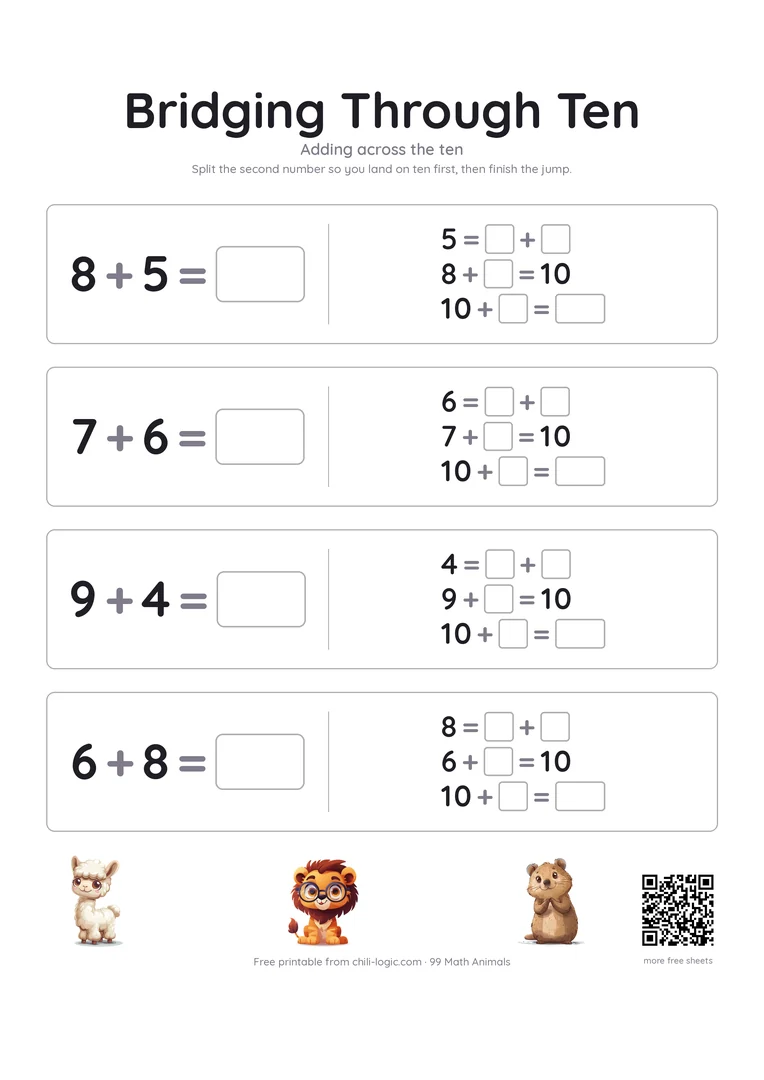
Eight tasks that cross the ten, each printed with the method beside it: split the second number, land on ten, finish the jump.
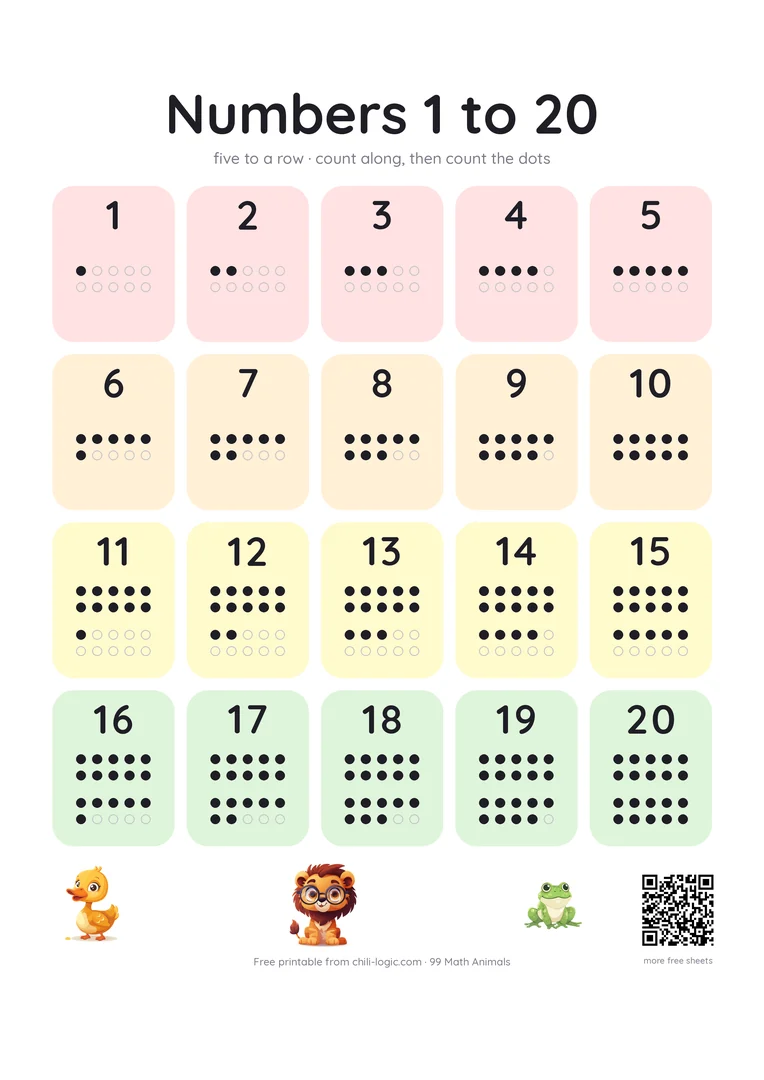
Four rows of five, and under every number its amount as dots. Thirteen shows up as a full ten and three more — which is the whole idea of the teen numbers, and the reason this is not just the hundred chart cut short.
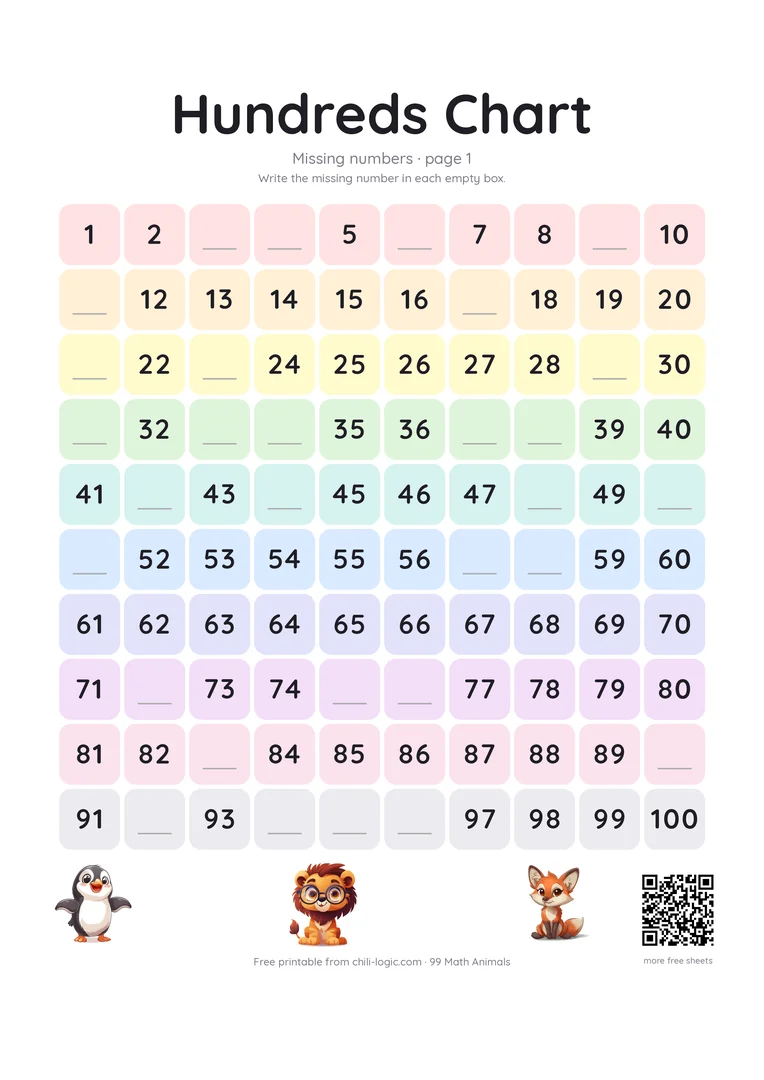
The hundred chart with holes in it. Two pages with thirty gaps each in different places, and a third where only the tens are missing — the column a child is meant to notice.
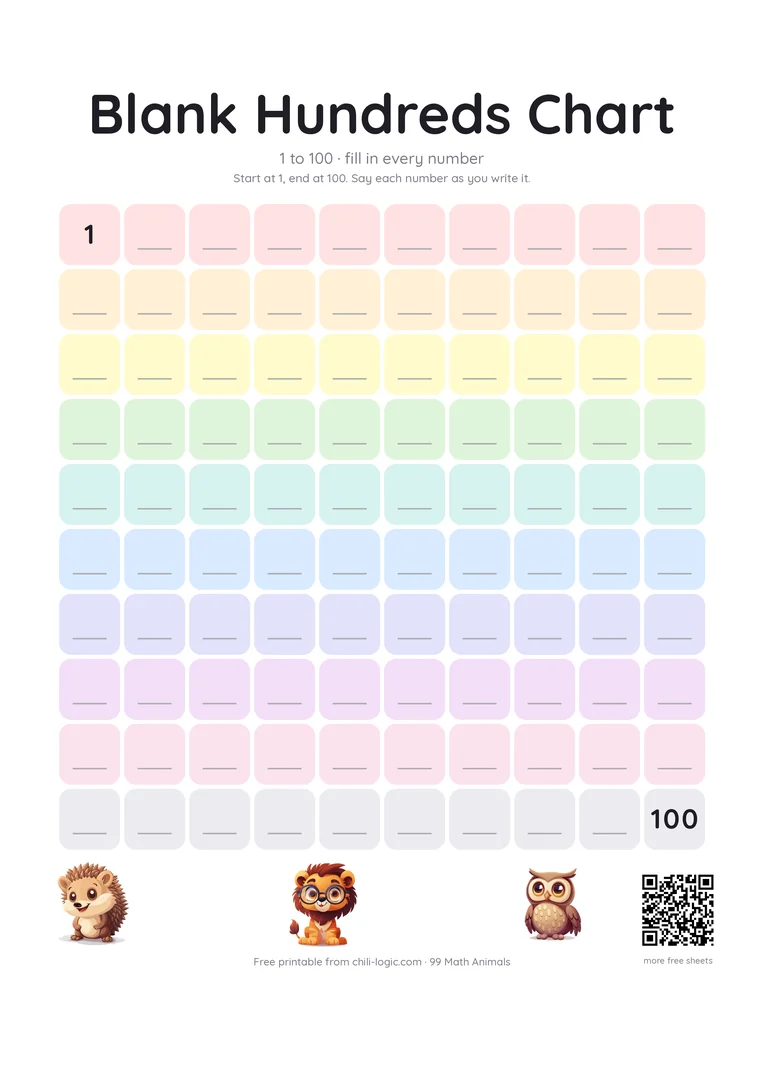
An empty ten-by-ten grid with only 1 and 100 printed. Writing all hundred numbers, in order, saying each one, is a bigger deal than it looks — and the rows are tinted so the tens pattern still shows once it is filled.
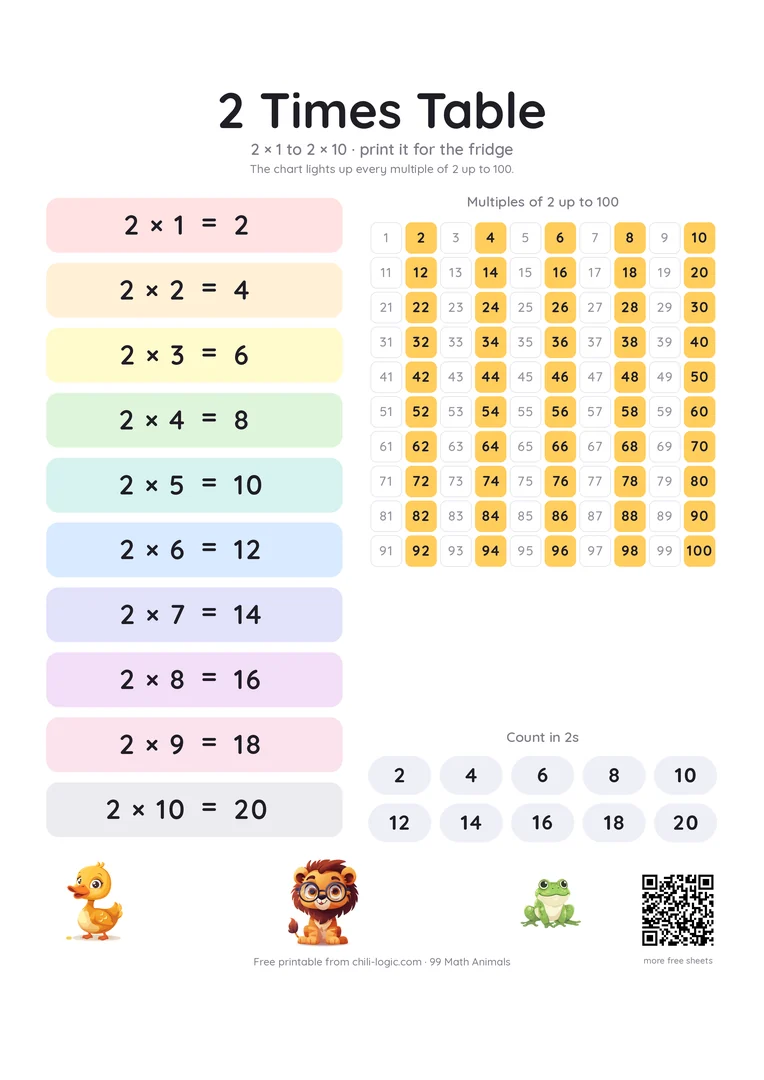
One table, one page: 2 × 1 to 2 × 10 big enough for the fridge, the multiples of 2 lit up on a hundred chart, and a practice page with the answers taken away.
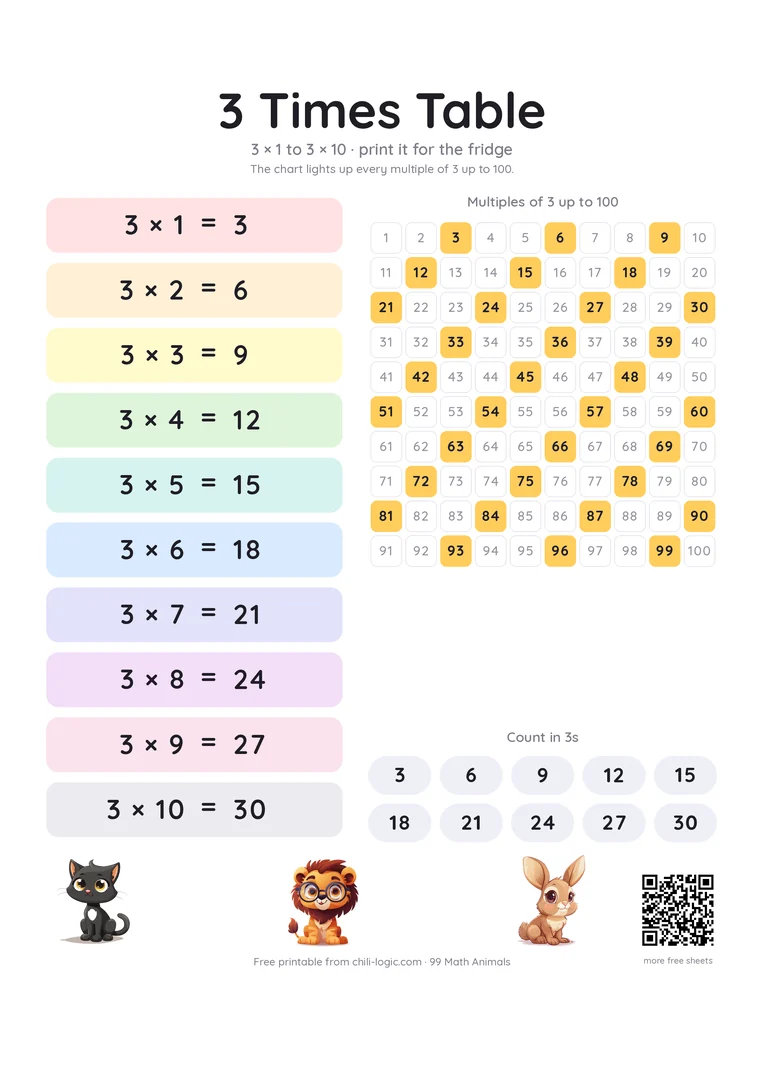
One table, one page: 3 × 1 to 3 × 10 big enough for the fridge, the multiples of 3 lit up on a hundred chart, and a practice page with the answers taken away.
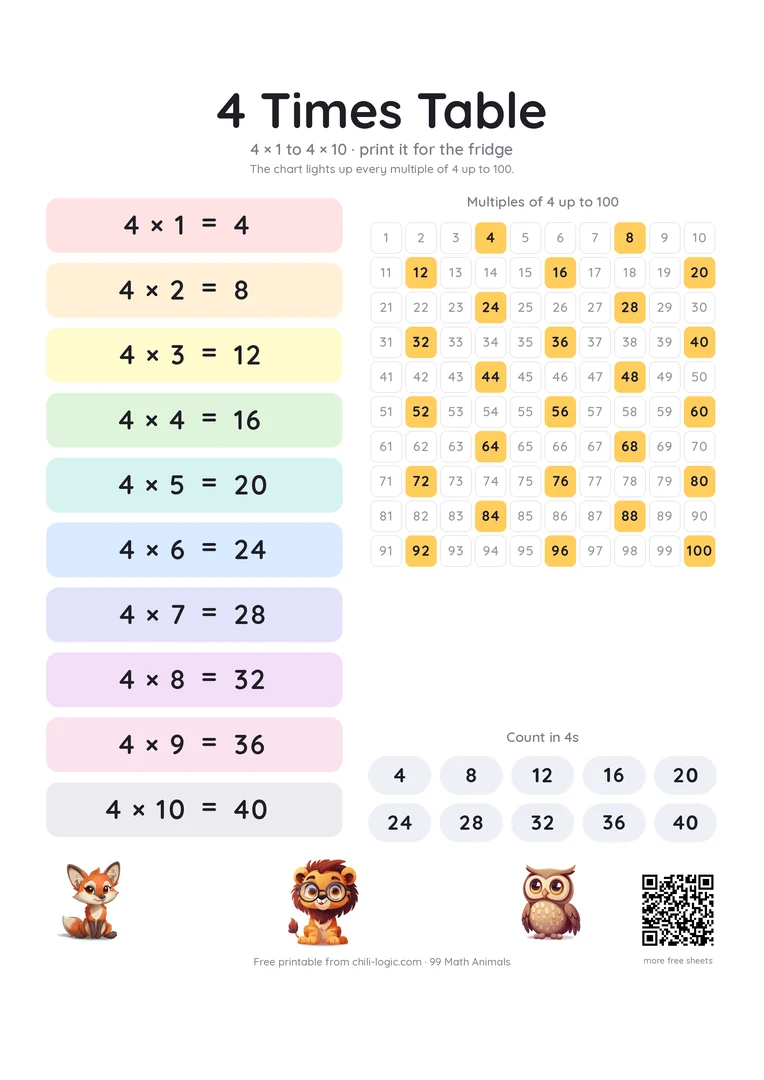
One table, one page: 4 × 1 to 4 × 10 big enough for the fridge, the multiples of 4 lit up on a hundred chart, and a practice page with the answers taken away.
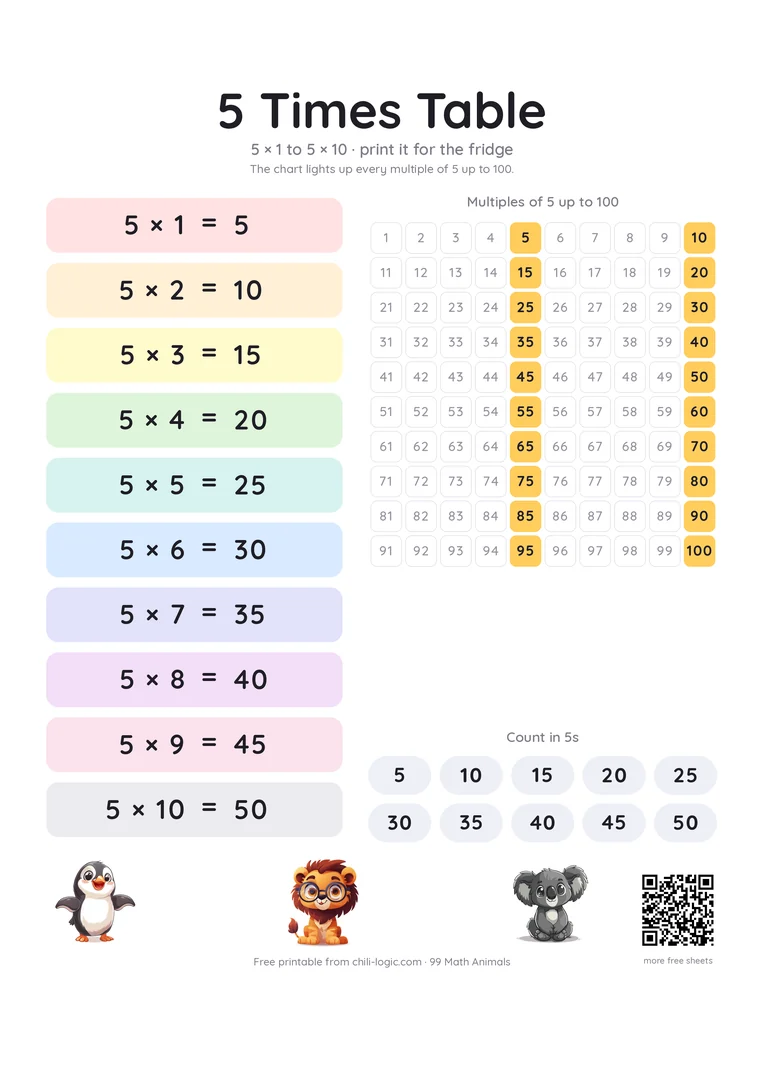
One table, one page: 5 × 1 to 5 × 10 big enough for the fridge, the multiples of 5 lit up on a hundred chart, and a practice page with the answers taken away.
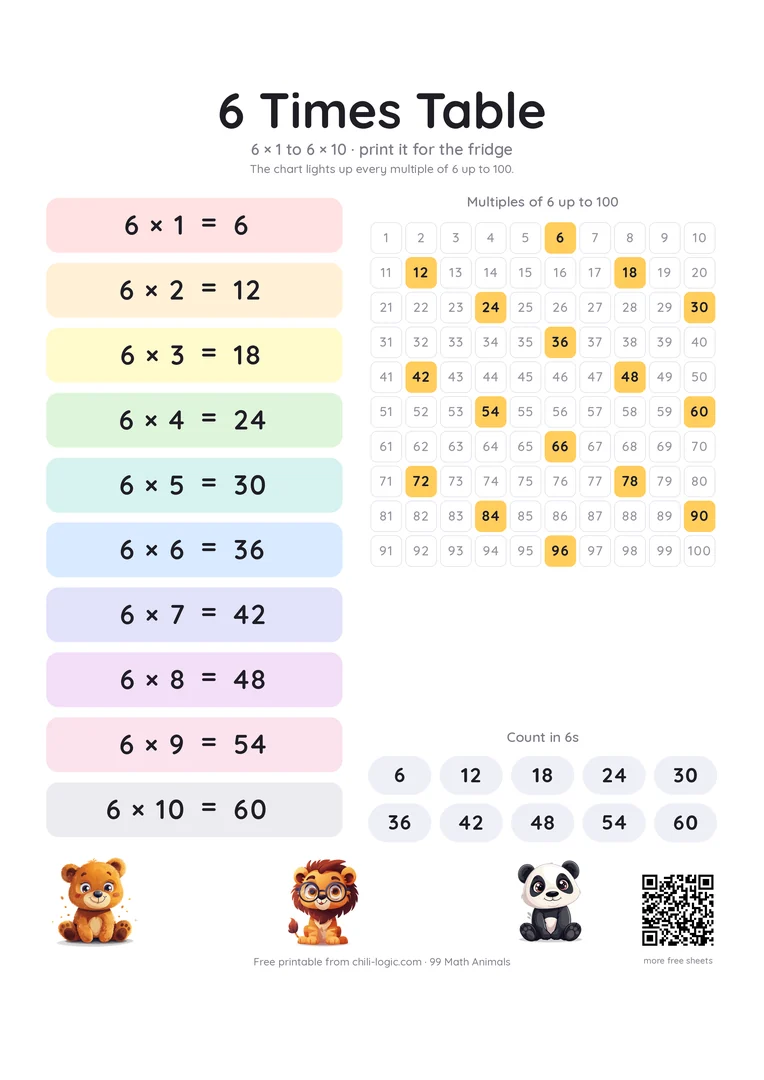
One table, one page: 6 × 1 to 6 × 10 big enough for the fridge, the multiples of 6 lit up on a hundred chart, and a practice page with the answers taken away.
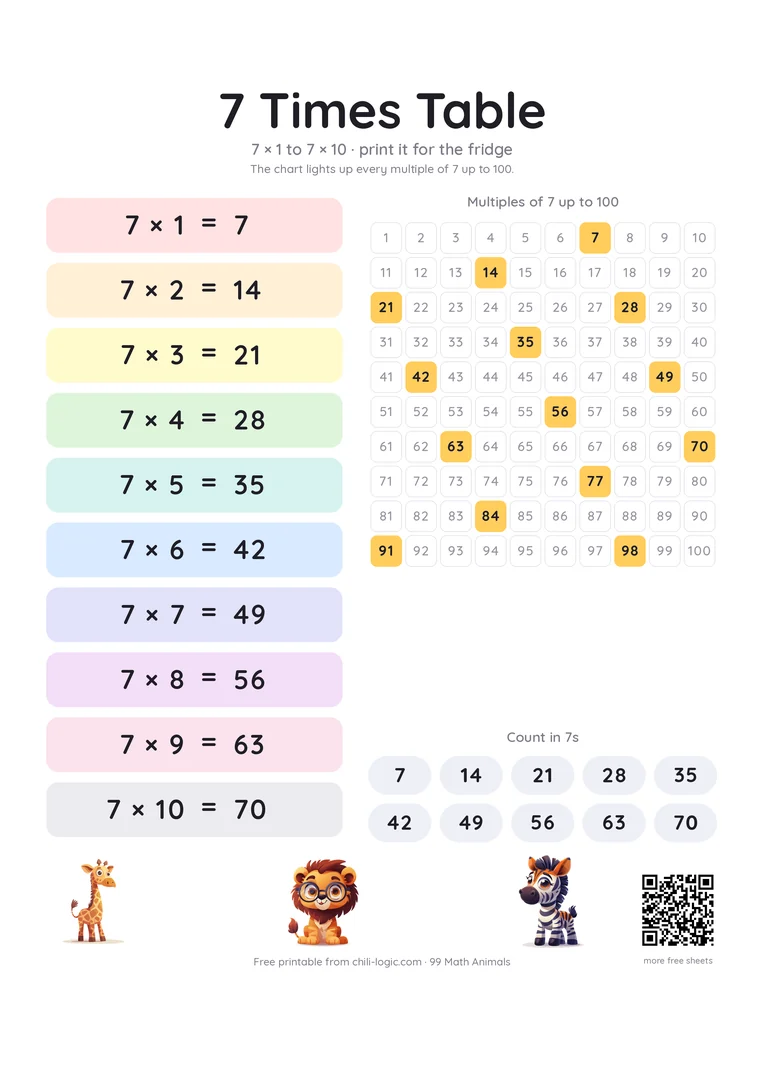
One table, one page: 7 × 1 to 7 × 10 big enough for the fridge, the multiples of 7 lit up on a hundred chart, and a practice page with the answers taken away.
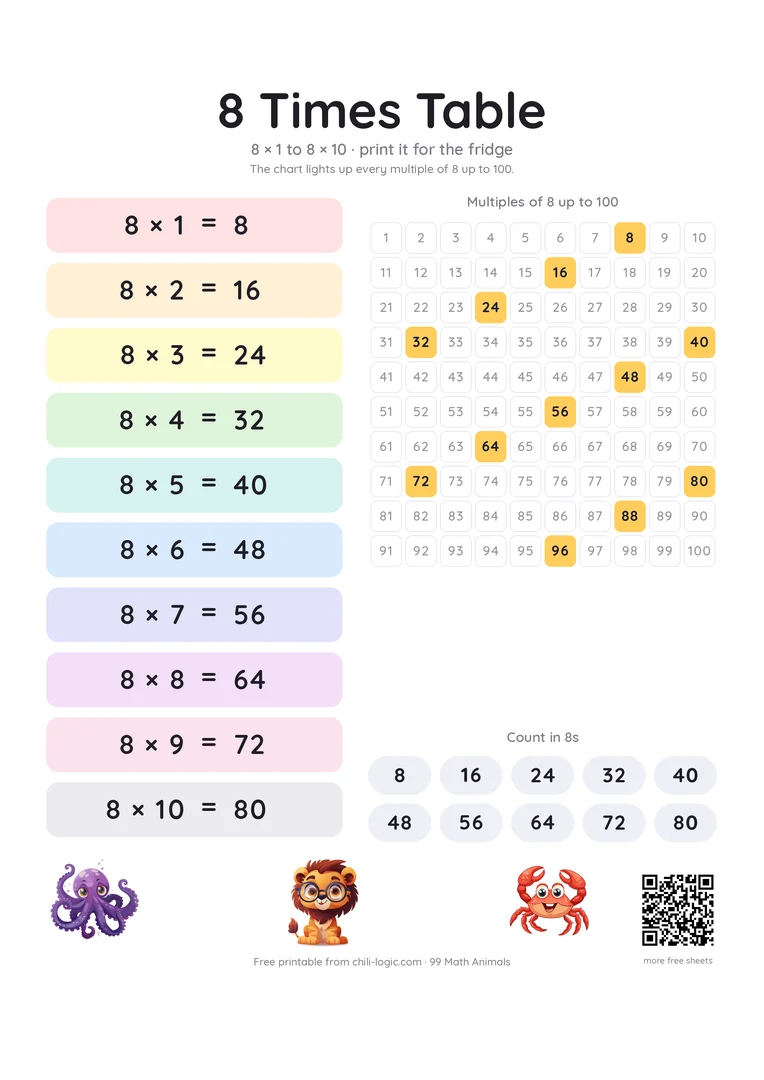
One table, one page: 8 × 1 to 8 × 10 big enough for the fridge, the multiples of 8 lit up on a hundred chart, and a practice page with the answers taken away.
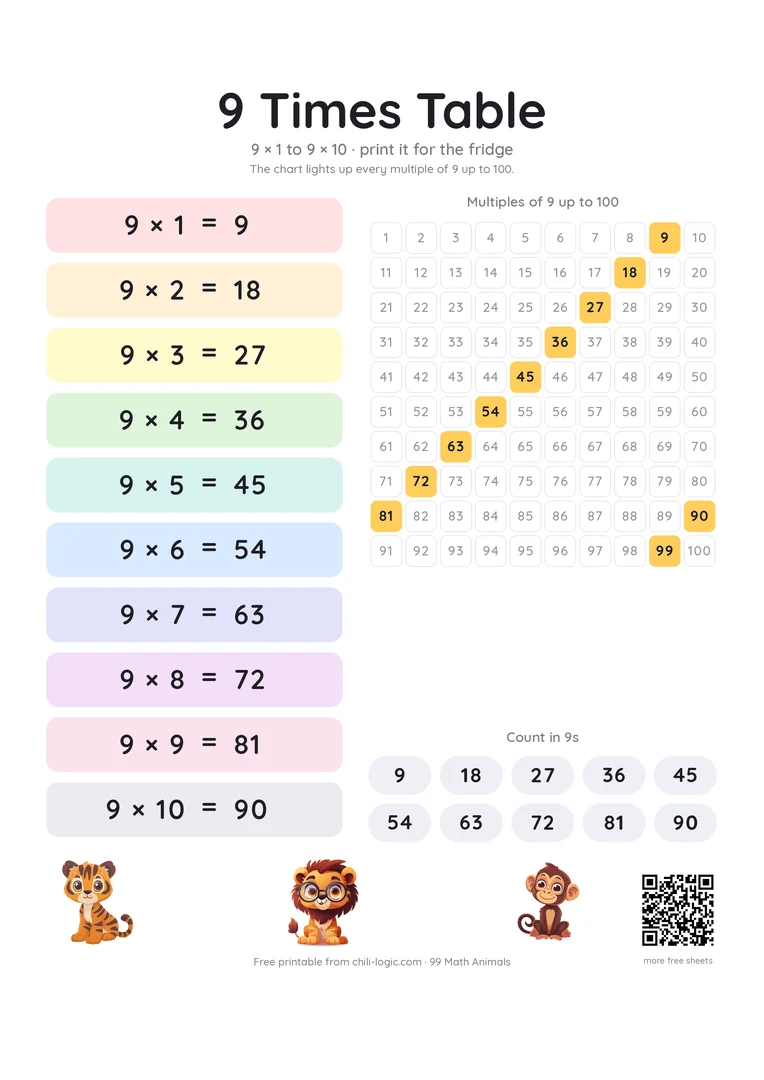
One table, one page: 9 × 1 to 9 × 10 big enough for the fridge, the multiples of 9 lit up on a hundred chart, and a practice page with the answers taken away.
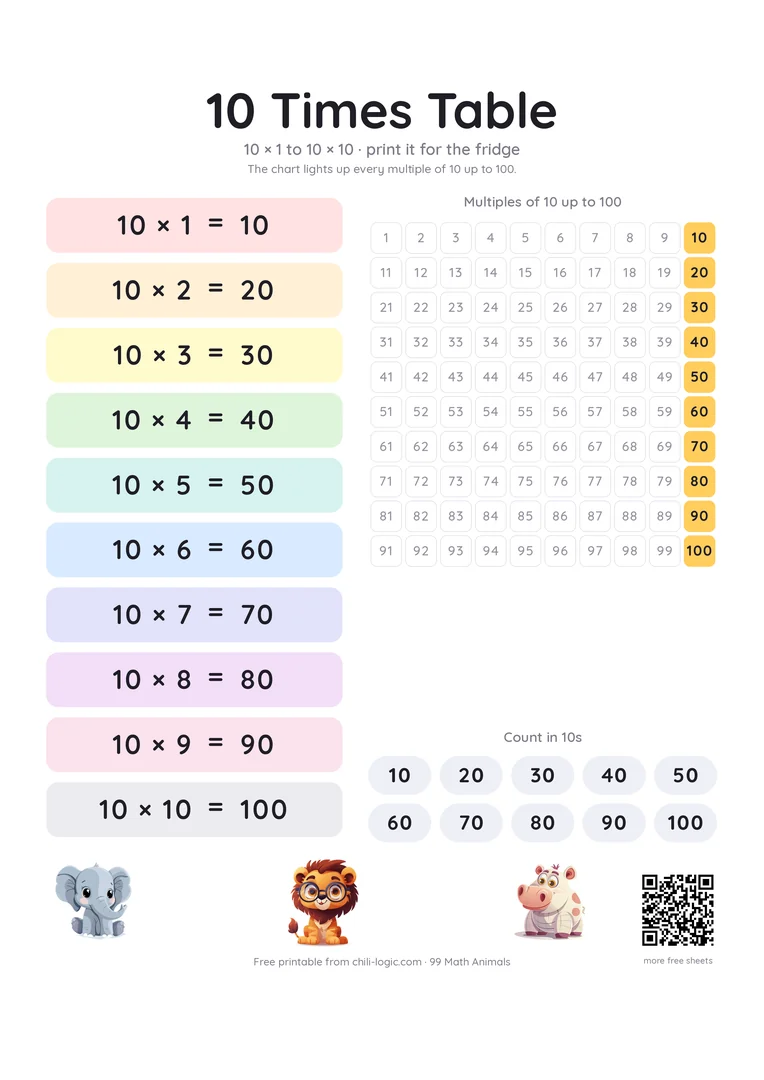
One table, one page: 10 × 1 to 10 × 10 big enough for the fridge, the multiples of 10 lit up on a hundred chart, and a practice page with the answers taken away.
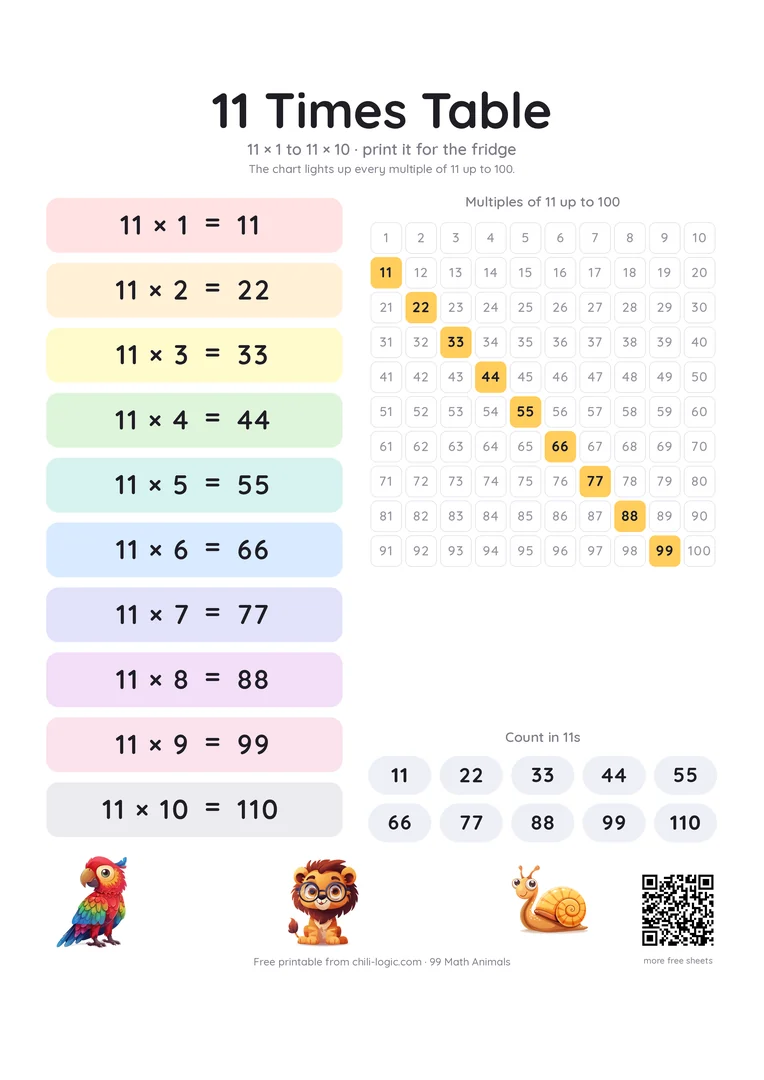
One table, one page: 11 × 1 to 11 × 10 big enough for the fridge, the multiples of 11 lit up on a hundred chart, and a practice page with the answers taken away.
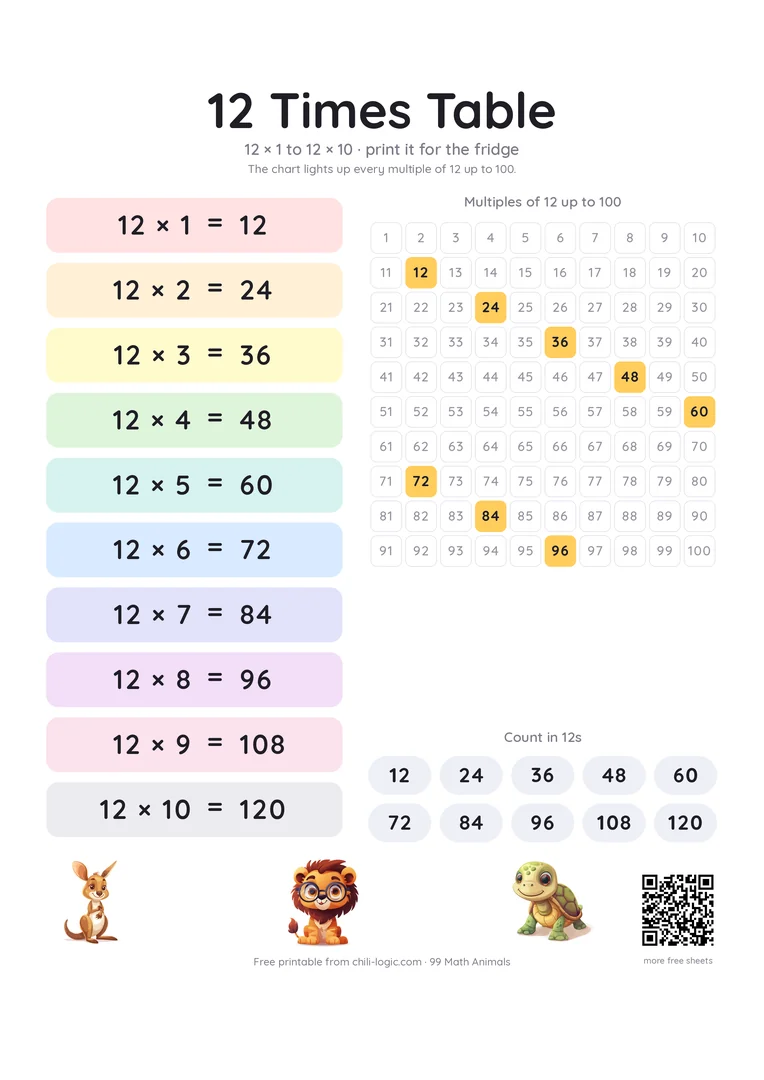
One table, one page: 12 × 1 to 12 × 10 big enough for the fridge, the multiples of 12 lit up on a hundred chart, and a practice page with the answers taken away.
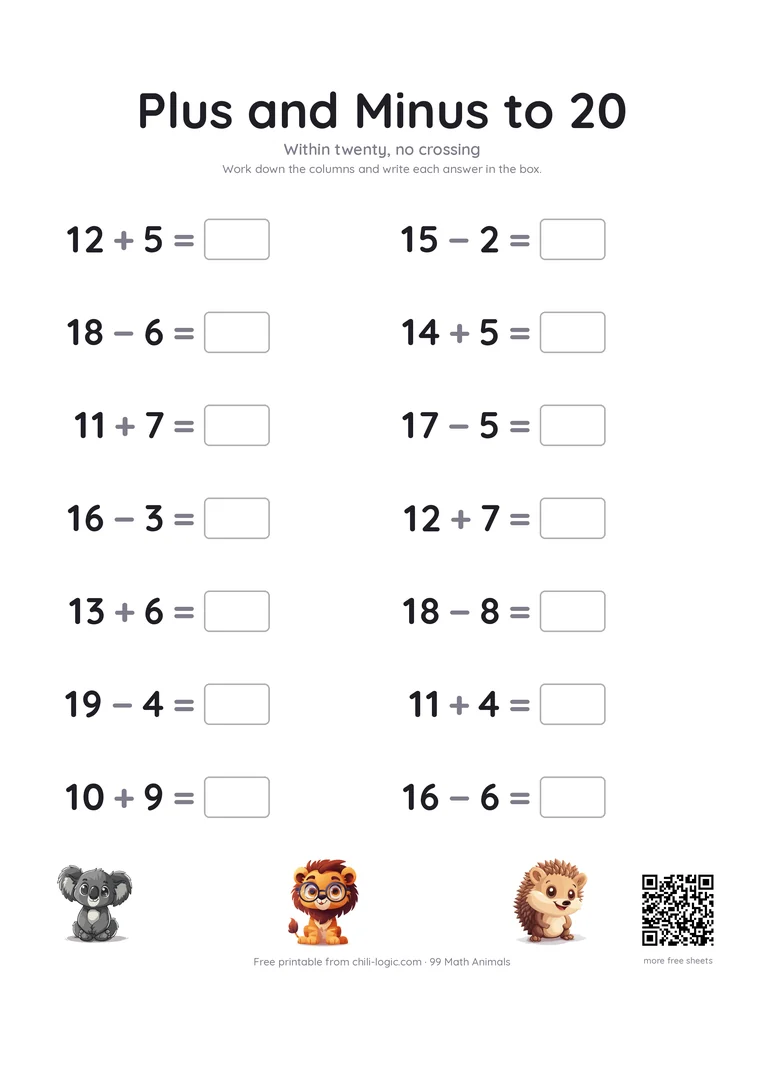
Twenty-eight mixed problems in two columns. The signs alternate down each column, so every line has to be read before it can be answered.
More on how children actually learn to write and count: read our notes for parents