


Number line jumps
The line is left empty and your child draws the hops. A sheet with the arcs already printed asks them to read someone else's picture — and reading a number line is far easier than building one.
How to use it
There is one mistake worth watching for, and it is almost universal. Asked to jump three from five, children count the tick they are standing on as the first jump and land on seven instead of eight. The hop is the gap between ticks, not the tick — and a pre-drawn arc hides the error completely, which is why nothing is drawn here. Say the jumps out loud together the first few times: six, seven, eight. Page two mixes in subtraction, so the direction has to be chosen rather than assumed.
Every page in this pack
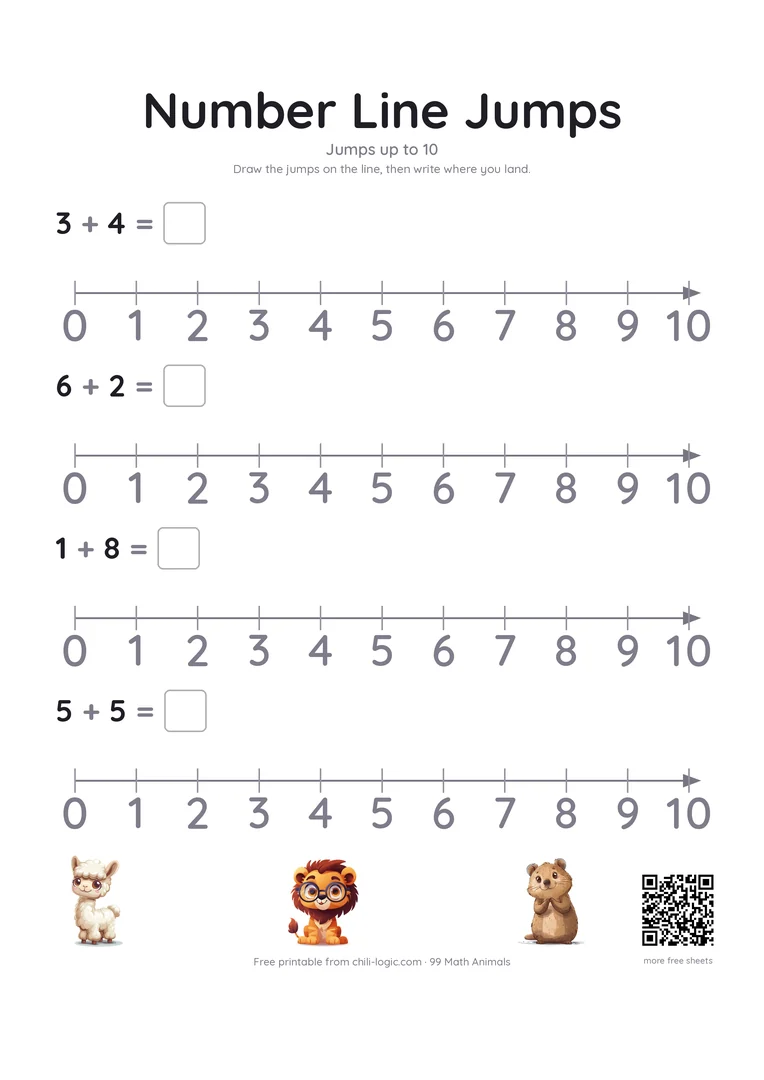
Jumps up to 10
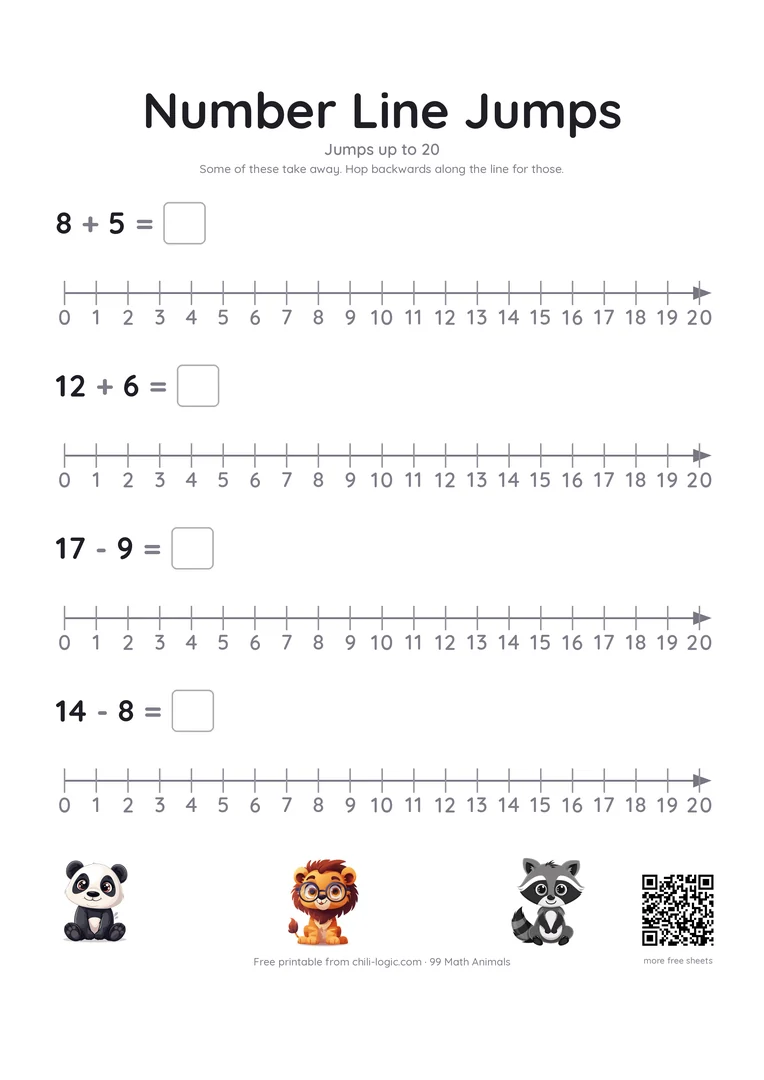
Jumps up to 20
Printing notes
- Print at 100%, not "fit to page" — scaling shrinks the digits and the whole point is that your child writes them at a steady size.
- Black-and-white and draft mode are fine. Nothing on these sheets depends on colour.
- Slide a sheet into a punched pocket and a dry-wipe pen turns one page into a hundred goes.
Where this sheet fits
The thinking behind it
When Do Kids Learn Addition and Subtraction? Ages & Stages — Read the full guide