
Numbers 1 to 20
Four rows of five, and under every number its amount as dots. Thirteen shows up as a full ten and three more — which is the whole idea of the teen numbers, and the reason this is not just the hundred chart cut short.
How to use it
Hang page 1 low enough to be touched. Count along the rows with a finger on each square, then stop on a number and count its dots — the point is the moment a child notices that 14 has a full frame and four more, without anyone saying "place value". Ask "which is more, 9 or 12?" and let the dots settle it.
Page 2 is the same chart with five numbers missing. The dots stay, so a child who cannot yet read the numeral can still work out what goes in the box by counting — and a child who can read it gets to check their answer against the dots.
Every page in this pack
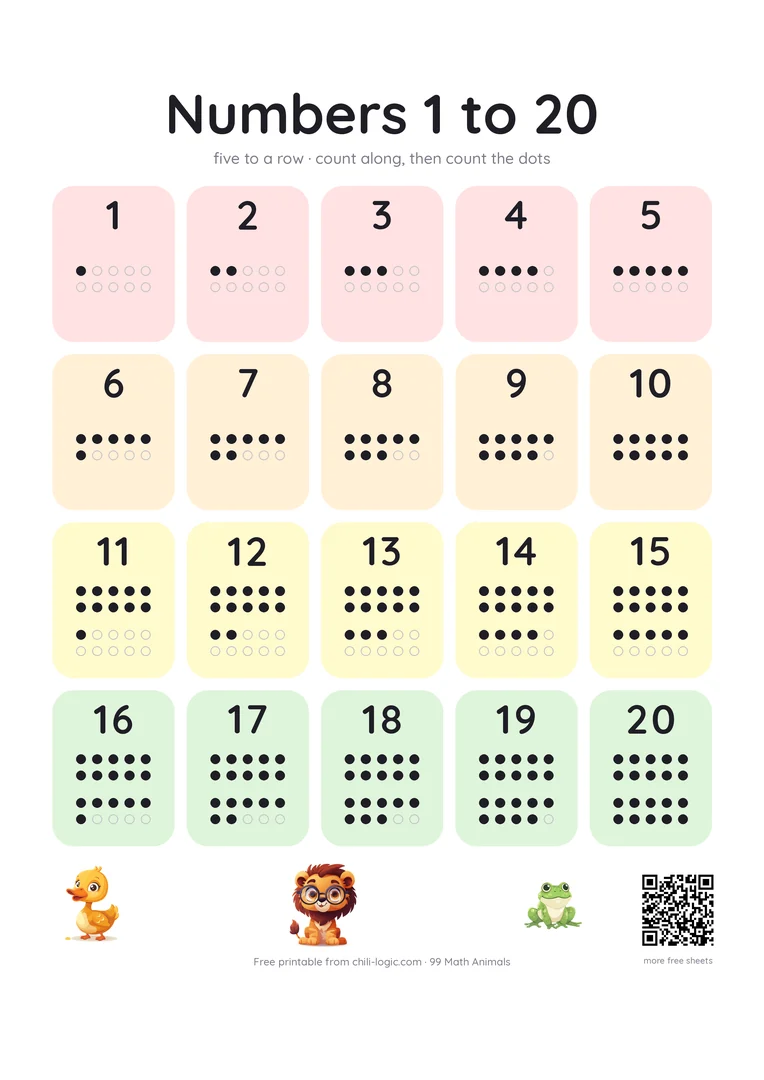
The chart
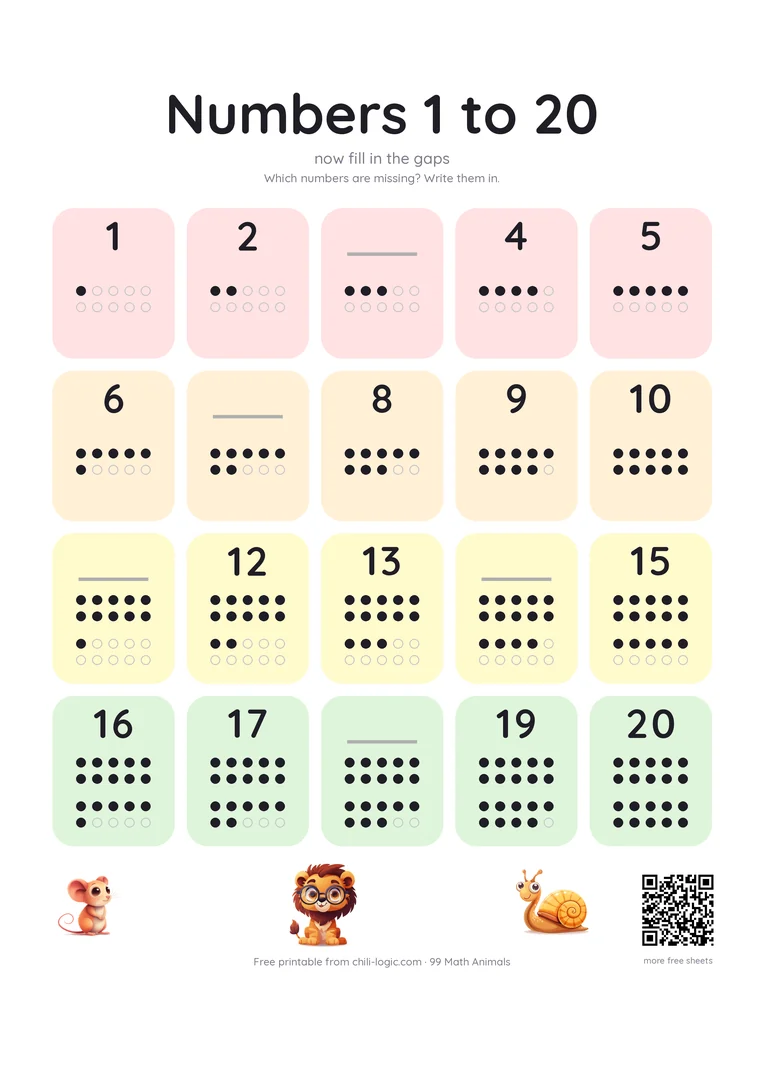
Fill in the gaps
Printing notes
- Print at 100%, not "fit to page" — scaling shrinks the digits and the whole point is that your child writes them at a steady size.
- Black-and-white and draft mode are fine. Nothing on these sheets depends on colour.
- Slide a sheet into a punched pocket and a dry-wipe pen turns one page into a hundred goes.
Where this sheet fits
The thinking behind it
When Do Kids Learn to Count to 10? — Read the full guide