


When Do Kids Learn to Count to 10?
In this article
Most toddlers can recite the numbers from one to ten well before they can count ten real things and land on the right total — those are two different skills, and mixing them up is where most of the worry about "is my child behind" comes from.
Short answer: rote counting to 10 (saying the words in order) usually shows up somewhere between about 2½ and 3½, while counting ten real objects accurately — touching each one once and knowing the last number is the total — tends to follow later, often between 4 and 4½. Both ends of that range are ordinary.
We build a counting app for young kids, so this exact stretch of childhood — a toddler's first wobbly "one, two, free," all the way to a preschooler confidently landing a finger on the tenth block and saying "ten!" — is what we watch happen, over and over, every day. Below is the difference between saying the numbers and actually counting them, the rough order most children move through between about 2 and 4, and why racing toward bigger numbers does not speed any of it up.
What does "counting to 10" actually mean?
There are really three separate skills hiding inside that one phrase. Rote counting is reciting the number words in order, like a rhyme — it can arrive early and does not require understanding a single one of them. One-to-one counting is touching or pointing at each object exactly once while saying one number per touch, in order. Cardinality is the last piece: knowing that the final number you said is the answer to "how many," not just the last word in a list.
A toddler can happily sing to ten and still hand you three crackers when you ask for five, because the singing arrived first and alone.
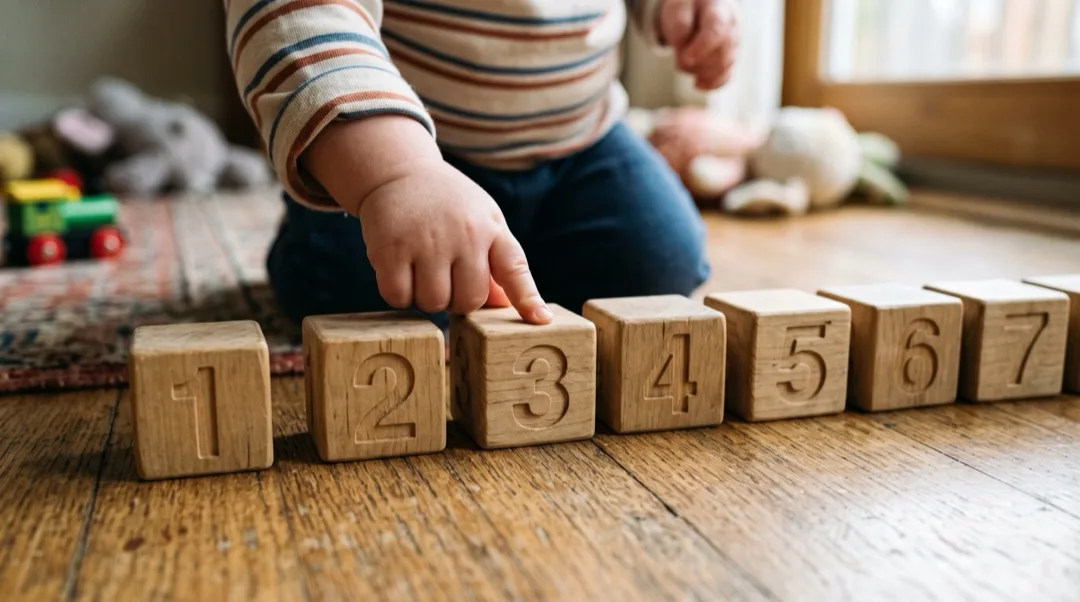
The rough order: age 2 to 4
Every child moves through this at their own pace, so treat the ages below as loose middles, not a checklist to pass or fail:
| Age | What's typical |
|---|---|
| Around 18 months to 2 years | A few number words appear, often out of order and not yet tied to real counting ("two" can just mean "more"). |
| Around 2 to 2½ | Can often show "how many" for 1 or 2 objects at a glance, without counting (called subitizing); "1, 2, 3" starts appearing in the right order. |
| Around 2½ to 3 | Rote counting to 5 or 10 is common, sometimes running together like one long word; counting real objects past 2 or 3 is still unreliable. |
| Around 3 to 3½ | One-to-one counting of 3 to 5 objects gets steadier, though a repeated touch or a skipped object is still normal. |
| Around 4 to 4½ | Counting 10 real objects accurately — one touch, one number, right total — is common, along with knowing the last number said is the answer. |
Why can my child recite to 20 but miscount 5 blocks?
Because reciting is memory and counting is math, and memory usually wins the race by a year or more. A child can hold a flawless "one" through "twenty" in their head the same way they hold a favorite song, with no idea yet that each word corresponds to one more thing. Pushing a child who recites well to "count higher" does not build the harder skill; it just makes the song longer. What actually builds one-to-one counting is small, real, touchable amounts — the kind of counting that produces an answer you can check by looking at the plate.
Signs your toddler is on track
A lot of the real progress at this age does not look like counting at all. You are usually in good shape if your toddler does most of the following, even loosely:
- Says a few number words, in something close to the right order, without being asked.
- Holds up fingers (even the wrong number of them) when asked how old they are.
- Notices an obvious "more" or "less" — a bigger pile of blocks, an emptier plate.
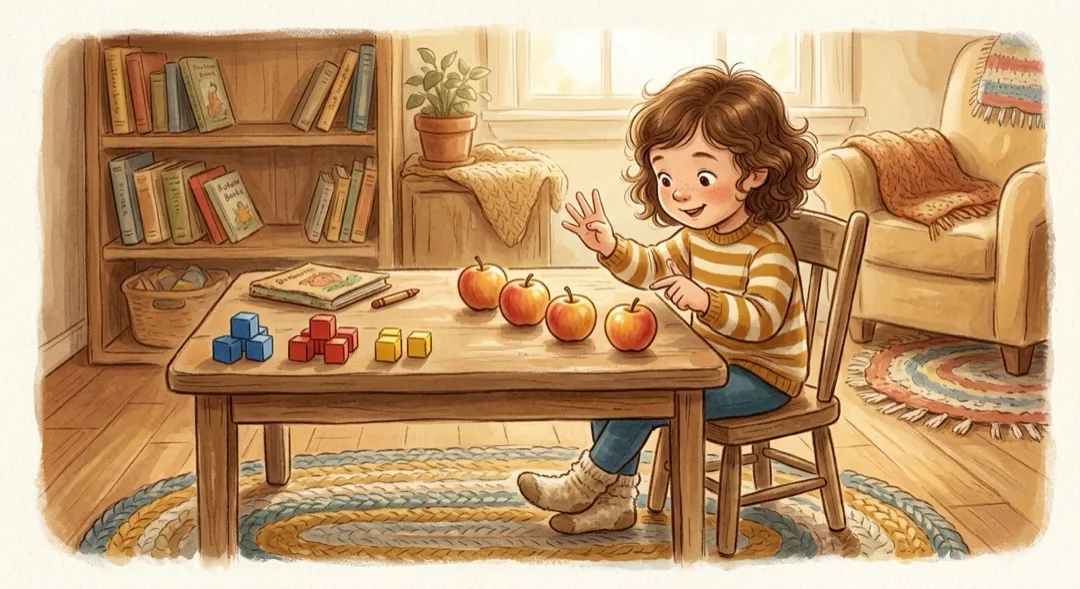
- Points at objects one at a time while counting, even if the numbers said are wrong.
- Enjoys counting rhymes and songs, and joins in on some of the words.
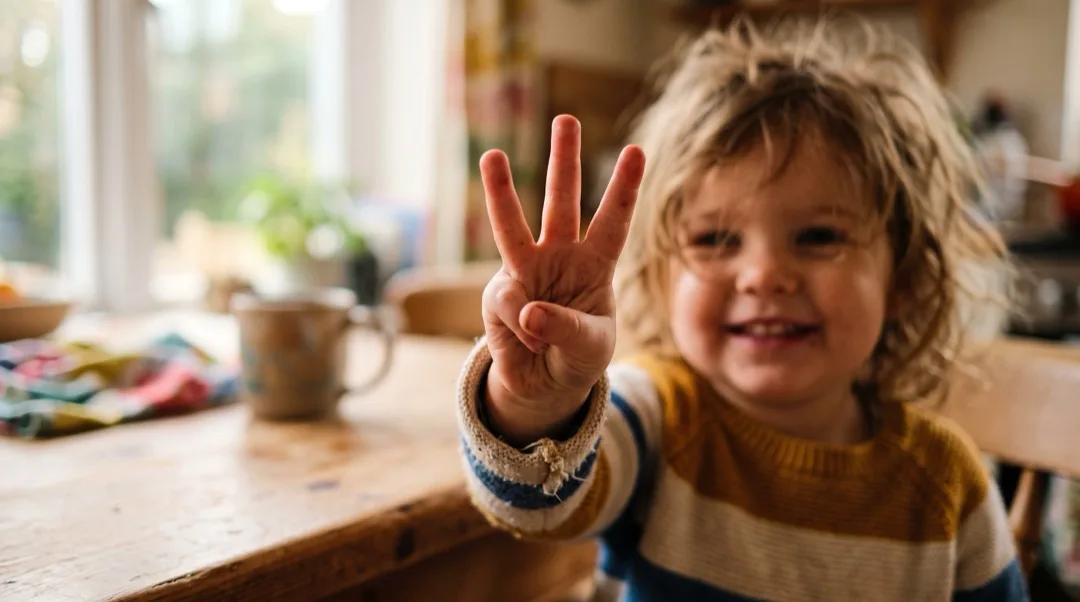
How to help, without turning it into a lesson
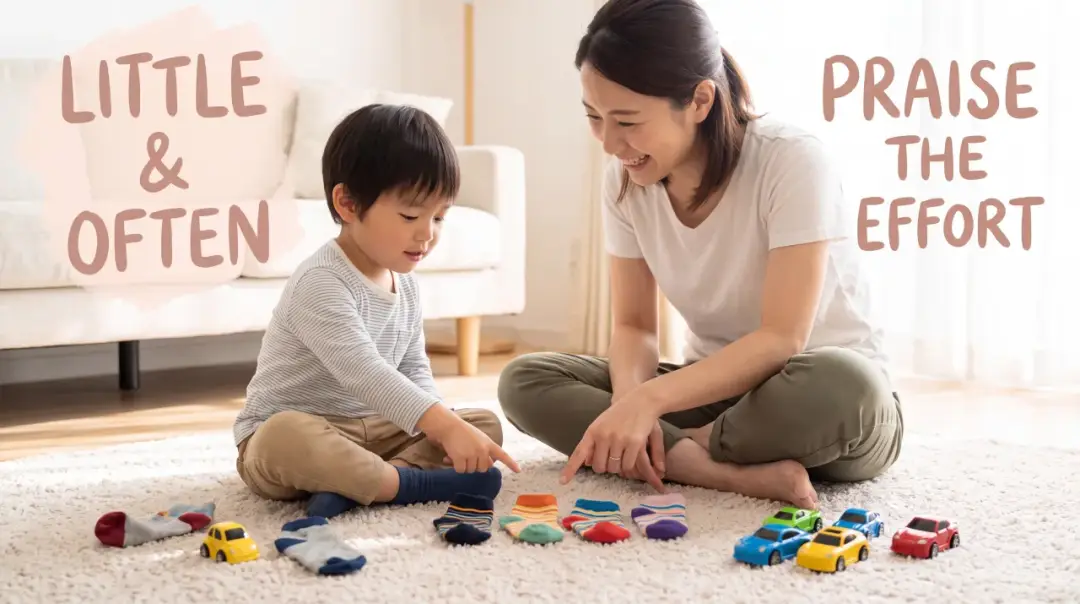
The most useful thing a toddler can do is count small, real things next to you, often and briefly. A few habits that build the skill without turning into drilling:
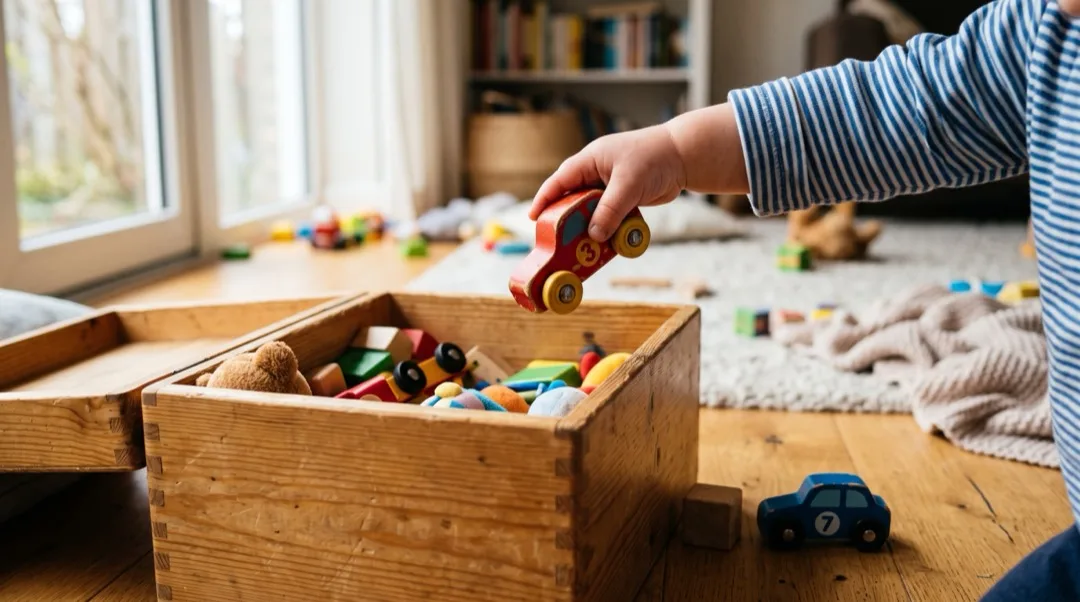
- Count things that are actually there: stairs on the way up, grapes on a plate, toy cars going into a box.
- Ask "how many?" after counting, not just "can you count?" — that question is what builds cardinality.
- Slow down the touch. If your toddler's finger races ahead of their voice, gently hold the object still until the number catches up.
- Stay small on purpose. Five real, accurately counted objects teaches more than twenty recited in a rush.
- Count backward sometimes once forward feels solid — "three, two, one, blast off" is secretly hard and secretly useful.
Counting to 10 vs. counting to 100 — what's the difference?
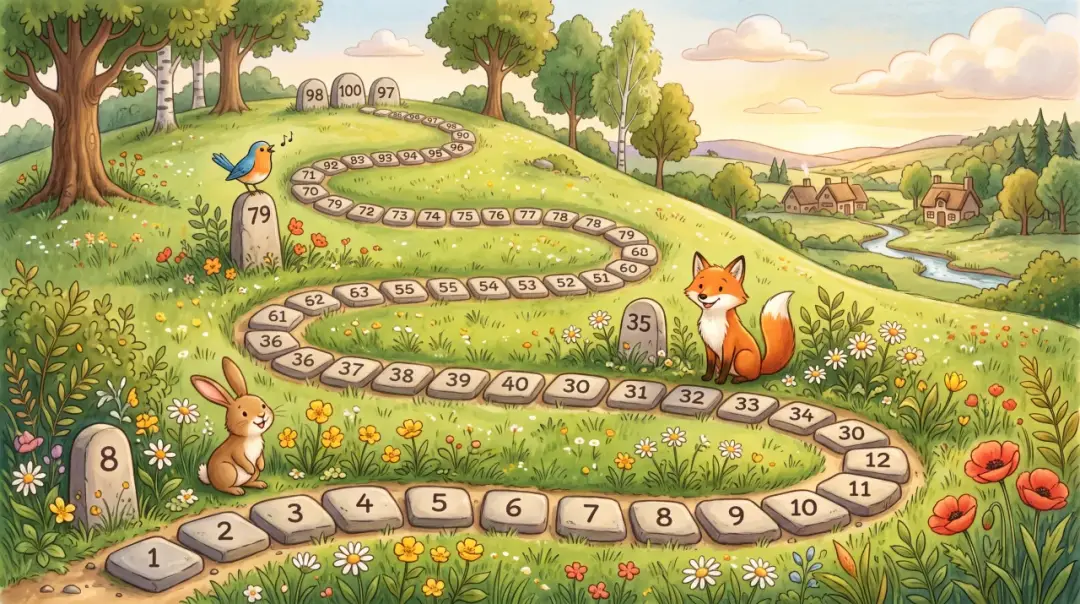
This article is about the foundational skill: small, meaningful counting, usually built between about 2 and 4. Reciting all the way to 100, and counting by tens, is a later milestone that most children reach around age 6, built directly on top of the one-to-one counting covered here. If your child has 10 solidly and you are wondering what comes next, we cover that whole stretch in when do kids learn to count to 100.
When should I worry?
Almost never this early — the range above is wide on purpose. It is worth a calm conversation with your pediatrician or your child's teacher if, by around age 3½ to 4, your child shows no interest in numbers at all, cannot hold up fingers for their age with any prompting, or appears to lose a counting skill they clearly had before. The US CDC's Learn the Signs. Act Early. milestones and the UK's NHS are calm, reputable places to check general development, but the fastest, most useful answer will always come from someone who has actually watched your child.
Questions parents ask
What age should a toddler count to 10?
Most toddlers can recite the numbers to 10 somewhere between about 2½ and 3½. Counting ten real objects accurately, with the right total, is a separate and later skill that usually shows up closer to 4.
Is it normal for a 3-year-old to count objects wrong?
Yes, very. At 3, reciting numbers is usually well ahead of counting real things accurately. Skipped objects, double touches, and a wrong final total are all typical and settle down with practice over the following year or so.
My 2-year-old says numbers out of order — is that okay?
Completely normal. Number words often arrive before the correct order does. Most children have "one, two, three" solidly in sequence sometime between 2 and 2½, with the rest following gradually after.
What is the difference between reciting and counting?
Reciting is saying the number words in order, like a rhyme, and needs no understanding. Counting means touching or pointing at each object once while saying one number per touch, and knowing the last number said is the total. Children almost always recite well before they truly count.