


Tens and ones
A ten is drawn as ten animals inside a frame; the leftovers stand loose beside it. Three pages, and the third one drops the pictures entirely — which is the page most printables leave out and the one that shows whether place value has actually landed.
How to use it
The frame around each ten is doing the teaching. It is the same frame as our ten-frame sheet, so a child who has filled one recognises the shape as one ten rather than as some animals in a box. Page three is the one to watch: reading place value off a picture is not the same skill as reading it off a number, and children who look fluent on the first two pages often stall on the third. Both directions appear there — parts to number, and number to parts — because those two also come apart.
Every page in this pack
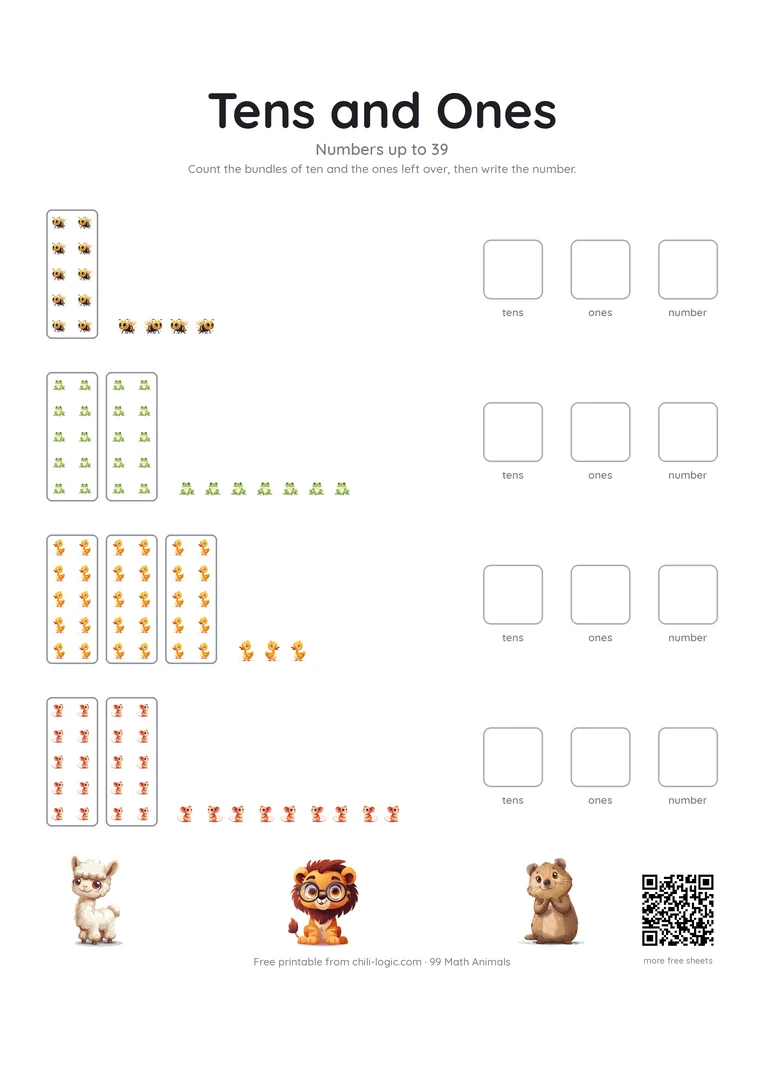
Numbers up to 39
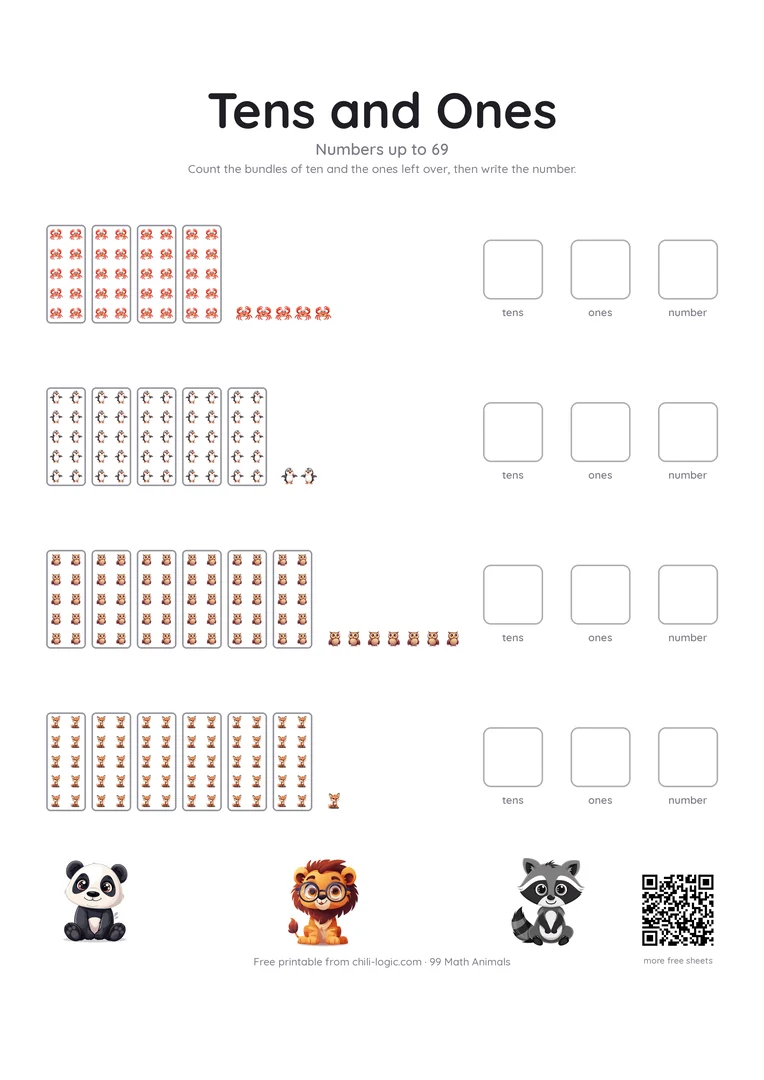
Numbers up to 69
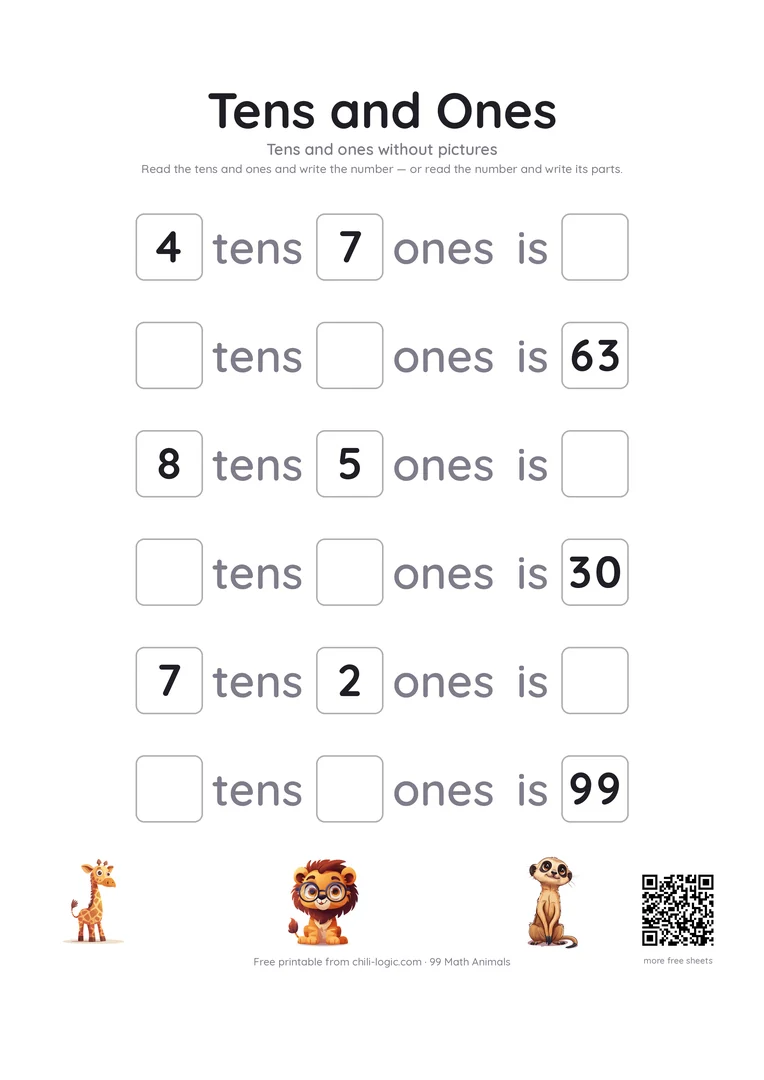
Without pictures
Printing notes
- Print at 100%, not "fit to page" — scaling shrinks the digits and the whole point is that your child writes them at a steady size.
- Black-and-white and draft mode are fine. Nothing on these sheets depends on colour.
- Slide a sheet into a punched pocket and a dry-wipe pen turns one page into a hundred goes.
Where this sheet fits
The thinking behind it
What Is Place Value? (Tens and Ones, Explained) — Read the full guide