


What Is Place Value? (Tens and Ones, Explained)
In this article
- What does "place value" actually mean?
- When do kids typically learn place value?
- Is there a real sign my child hasn't quite grasped it yet?
- Why does place value matter for so many other things?
- What's a simple way to make it concrete at home?
- My child can count to 100 but still writes two-digit numbers oddly — is that a place value problem?
Place value is the idea that a digit's position — not just which digit it is — sets its worth: in 23, the 2 means two tens, not just "a two," and the 3 means three ones.
Most kids get an early, informal sense of it in kindergarten through 1st grade, and it solidifies through 2nd-3rd grade as it starts getting used in real arithmetic (regrouping in addition and subtraction).
Short answer: place value is the quiet skill underneath almost everything else on this site — skip counting by 10s, adding two-digit numbers, counting money — so it's worth understanding directly rather than only meeting it sideways inside those other topics.
We make a counting app built directly on tens and ones — kids see quantities grouped that way before they ever write the digits — so place value is a skill we think about constantly. Below: what the term actually means in plain language, when it typically clicks, a real, documented sign that it hasn't yet, and why it quietly underpins so much of what looks like separate math skills.
What does "place value" actually mean?
It means a digit's position in a number determines its value, not just its face value. The 4 in 47 isn't "a four" the way a single object is four things — it's 4 tens, or 40. Kids spend their earliest years learning single digits in isolation (1 is one apple, 4 is four fingers), where identity and value are the same thing, so the jump to multi-digit numbers — where the same digit means something completely different depending on where it sits — is a genuinely new idea, not just a bigger version of the old one.
When do kids typically learn place value?
An early, informal sense of grouping by tens usually starts in kindergarten to 1st grade — the same window as skip counting by 10s, which leans on exactly this idea. Real fluency, where a child can use place value to actually solve problems (regrouping — "carrying" and "borrowing" — in addition and subtraction), typically develops through 2nd and 3rd grade. Understanding the idea and being able to compute with it are two different milestones, and the gap between them is normal, not a delay.
| Stage | What it looks like | Roughly when |
|---|---|---|
| Grouping | Sorting objects into tens and leftover ones, by hand | Kindergarten |
| Naming | Saying "23 is 2 tens and 3 ones" out loud, with help | Kindergarten-1st grade |
| Writing | Writing two-digit numbers correctly without sounding them out digit by digit | 1st grade |
| Computing | Using regrouping to add or subtract across a tens boundary | 2nd-3rd grade |
Is there a real sign my child hasn't quite grasped it yet?
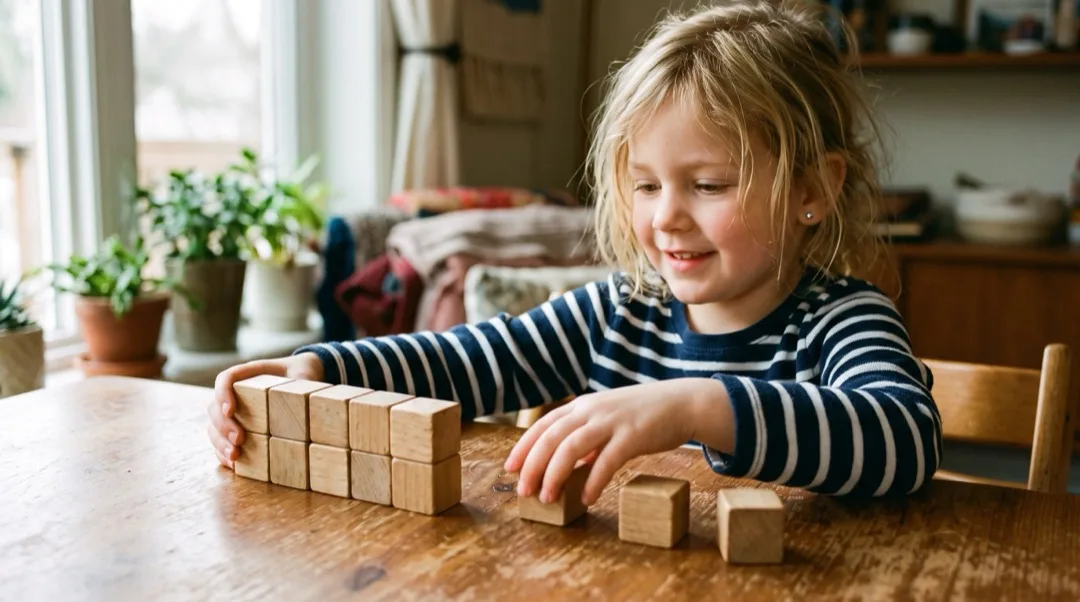
Yes, and it's a genuinely documented one, not a guess: a child who understands number words before they understand position will sometimes write numbers by transcribing what they hear rather than the actual digits — writing "six hundred nine" as 6009 (600, then 9, stuck together) instead of 609.
It's an entirely logical mistake from the child's point of view; they're accurately writing down the words, just not yet using position to combine them. Seeing it isn't a sign of a bigger problem — it's a specific, well-known signal that place value specifically (not counting, not writing numbers in general) is the next thing to work on.
Why does place value matter for so many other things?
Because most of what looks like separate math skills is really place value applied in a new setting. Skip counting by 10s works because 10, 20, 30 is just "one ten, two tens, three tens." Counting money works the same way once coins move past ones and fives.
Two-digit addition with regrouping is, underneath, ten ones being traded for one ten. None of those are really separate topics from a child's perspective once place value itself is solid — which is exactly why it's easy for a parent to notice the symptom (trouble with "carrying" in addition, say) without realizing the actual root skill is a level underneath it.
What's a simple way to make it concrete at home?
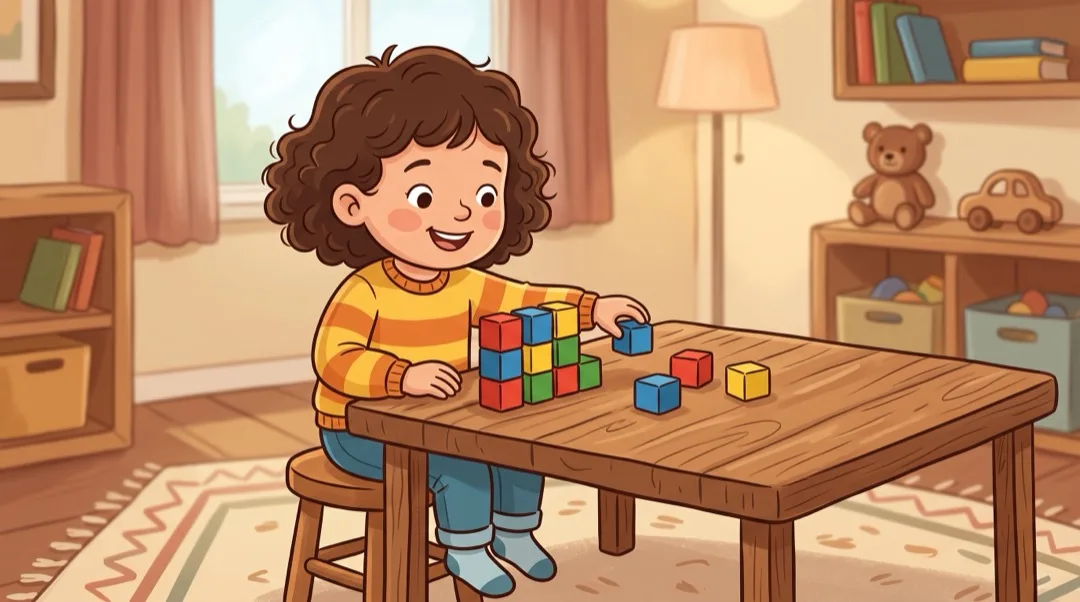
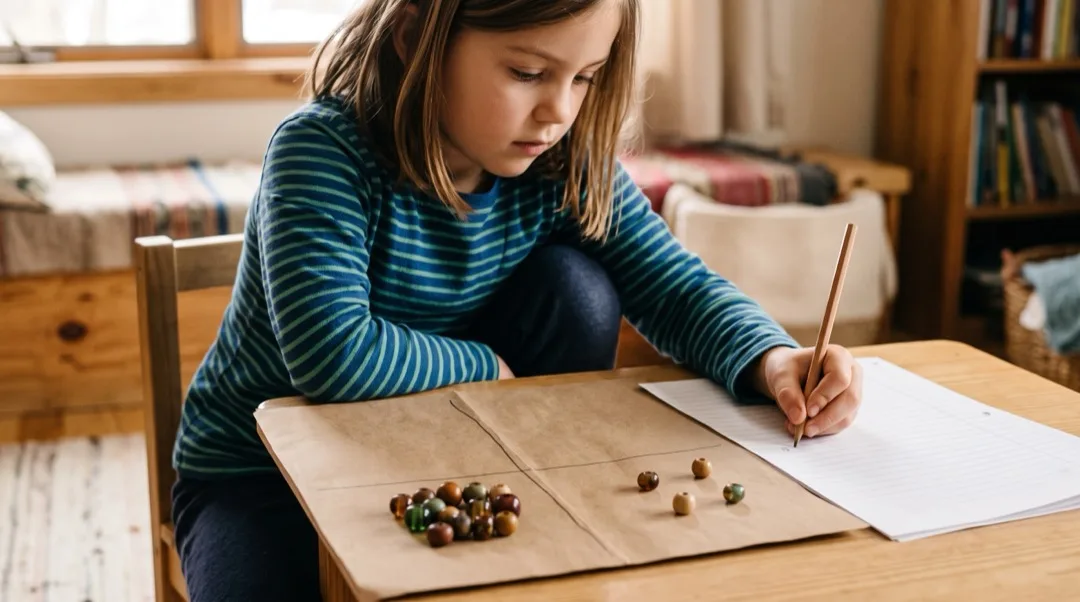
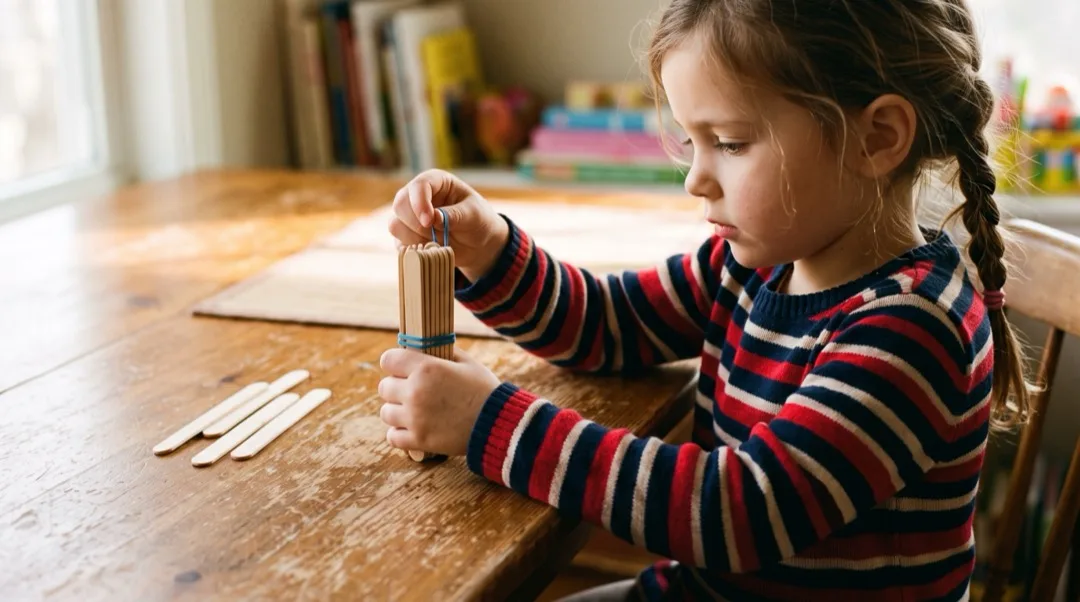
- Bundle real objects into tens. Straws, craft sticks, or blocks banded into groups of exactly ten, with a few loose ones alongside, make "2 tens and 3 ones" a physical thing to point at, not just a sentence.
- Say the value, not just the digit. Instead of "two, three," say "two tens and three ones" out loud when reading a number together — the habit of narrating position, not identity, is most of the work.
- Use a two-column mat. A plain sheet split into "tens" and "ones" columns, with objects or written digits placed in the matching column, keeps the two ideas visually separate while they're still being learned.
My child can count to 100 but still writes two-digit numbers oddly — is that a place value problem?
Often, yes, and that's a useful distinction to make. Counting to 100 out loud is a sequencing skill — knowing what comes next. Writing 23 correctly requires knowing that position encodes value, a separate skill that can lag well behind fluent counting. A child can be genuinely strong at one and still shaky on the other; it's not a contradiction, and it points at exactly what to work on next.
Questions parents ask
What is place value in simple terms?
It's the idea that a digit's position in a number sets its value, not just which digit it is — the 2 in 23 means two tens, not just "a two." It's why the same digit can mean very different things depending on where it sits.
When do kids learn place value?
An early, informal sense of grouping by tens usually starts in kindergarten to 1st grade; real fluency using it to compute (regrouping in addition and subtraction) typically develops through 2nd-3rd grade. Understanding the idea and computing with it are separate milestones.
How do I know if my child understands place value yet?
A well-documented sign that it hasn't clicked yet: writing a number the way it sounds rather than by position — "six hundred nine" written as 6009 instead of 609. It's a logical mistake, not a bigger problem, and points specifically at place value as the next skill to work on.
Why does place value matter for other math skills?
Because skip counting by 10s, two-digit addition with regrouping, and counting money by denomination all quietly depend on it. Trouble with any of those can actually be a place-value gap underneath, not a problem with that specific skill.