


Count the animals 1–10
A row of animals, a box at the end, one number to write. The row gets longer as the count goes up, so the quantity is something a child can see before they can count it.
How to use it
Let them touch each animal as they count it — pointing is not a crutch, it is how one-to-one correspondence gets built, and it drops away on its own. If the answer comes out wrong, ask them to count it again out loud rather than correcting the number; nine times out of ten they catch it themselves. Page 3 mixes the counts up on purpose, because a child who has learned the pattern of the page rather than the counting will come unstuck there, and that is worth knowing.
Every page in this pack
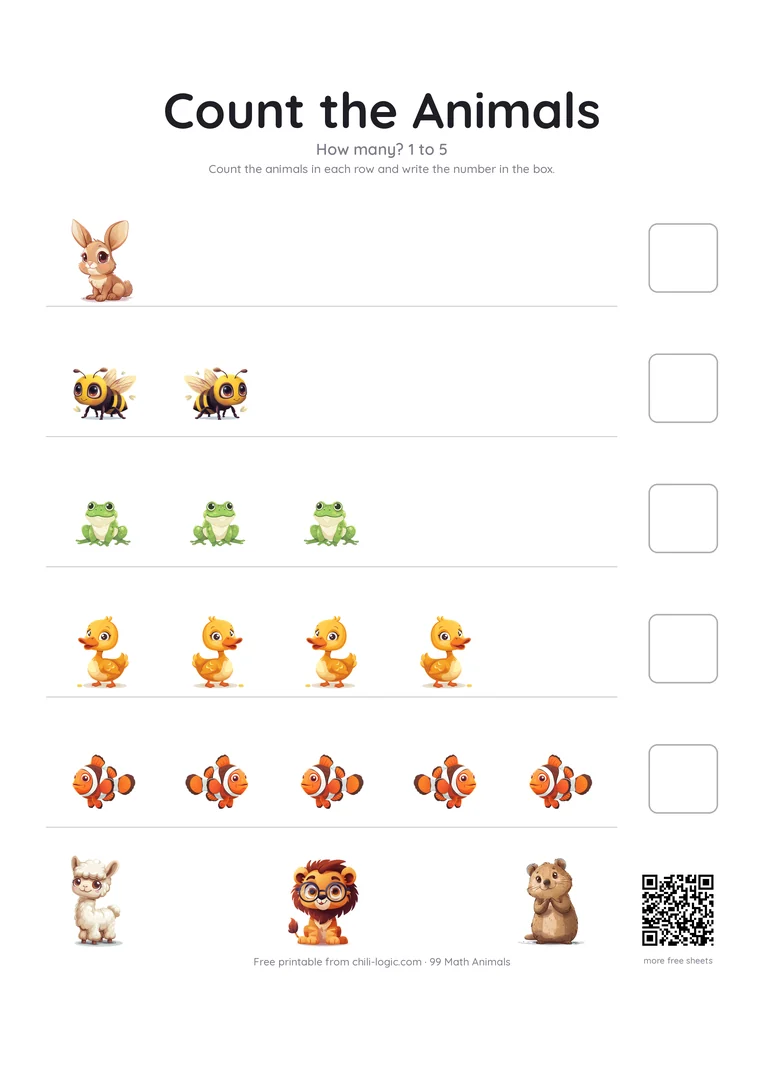
How many? 1–5
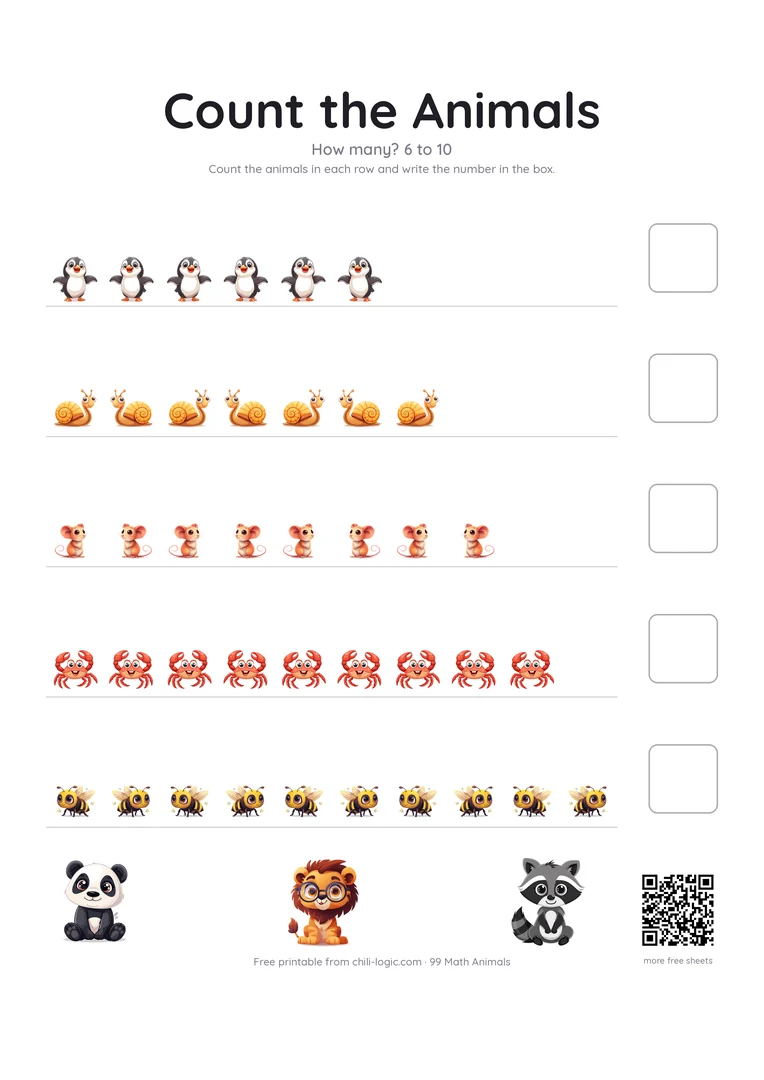
How many? 6–10
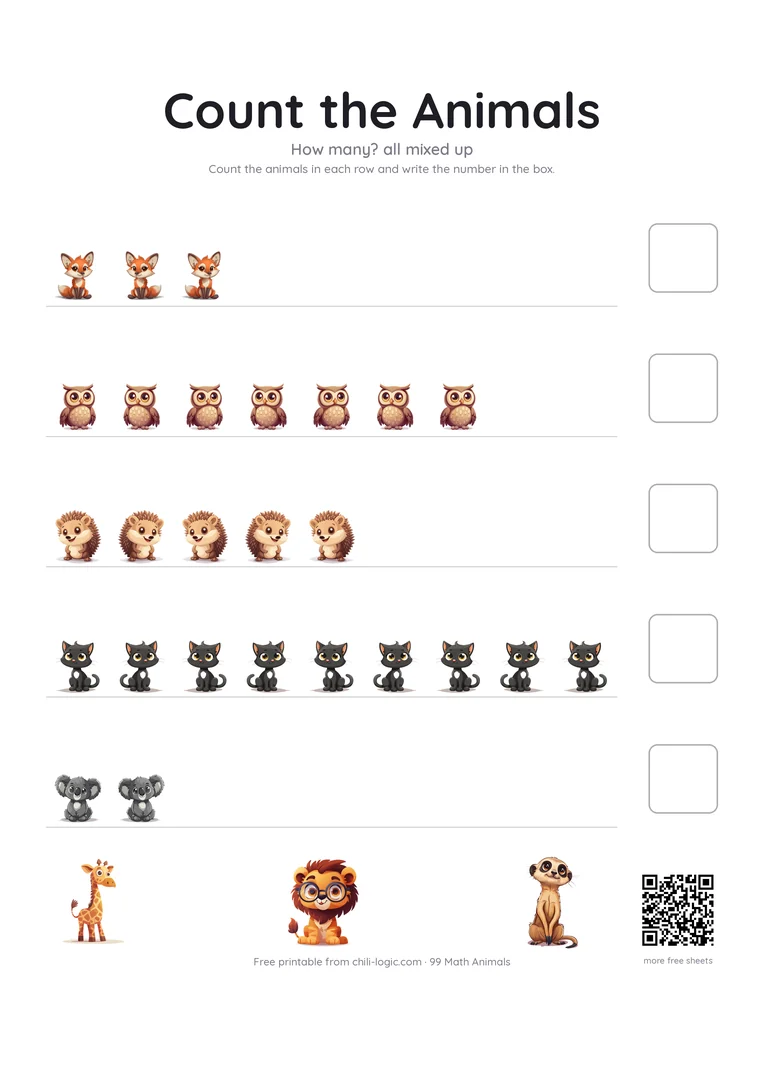
All mixed up
Printing notes
- Print at 100%, not "fit to page" — scaling shrinks the digits and the whole point is that your child writes them at a steady size.
- Black-and-white and draft mode are fine. Nothing on these sheets depends on colour.
- Slide a sheet into a punched pocket and a dry-wipe pen turns one page into a hundred goes.
Where this sheet fits
Comes beforeHow many do you see?Ages 4–7
The thinking behind it
When Do Kids Learn to Count to 10? — Read the full guide