



Number tracing for left-handers
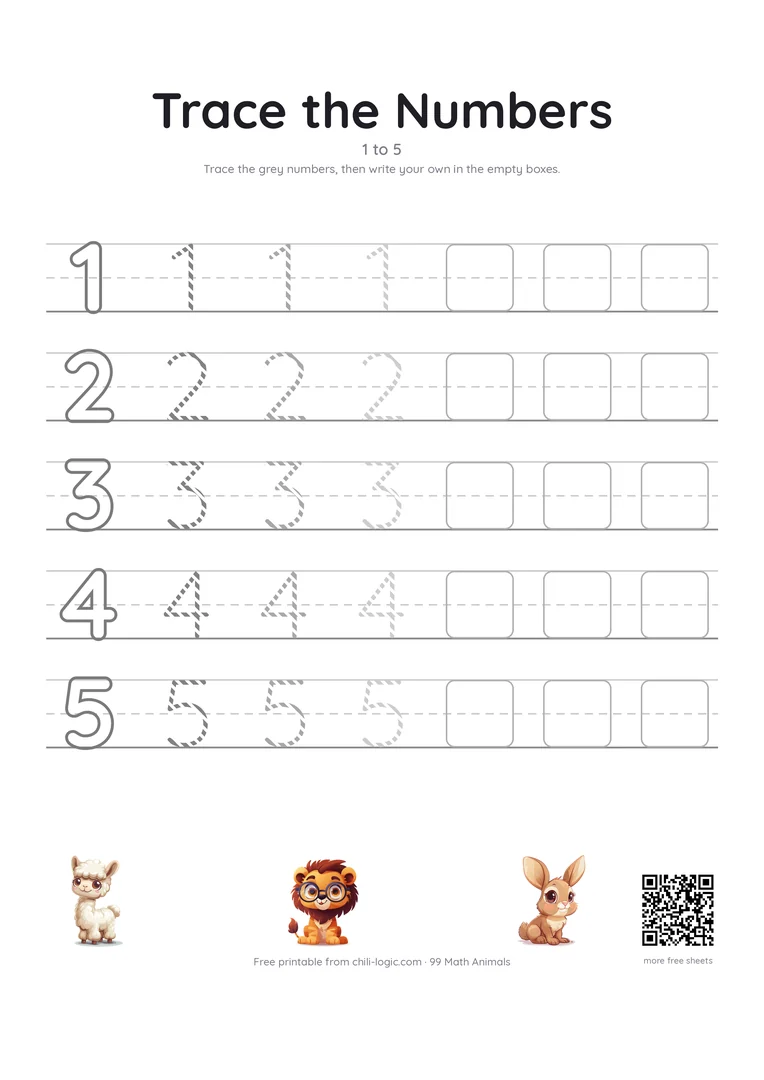
The row is mirrored. The model sits at the right-hand end, every practice slot is to its left, and the trail fades as it goes — so the reference is always on the side the writing hand has not reached. A left hand covers what it has just passed, which on an ordinary sheet is the model.
How to use it
Start next to the model and work away from it, towards the empty boxes. That direction is the whole design: a left hand sits to the left of the pencil, so it covers what has just been written — including the model, on any sheet that puts it at the far left. By the third repetition children there are copying from memory, and nobody notices.
The digits themselves are not mirrored, and should not be. A left-handed child writes the same shapes with the same stroke order as everyone else; printing them reversed would teach exactly the error this sheet exists to prevent. Only the layout changes.
Two things off the page help as much as the page does. Tilt the paper clockwise, roughly thirty degrees — the mirror of what a right-hander does — so the hand stays below the writing line instead of hooking over it. And let your child hold the pencil a little further back from the tip, about two finger-widths, so they can see what they are writing.
Every page in this pack
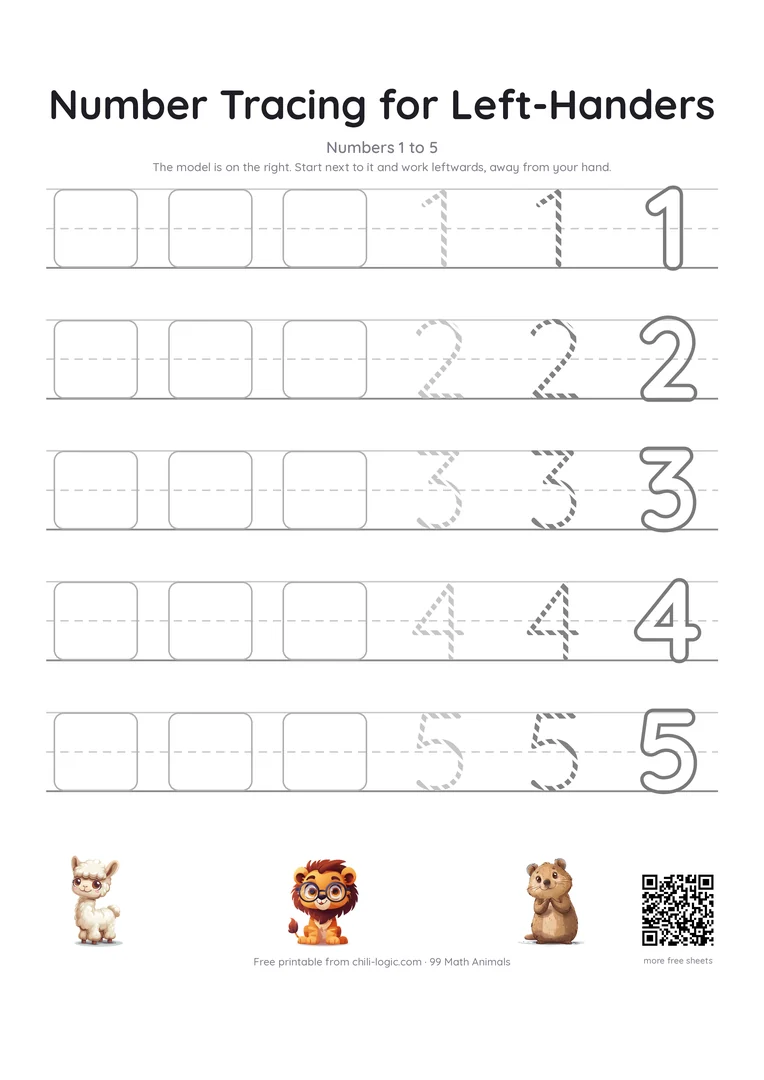
Numbers 1 to 5
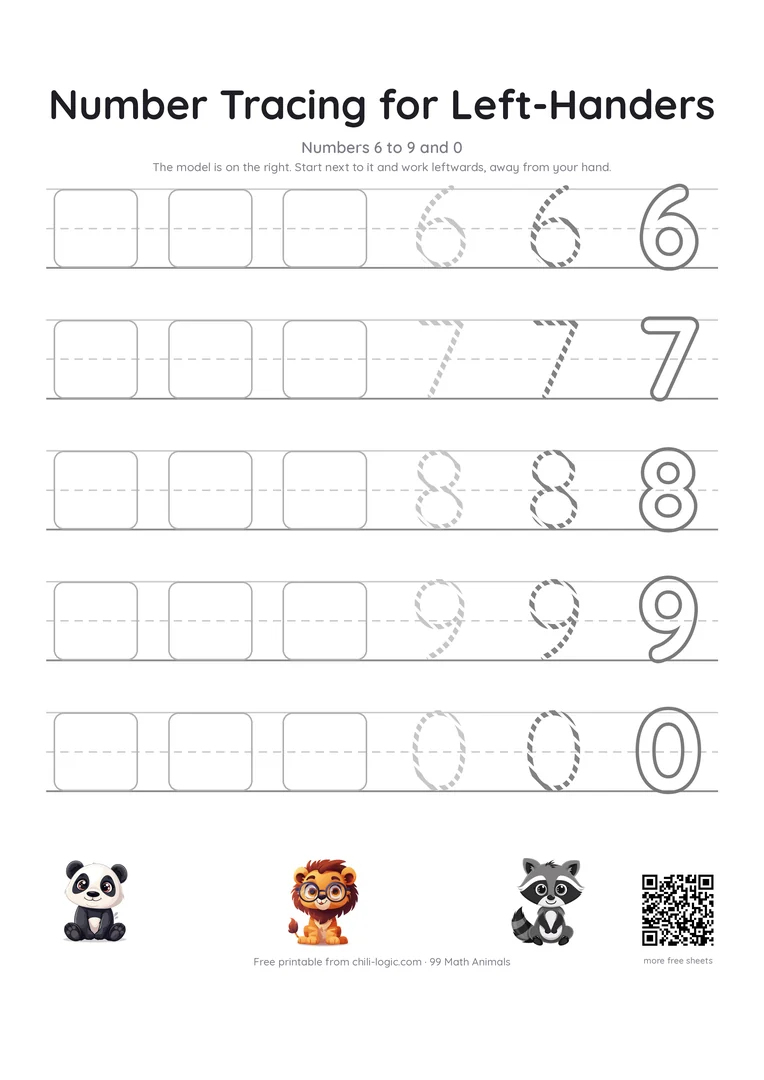
Numbers 6 to 9 and 0
Printing notes
- Print at 100%, not "fit to page" — scaling shrinks the digits and the whole point is that your child writes them at a steady size.
- Black-and-white and draft mode are fine. Nothing on these sheets depends on colour.
- Slide a sheet into a punched pocket and a dry-wipe pen turns one page into a hundred goes.
The thinking behind it
Helping a Left-Handed Child Write Numbers — Read the full guide