


Helping a Left-Handed Child Write Numbers
In this article
Most handwriting instruction quietly assumes a right-handed child, and a left-handed child following the same paper position and pencil grip will genuinely struggle more than the writing itself should be.
Short answer: the two adjustments that matter most are tilting the paper the opposite way (left side up, roughly 30 degrees) and holding the pencil a little farther back from the tip so the writing hand doesn't block the child's own view of what they're writing.
Neither is about correcting the child — it's about correcting the setup. This article covers the specific adjustments that actually help, and the one thing worth never doing: trying to switch a child's natural hand.
We build the handwriting recognizer inside 99 Math Animals, so number formation across every kind of grip and angle is something we look at constantly. Left-handed children are a meaningful minority of the kids using it, and the mechanics that make writing comfortable for them are genuinely different, not just a mirror image of right-handed instruction. Below is what actually helps, grounded in real occupational-therapy guidance rather than guesswork.
Why does handedness change how numbers should be taught?
A right-handed child writing left-to-right pulls the pencil away from what they've already written, so nothing gets covered and the hand never blocks the view. A left-handed child pushes the pencil across the page in the same left-to-right direction, which means the hand naturally travels over the freshly written numbers unless the setup compensates for it. That single mechanical difference is behind most of the specific struggles parents notice — smudged pencil marks, an awkwardly curled wrist, or a child leaning in very close to see around their own hand.
The two adjustments that actually help
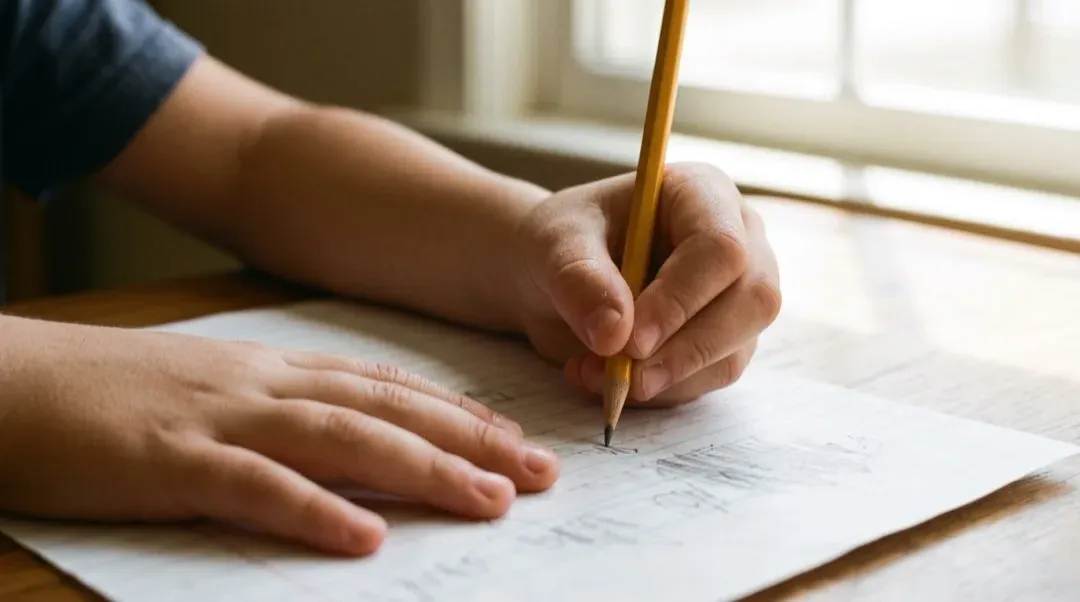
Paper angle. Tilt the paper so the left side is angled up, roughly 30 degrees clockwise from straight — closer to 45 degrees if that's what lets a particular child see their own writing most clearly.
This is the opposite tilt from what's usually taught for right-handed writing, and it's the single biggest fix for the hooked, curled wrist some left-handed children develop to see around their hand. Pencil grip distance. Have the child hold the pencil about 2.5 to 3.8 centimeters (roughly 1 to 1.5 inches) back from the tip, a little farther back than a typical right-handed grip. A small sticker at the right spot on the pencil is an easy visual reminder if a child keeps sliding their fingers down toward the tip.
Setting up a comfortable writing space
- Angle the paper before the child starts, not after they're stuck. Get the tilt right at the beginning of a writing session rather than correcting mid-way through.
- Give elbow room. Seat a left-handed child at the end of a table or to the left of any right-handed sibling or classmate, so two elbows aren't competing for the same space.
- A slightly raised, tilted surface can help. A propped-up clipboard, binder, or slant board keeps the wrist straighter and reduces the hooked-wrist posture that develops when a child writes flat and low.
- Watch the wrist, not just the numbers. A curled, hooked wrist is usually a sign the paper angle needs adjusting — not something to fix by changing the grip alone.
Right-handed default vs. left-handed adjustment
| Typical right-handed setup | Left-handed adjustment | |
|---|---|---|
| Paper angle | Tilted slightly right, roughly 20-30 degrees counterclockwise | Tilted slightly left, roughly 30-45 degrees clockwise |
| Pencil grip distance | Close to the tip, around 1.5-2 cm back | Farther back, around 2.5-3.8 cm, to keep the hand clear of the view |
| Wrist posture | Stays fairly straight naturally | Watch for a hooked, curled wrist — usually a paper-angle sign, not a grip problem |
| Seating next to a peer | Fine on either side | Best seated to the left of a right-handed peer so elbows don't collide |
Should I switch my child to their right hand?
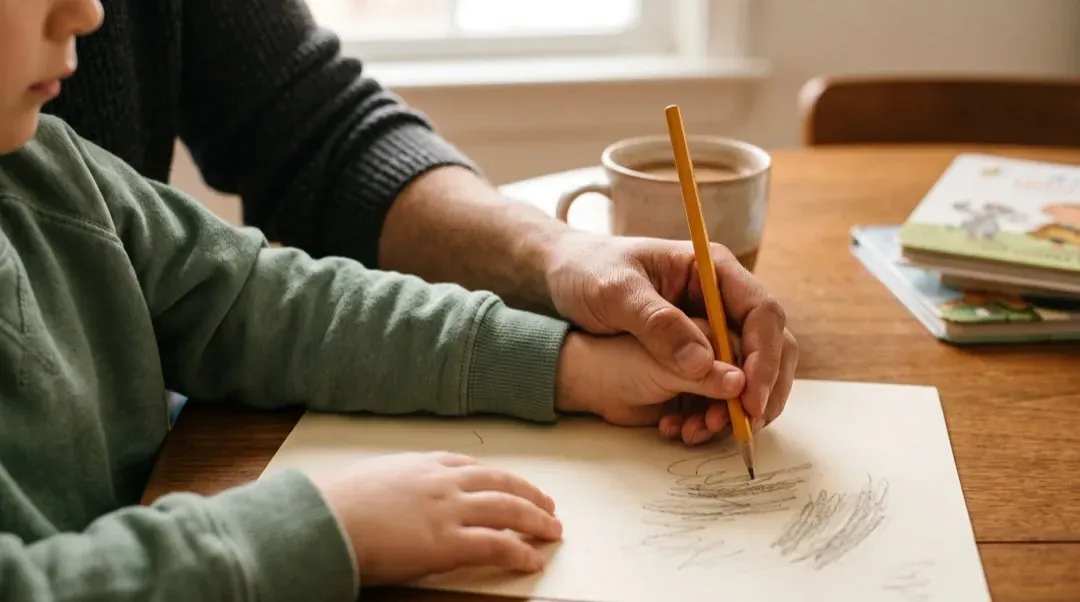
No. Hand preference is established early and isn't something to override, even gently — the adjustments above exist specifically so a left-handed child doesn't need to fight their own natural hand to write comfortably. If a child seems to be struggling more than the setup explains, that's a conversation for a teacher or occupational therapist, not a reason to try switching hands.
Is this related to writing numbers backwards?
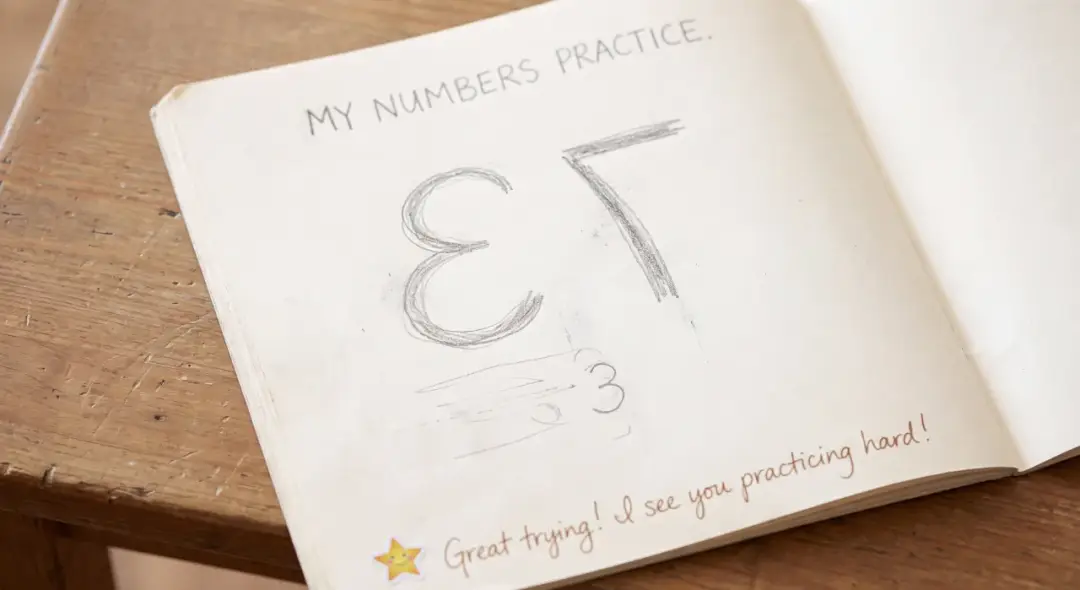
Not directly. Number reversals are common in both left- and right-handed children up to around age 7, and handedness on its own doesn't cause or prevent them. The adjustments in this article are about comfort and legibility, not about reversals — a left-handed child who reverses numbers is going through the same typical stage as a right-handed one.
Questions parents ask
Is it normal for a left-handed child to write more slowly?
Somewhat, especially before the paper angle and grip distance are adjusted. Once the setup accounts for handedness, most of that gap closes — it's rarely about ability, more about fighting an unhelpful default setup.
Should I make my left-handed child switch to their right hand?
No. Hand preference is established early and switching it isn't recommended — the goal is adjusting the setup (paper angle, pencil grip distance) to fit the child's natural hand, not the other way around.
What paper angle is best for left-handed writing?
Roughly 30 degrees clockwise from straight, left side angled up — the opposite tilt from typical right-handed instruction. Some children see their writing more clearly at a steeper angle, up to about 45 degrees; let the child's comfort guide the exact tilt.
Do left-handed pencil grips actually help?
They can, mainly by encouraging the child to hold the pencil farther back from the tip. But the paper angle usually matters more than the grip tool itself — a good angle with an ordinary pencil beats a specialty grip on flat, unangled paper.