



Number memory 1 to 20
Twenty pairs on four pages: every number from 1 to 20 and a ten frame that shows it. Past ten the frame fills up and a second one starts, so 14 reads as ten and four, the way school teaches the teen numbers.
How to use it
Each page is a complete game of five pairs, so start with 1 to 5 and add a page when it gets easy, or print all four for one long game of twenty pairs. Print on thick paper, or glue the sheet to card before cutting, so the cards do not show through. The ten frame is there for the numbers past ten. A full frame is always ten, so a child who sees a full frame and four more can say "fourteen" without counting from one. That is the step that makes 11 to 20 make sense, and it is why this game uses frames instead of a heap of animals. For a younger child, lay the cards face up and just find the pairs.
Every page in this pack
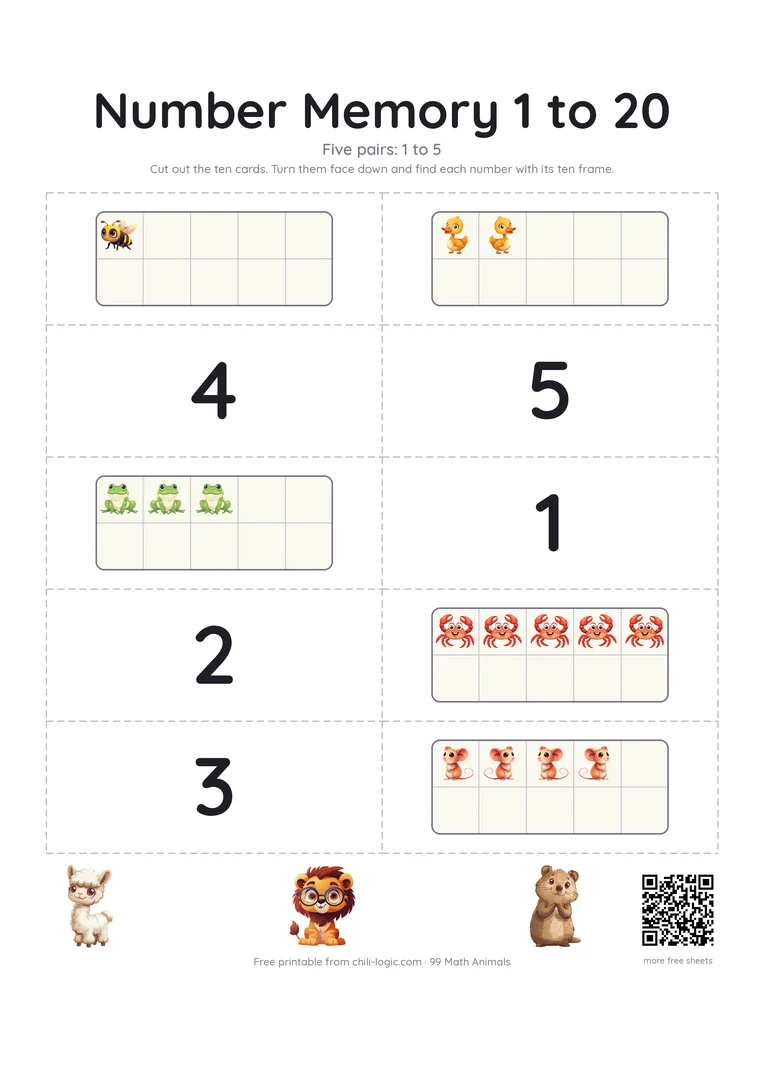
Pairs 1–5
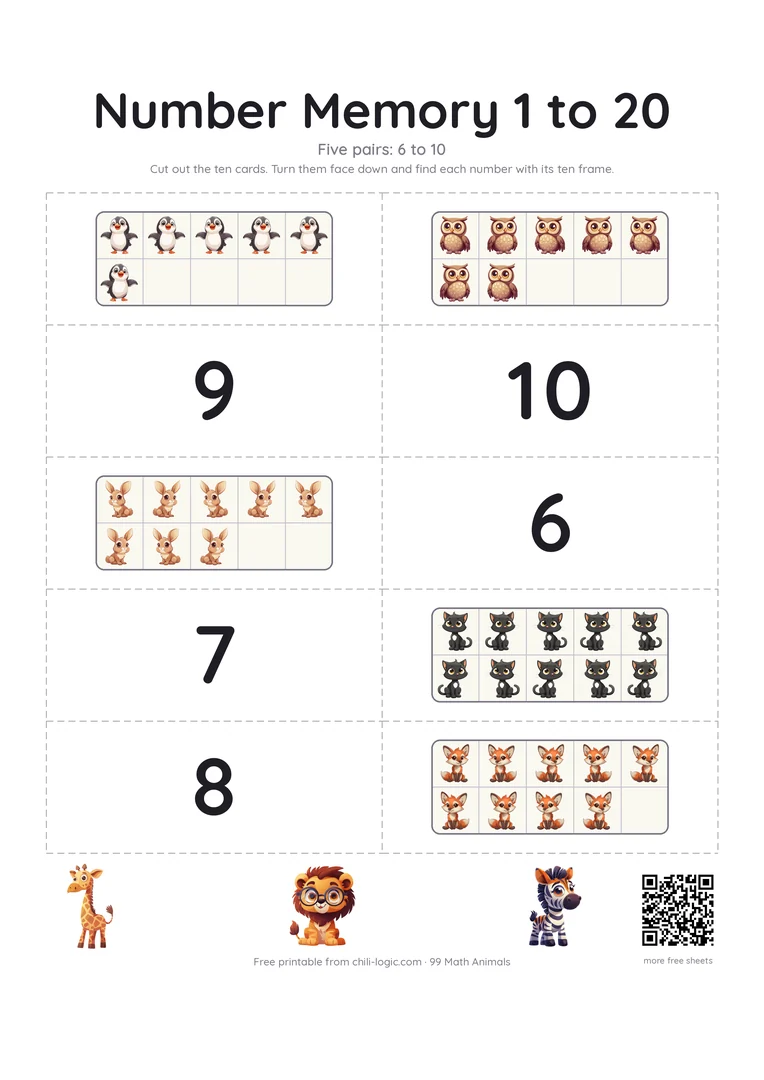
Pairs 6–10
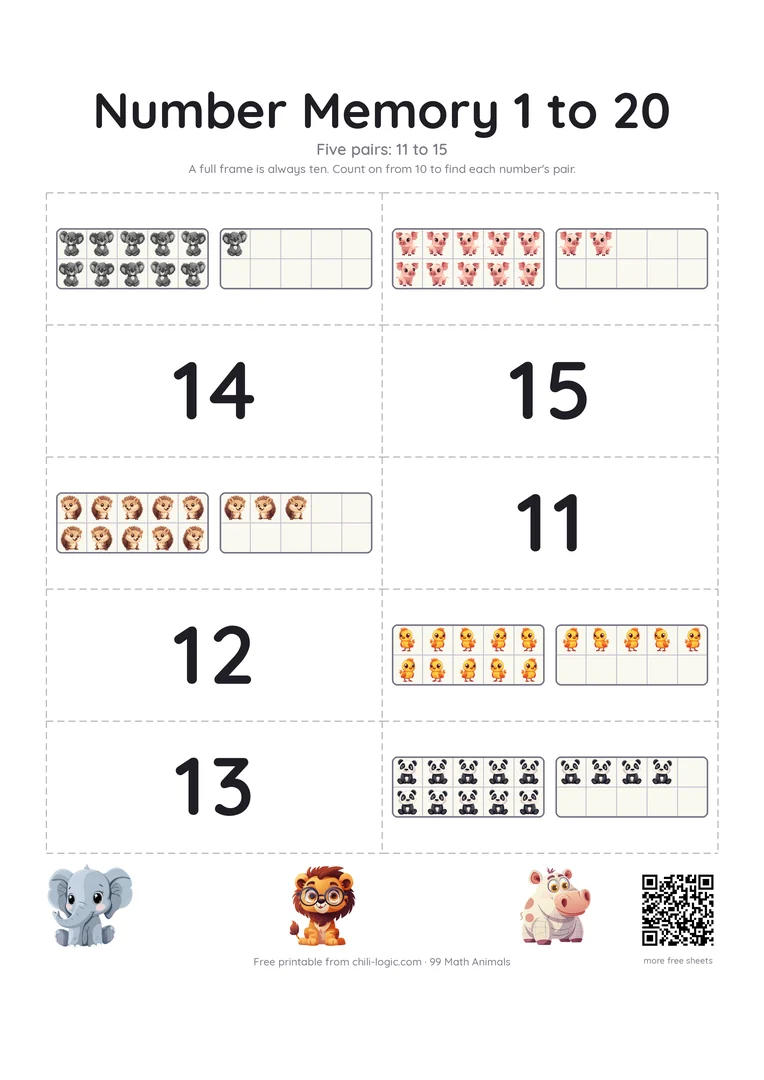
Pairs 11–15
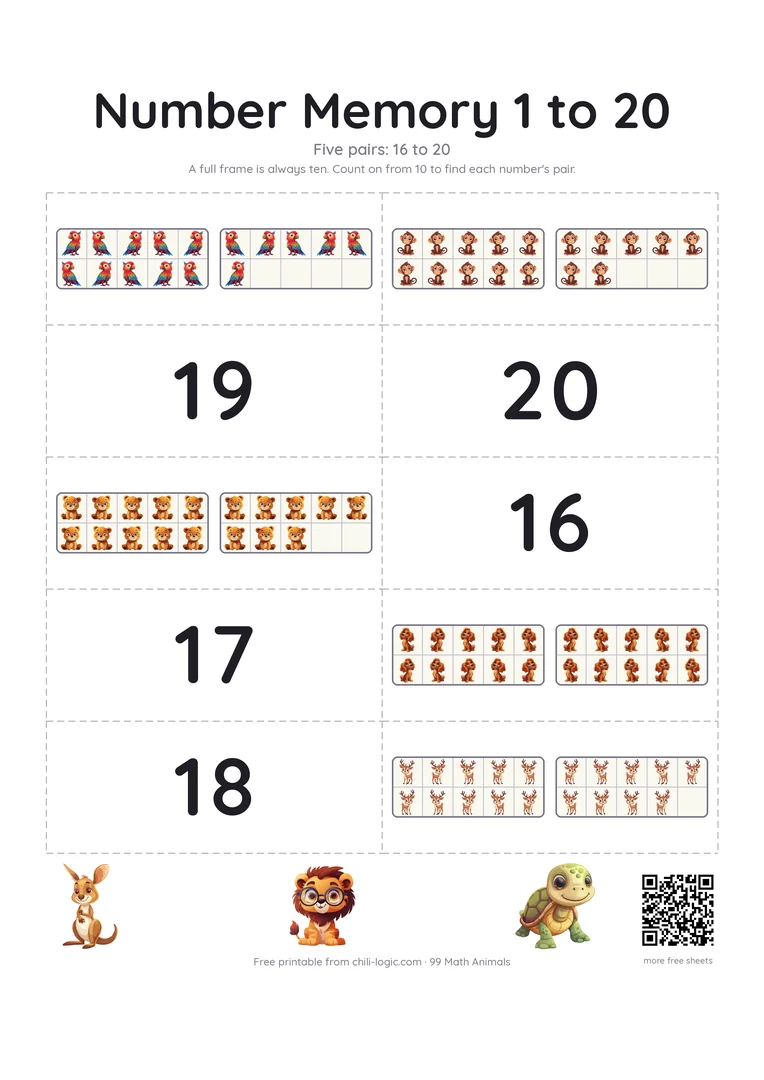
Pairs 16–20
Printing notes
- Print at 100%, not "fit to page" — scaling shrinks the digits and the whole point is that your child writes them at a steady size.
- Black-and-white and draft mode are fine. Nothing on these sheets depends on colour.
- Slide a sheet into a punched pocket and a dry-wipe pen turns one page into a hundred goes.
Where this sheet fits
The thinking behind it
What Is Subitizing? (Seeing a Number Without Counting) — Read the full guide