


What Is Subitizing? (Seeing a Number Without Counting)
In this article
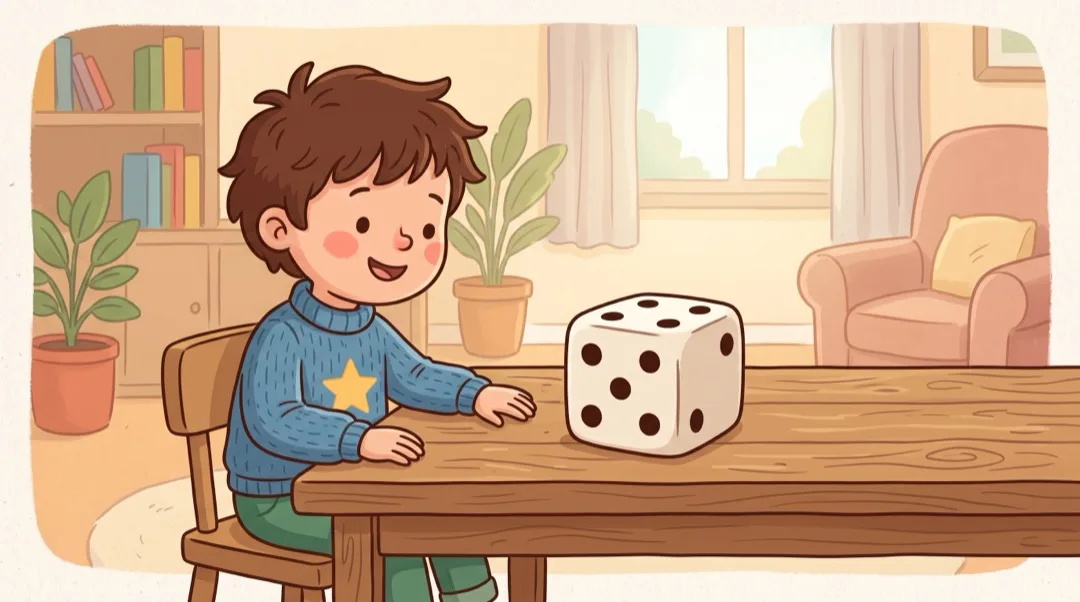
Subitizing is instantly recognizing how many items are in a small group without counting them one by one — glancing at three dots and just knowing it's three, the way an adult reads a die without touching a single pip.
Short answer: it starts remarkably early (even infants respond differently to 2 versus 3 objects), is usually solid for small sets by age 3-4, and a second, later stage — combining recognized sub-groups instead of just recognizing one group — develops around kindergarten to 1st grade and quietly becomes one of the first real bridges into addition.
We make a counting app where kids see small groups of animals on screen before they write an answer, so how a child actually perceives a group — at a glance, or by counting it out — is something we think about constantly. Below: what subitizing actually means, the two different stages it happens in, and why it's worth more attention than the passing mention it usually gets.
What does "subitizing" actually mean?
It's seeing a quantity and knowing the number immediately, without the step-by-step process of counting. It splits into two distinct stages. Perceptual subitizing is recognizing a small group all at once, as a single shape — this is what's happening when someone reads a die face without counting pips, and it's usually reliable for groups up to about 4 or 5.
Conceptual subitizing is the more advanced version: recognizing two or more smaller groups within a bigger one and combining them instantly — seeing a die showing 6 as "a 3 and a 3" rather than six separate pips, without consciously adding.
When does subitizing typically develop?
Earlier than most number skills on this site. Even infants show measurably different responses to 2 objects versus 3, long before any formal counting. Perceptual subitizing for small sets (2-4 items) is usually solid by age 3-4. Conceptual subitizing — combining recognized sub-groups instead of just recognizing one group — is a later, school-age skill that develops around kindergarten to 1st grade, as working memory and early grouping skills come online.
| Stage | What it looks like | Roughly when |
|---|---|---|
| Early perceptual | Reacting differently to 2 vs. 3 objects, well before counting | Infancy |
| Perceptual | Instantly naming a group of 2-4 without counting | Age 3-4 |
| Extended perceptual | Instantly naming familiar patterns up to 5-6 (dice, dominoes) | Age 4-5 |
| Conceptual | Seeing a 6-pattern as "3 and 3" and combining instantly | Kindergarten-1st grade |
Why does this matter more than it sounds like it would?
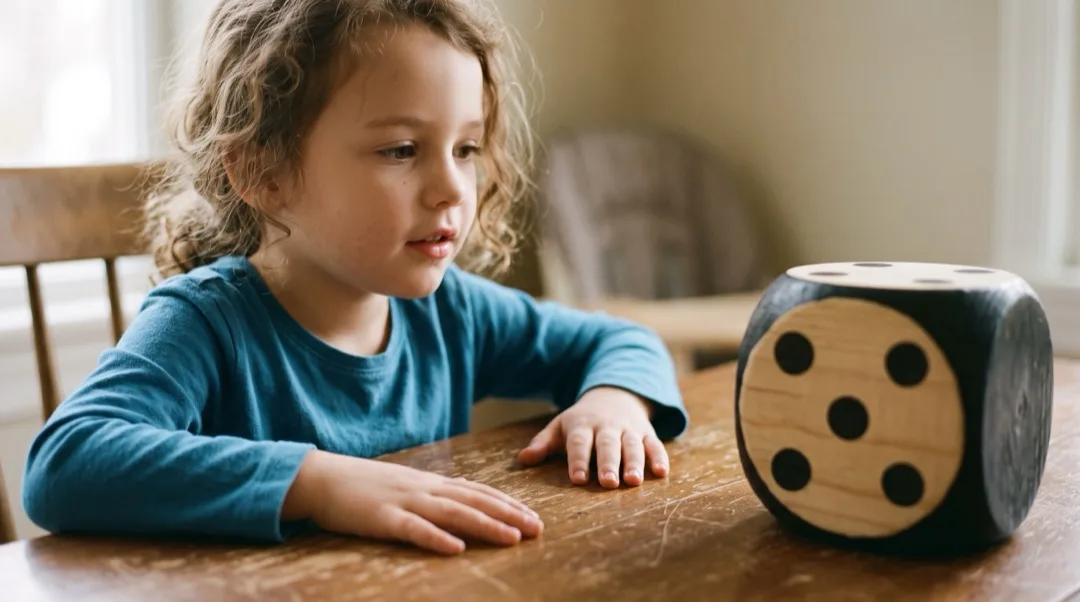
Because subitizing is one of the earliest real signs of number sense — understanding quantity as a thing in itself, not just a word in a counting sequence — and conceptual subitizing specifically is one of the first natural bridges into addition.
A child who instantly sees a 6-dot pattern as "3 and 3" is doing something very close to 3 + 3 = 6, just perceptually rather than as a calculation. Kids who subitize well tend to count more confidently too, since they can check a count against an instant impression ("that looked like about 5, and I counted 5") instead of counting blind.
How is this different from just counting fast?
Counting fast is still counting — touching or naming each item in sequence, just quickly. Subitizing has no sequence at all; the quantity registers as one instant impression, the same way most adults don't count the legs on a dog to know it has four. That's also exactly why it tops out around 4-6 items even in adults — past that point, the human brain reliably switches back to actual counting, which is normal, not a limitation to worry about in a child.

What's a simple way to build it at home?
- Flash small groups briefly, then hide them. Show 3-4 objects for about a second, cover them, and ask how many — the brief glimpse forces an instant read instead of a slow count.
- Use dice and dominoes on purpose. Their dot patterns are consistent and familiar, which is exactly what makes them easy to subitize — any board game with dice is quiet subitizing practice already.
- Point out the sub-groups in a bigger pattern. "Look, that's 2 dots and 2 more dots" turns a static pattern into an early, gentle nudge toward conceptual subitizing, without ever asking for a formal addition fact.
My child still counts everything, even tiny groups of 2 — is that behind?
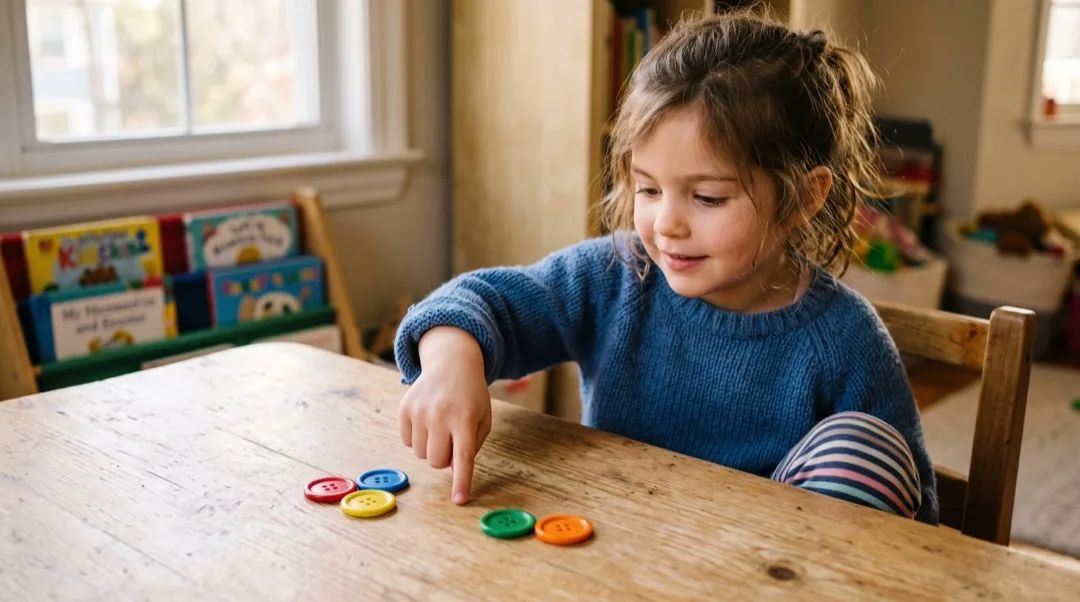
Not necessarily. Counting a small group instead of subitizing it isn't wrong, just a slightly earlier stage — and plenty of children move fluidly between the two depending on how confident they feel in the moment, not on a fixed schedule. Consistent, deliberate practice with the same few patterns (a die, a domino, a familiar finger shape) is what tends to move a group from "counted" to "instantly known" over time, not correcting the counting itself.
Questions parents ask
What is subitizing in simple terms?
Instantly knowing how many items are in a small group without counting them one by one — the way most people read a die face without touching each dot. It's usually reliable for groups up to about 4-6.
When do kids learn to subitize?
Very early — even infants respond differently to 2 versus 3 objects. Perceptual subitizing (instantly naming a small group) is usually solid by age 3-4; conceptual subitizing (combining recognized sub-groups, like seeing "3 and 3" as 6) develops later, around kindergarten to 1st grade.
What's the difference between perceptual and conceptual subitizing?
Perceptual subitizing is recognizing one small group all at once, as a single shape. Conceptual subitizing is recognizing two or more smaller groups within a bigger pattern and combining them instantly — a more advanced skill that's an early, natural bridge into addition.
Why does subitizing matter for later math?
It's one of the earliest real signs of number sense, and conceptual subitizing specifically is close to doing addition perceptually rather than by calculation. Kids who subitize well also tend to count more confidently, since they can check a count against an instant impression.