


How to Use Number Tracing Worksheets
In this article
Tracing worksheets help most when the support fades and disappears, not when a child repeats the same fully-guided number over and over.
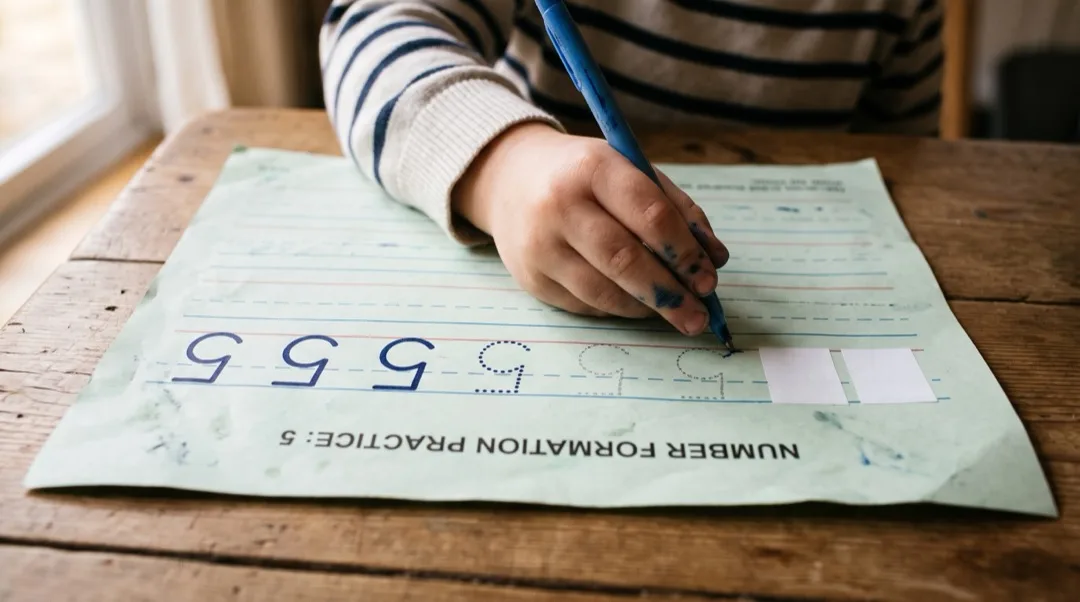
Short answer: the tracing itself barely matters — what matters is the sequence. A full model to trace, then a dotted or dashed version, then a faint version, then a blank line where the child writes from memory.
A worksheet a child fills in without ever losing the guide teaches much less than it looks like it does. Below is what tracing is actually good for, the one mistake that makes it close to pointless, and how to make effective tracing practice at home with nothing but paper and a pencil.
We build the handwriting recognizer inside 99 Math Animals, so number formation is something we think about constantly. Tracing is a genuinely useful tool, but only one part of learning to write numbers — for the fuller picture of readiness, order, and multisensory practice, see our guide on how to teach a child to write numbers. This piece goes deeper on tracing specifically.
What tracing actually helps with
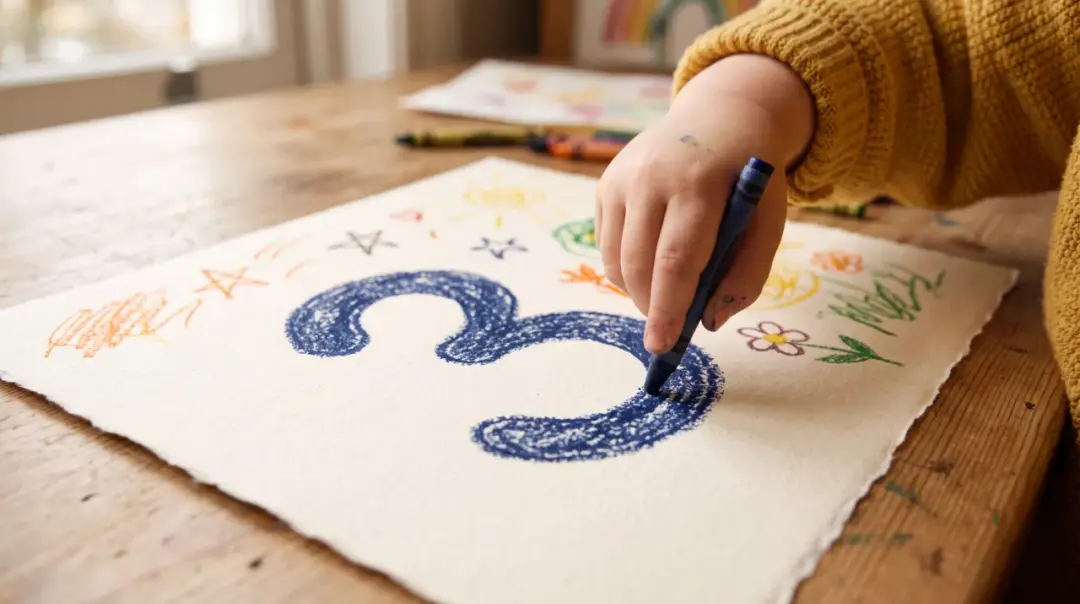
Tracing gives a child's hand a correct path to follow before it can generate that path alone. Repeating the right motion, guided, builds the motor memory that eventually lets the hand do it unguided. That is genuinely useful, especially early on, and especially for the trickier numbers like 2 and 8. The catch is that the guide has to actually go away at some point, or the motor memory being built is "follow this line," not "draw a 2."
The mistake that makes tracing pointless
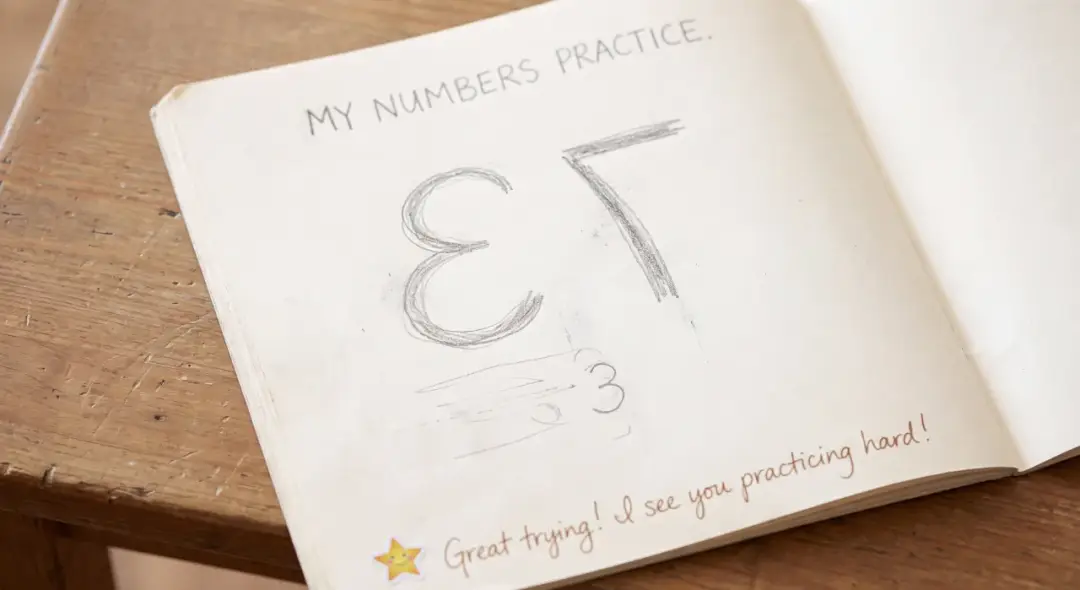
The most common way tracing stops working: a child fills in guide after guide, page after page, and the guide never fades. At that point tracing turns into "ghost writing" — a pencil following a groove without much attention behind it, the same way an adult's hand can sign a familiar signature while thinking about something else entirely. It looks like practice. It produces a lot of neat pages. But without ever removing the support, very little transfers to writing the number from nothing. The fix is not more tracing; it is less support, sooner than feels comfortable.
The progression that actually works
Four stages, each with less help than the last:
| Stage | What it looks like | When to move on |
|---|---|---|
| Full model | A solid, fully-drawn number to trace directly over | As soon as the motion feels comfortable, often after just a few repeats |
| Dotted or dashed | A broken outline the child connects, still a clear path to follow | Once the child rarely strays outside the dots |
| Faint outline | A light, barely-there version — a hint, not a groove | Once the shape comes out recognizable most of the time |
| Blank | Nothing but a line to write on, from memory | This is the actual goal — everything before it was scaffolding |
How to make your own tracing practice (no printer needed)
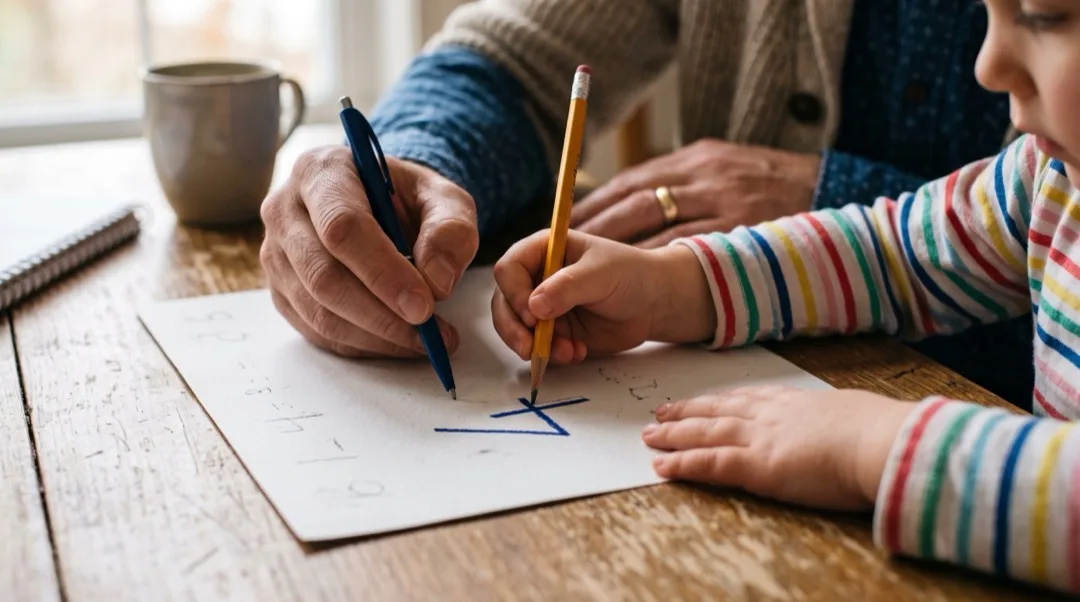
- Write the number yourself and have your child trace directly over your pen or pencil marks — no printing required, and you can write it exactly the right size for their hand.
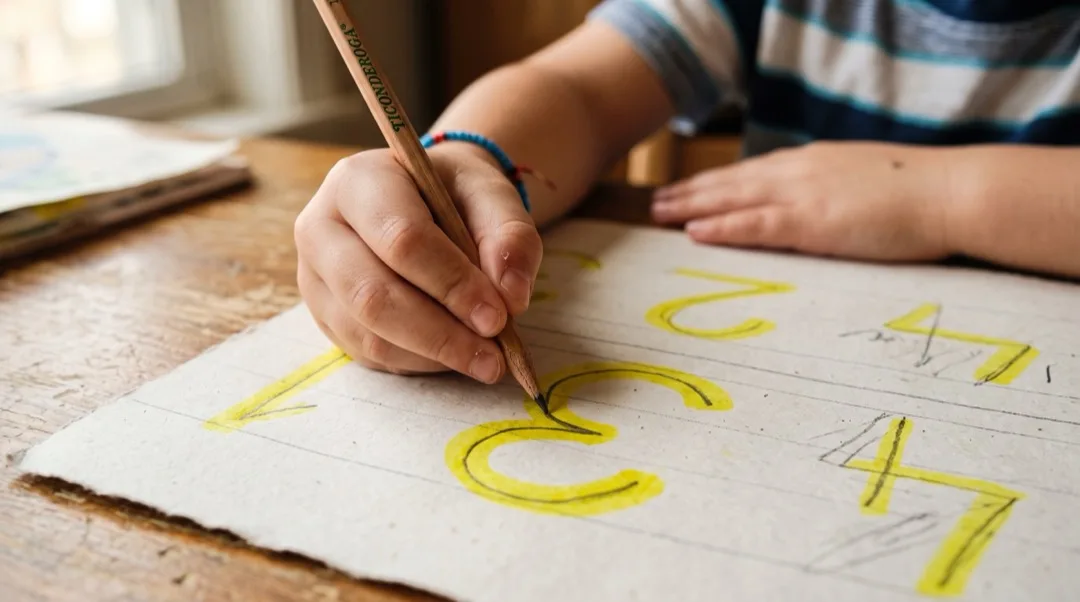
- Draw the number in highlighter and have them trace over it in pencil; the color makes the path obvious without looking like a worksheet.
- Use a tray of salt, sand, or shaving foam and a fingertip instead of paper at all — texture adds a sensory element and it wipes clean for the next try.
- On a whiteboard, draw the number faintly and let your child go over it in a darker color, which naturally builds in the "fading support" idea.
- Say the stroke out loud while they trace ("down, curve, curve" for a 3) — the verbal cue reinforces the same path the hand is learning.
What to look for if you use printed worksheets
If you come across free printable sheets elsewhere, a few things separate the useful ones from the ones that are mostly filler: they actually fade across the page rather than repeating the same full guide start to finish; they show where the pencil starts and which direction it travels, not just the finished shape; the numbers are large enough for a young hand, not sized for an adult's fine motor control; and there are only a handful of repeats per number, not a whole row — quality of attention matters more than quantity of reps.
Does tracing replace other kinds of practice?
No, and it should not try to. Tracing is one tool for building the motion; it does not replace counting, talking about quantities, or writing with a real purpose, like numbering the pages of a homemade book. Our guide on ways to practice numbers at home covers the screen-free side of that mix.
Questions parents ask
Do number tracing worksheets actually work?
They can, but only if the guide gradually fades and eventually disappears. A worksheet that always gives a full model to trace teaches a child to follow a line, not to write the number independently, no matter how many pages get filled in.
How many times should a child trace each number?
Far fewer than a typical worksheet asks for. A handful of attentive repeats, moving quickly from a full guide to a faded one to nothing, teaches more than twenty repetitions of the same fully-guided shape.
Can I make tracing practice without a printer?
Yes, easily. Writing the number yourself for your child to trace, using a highlighter as a guide, or tracing in a tray of salt or sand all work as well as a printed sheet, and let you control the size and pace directly.
At what age should tracing move to freehand writing?
There is no fixed age — it depends on how quickly a specific number feels comfortable, and that varies number by number. The signal to fade the support is consistency, not a birthday: once a child rarely strays from the guide, it is time to remove it.