



Big map, little map
The animals hid treasures on a map, and your child finds the same spots in the same park drawn at another size. Then the same move on a number line: count where the animal sits and mark it on a shorter line.
How to use it
This is a spatial sheet, and it is here on purpose. Carrying a position from one size to another ("a bit left of the pond, near the top") is called spatial scaling, and it is the same move a child makes when they put 7 on a number line: the line is a map of the numbers. In a 2020 study with 250 eight-year-olds, a short practice in scaling made them more accurate at placing numbers on a line. On page one both maps have a faint grid to lean on. Page two takes it away and goes from small to big, and two of the treasures lie in open grass, with no tree or rock beside them. Page three is the point of it all: your child counts the ticks to read where the animal sits, writes the number, then marks the same place on a shorter line that has only its two ends numbered. Near enough is right: a mark within a finger's width of the spot counts.
Every page in this pack
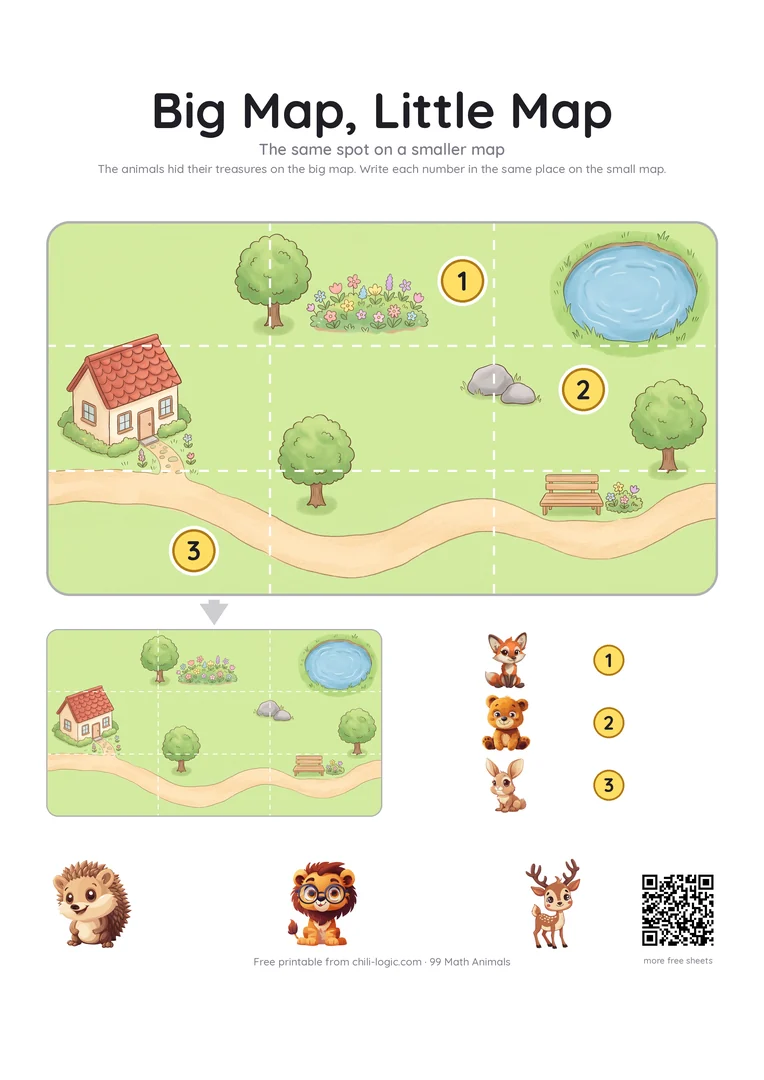
Big map to small map, with a grid
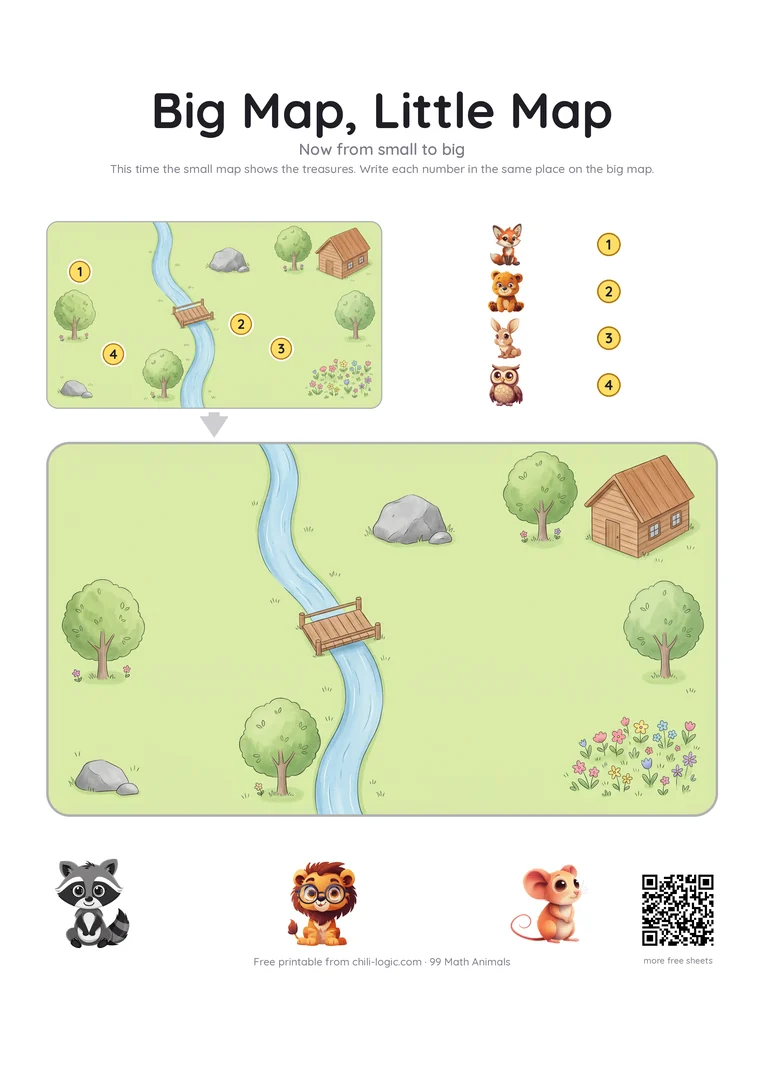
Small map to big map, no grid
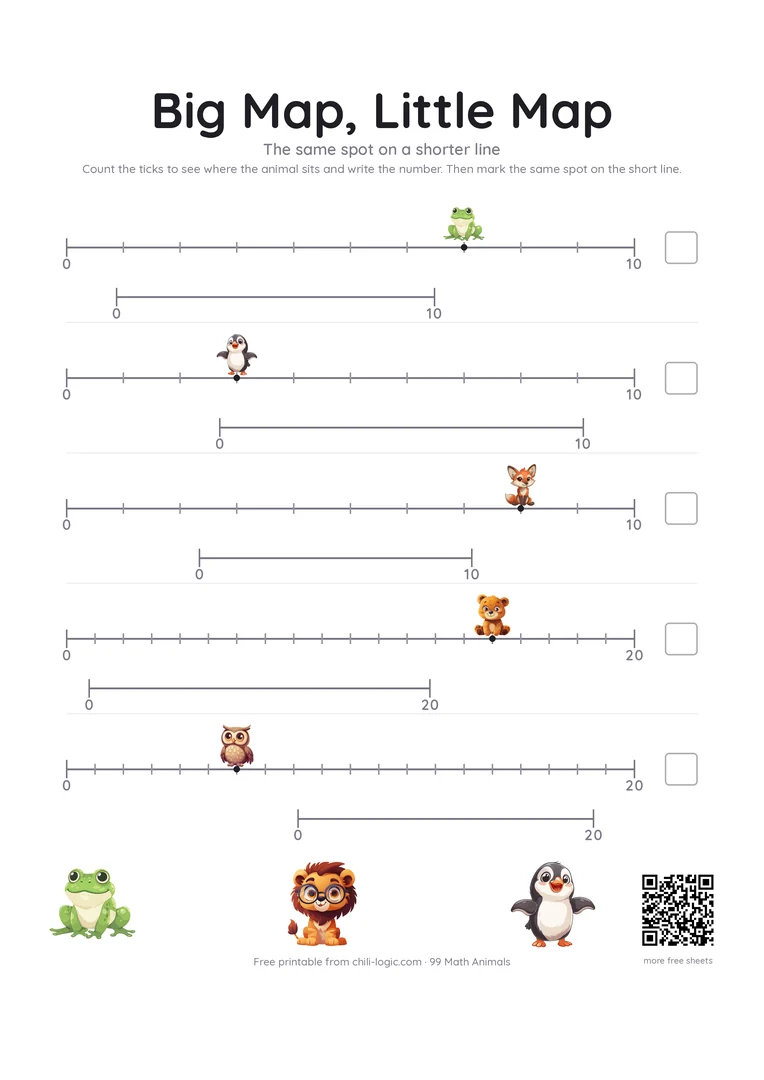
The same spot on a shorter number line
Printing notes
- Print at 100%, not "fit to page" — scaling shrinks the digits and the whole point is that your child writes them at a steady size.
- Black-and-white and draft mode are fine. Nothing on these sheets depends on colour.
- Slide a sheet into a punched pocket and a dry-wipe pen turns one page into a hundred goes.
The thinking behind it
Board Games That Teach Math (and the One Rule That Makes Them Work) — Read the full guide