



Board Games That Teach Math (and the One Rule That Makes Them Work)
In this article
- Do board games really help kids learn math?
- Why does a straight, numbered track matter?
- How do you play so the math actually happens?
- Which games fit which age?
- What about the games we already have at home?
- Can we make our own number board game?
- Choosing a game as a gift: what should you look for?
- Where does a math app fit?
- Is there anything to watch for?
Yes — some board games measurably help young children with numbers, and the ones that work best are the plainest: a straight track of numbered squares, a die or a spinner, and a child who says the numbers out loud as they move. That last detail, counting from the square you are on ("five, six, seven") instead of starting again at "one", is what turns a race game into a number line your child walks along.
Short answer: in experiments with 4- and 5-year-olds, about an hour in total of a simple 1-to-10 race game, spread over two weeks, improved counting, reading numbers and comparing which number is bigger, and the gains were still there two months later. A 2025 review of 18 studies found the effect small but reliable. What matters is a straight, numbered track and saying the numbers on the squares, not the name on the box.
We make a counting app for young children, so we will say up front where this article lands: for this particular job, a strip of card and a parent at the table beat our app and most others. Below: what the studies actually found, which games suit which ages, how to play so the math happens, and what to look for if a game is on this year's gift list.
Do board games really help kids learn math?
They can, with an honest note about how much. The best-known evidence comes from psychologists Geetha Ramani and Robert Siegler, who gave preschoolers from low-income families a homemade game: ten squares in a row, numbered 1 to 10, a token, and a spinner that landed on 1 or 2. The children played four sessions of 15 to 20 minutes. Afterwards they were better at counting, at naming written numbers, at saying which of two numbers is bigger and at placing numbers on a line, and nine weeks later the gains had not faded.
The detail that made researchers pay attention was the comparison group. Other children played the identical game with coloured squares instead of numbers: same board, same fun, same friendly adult, and no gains. In a later experiment, the same numbers on a circular board helped less than on a straight one. The game worked when it laid the numbers out in order, with bigger numbers further along.
Since then the idea has been tested many times. A 2025 meta-analysis in the Review of Educational Research pooled 18 studies with more than 1,700 children from preschool to second grade and found a positive average effect of linear number board games: small, about a fifth of a standard deviation, but consistent. A 2023 review of 19 studies with children aged 3 to 9 was more cautious, finding improvements in counting, addition and comparing numbers in about half of the tasks measured, and asking for better-designed studies. A 2025 review of math games in general reached the same practical point: games help, and how a game is designed and played matters as much as which game it is.
Why does a straight, numbered track matter?
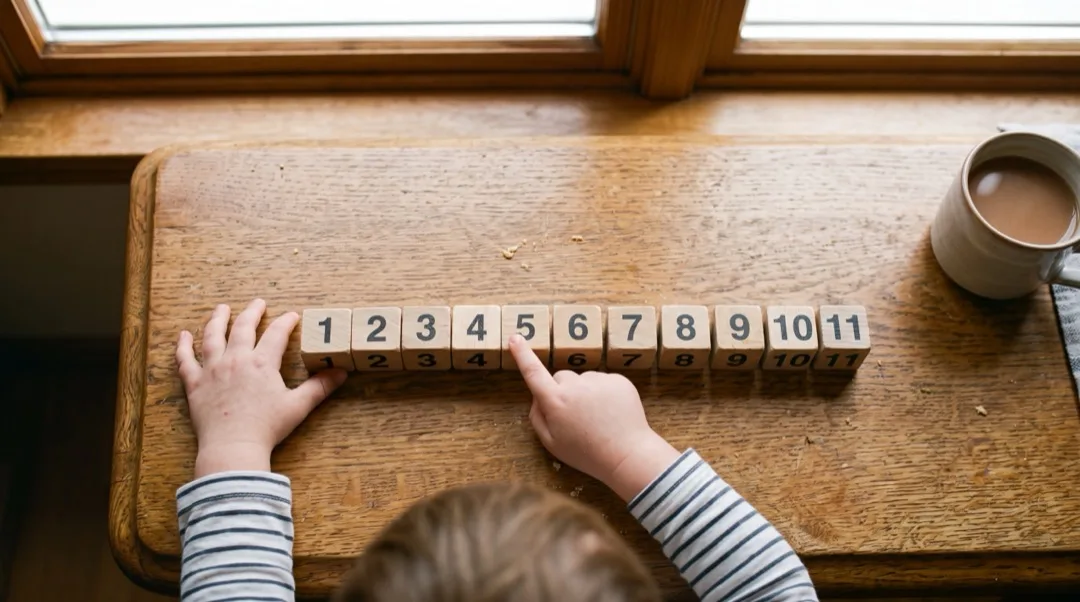
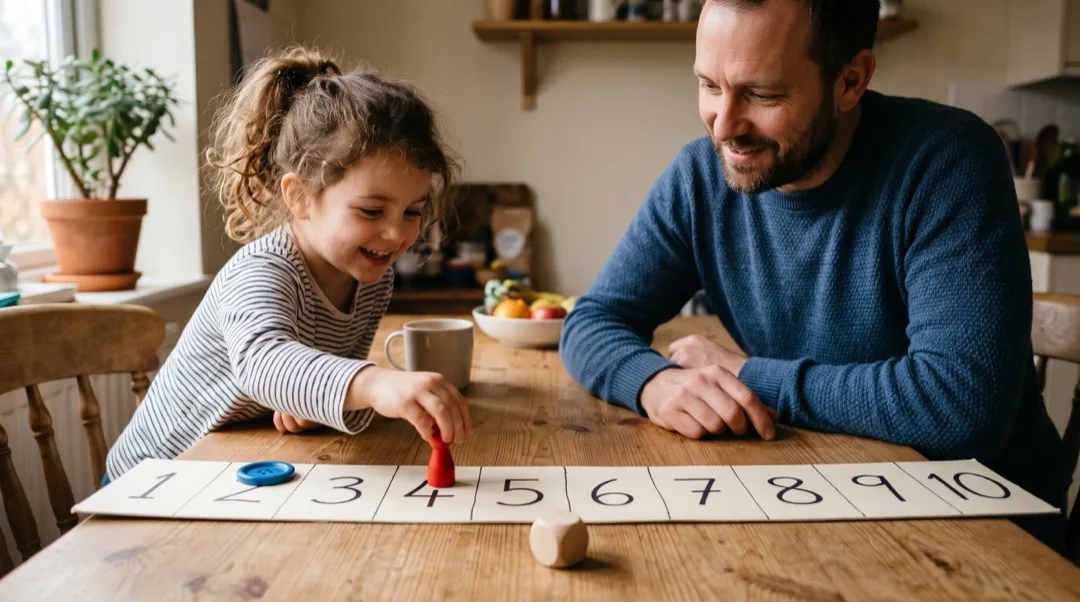
Because it is a number line in disguise. When a token sits on 7 and the child moves three ("eight, nine, ten"), several things happen at once: they see that 10 is further along than 7, that every step adds exactly one, and that the distance they travelled is the number they rolled.
Young children's sense of how big numbers are is lopsided at first. Asked to mark numbers on a line from 0 to 100, many kindergartners spread the small numbers wide and squash everything above 20 or so into the far end, as if 60 and 90 were nearly the same. Walking along a track where every number has its own equal square is one of the simplest ways to straighten that picture out. A circular or tangled path blurs it, a board of colours removes the numbers altogether, and so does moving a token without counting the squares aloud. The math is in the walk, not in the dice.
How do you play so the math actually happens?
These are the habits the researchers built into their games, plus a few we have picked up from watching children play:
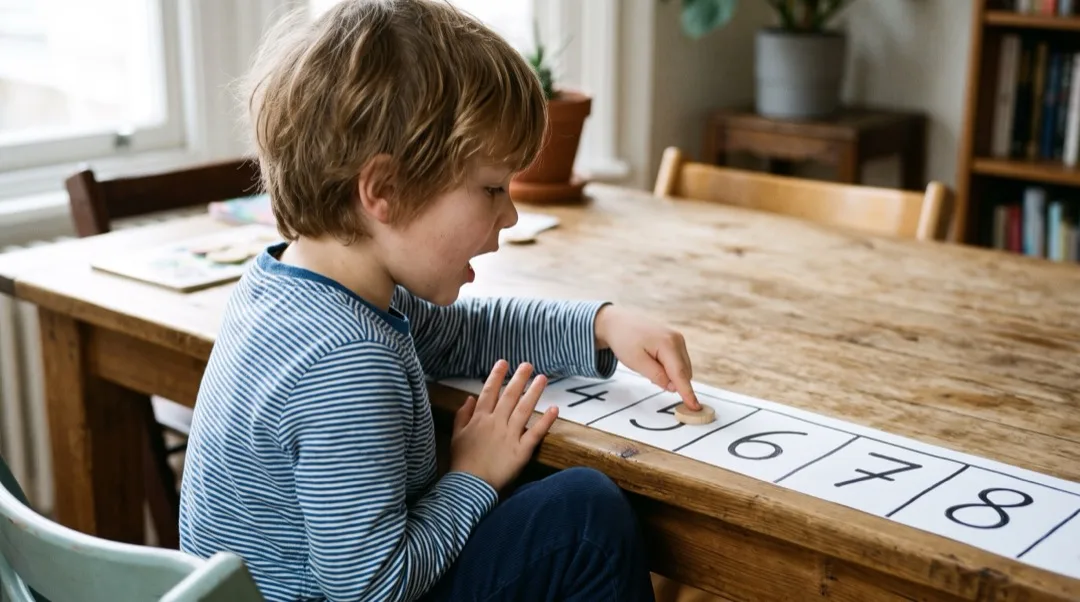
- Count from where you stand. On square 4, rolling a 3: "five, six, seven," touching each square. Not "one, two, three." This is the rule that matters most, and children forget it all the time, so model it calmly on your own turn rather than correcting theirs.
- Say the number you land on. "I'm on nine." A tiny habit that ties the spoken word to its place on the track.
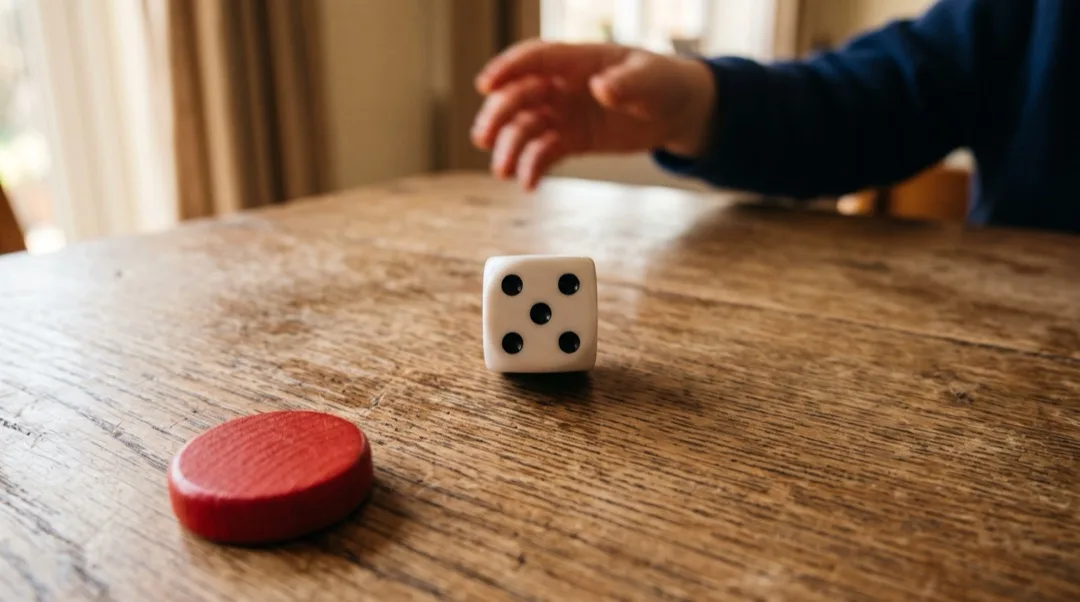
- Use small moves for small children. A spinner or die with only 1s and 2s keeps a 3- or 4-year-old counting rather than guessing. Switch to an ordinary dot die when the counting is steady.
- Let your child move your token too. Counting your moves doubles the practice, and children enjoy being in charge.
- Ask one question, not five. "Who is closer to 10?" or "How many more to the finish?" once in a game is plenty. A quiz dressed up as a game stops being a game.
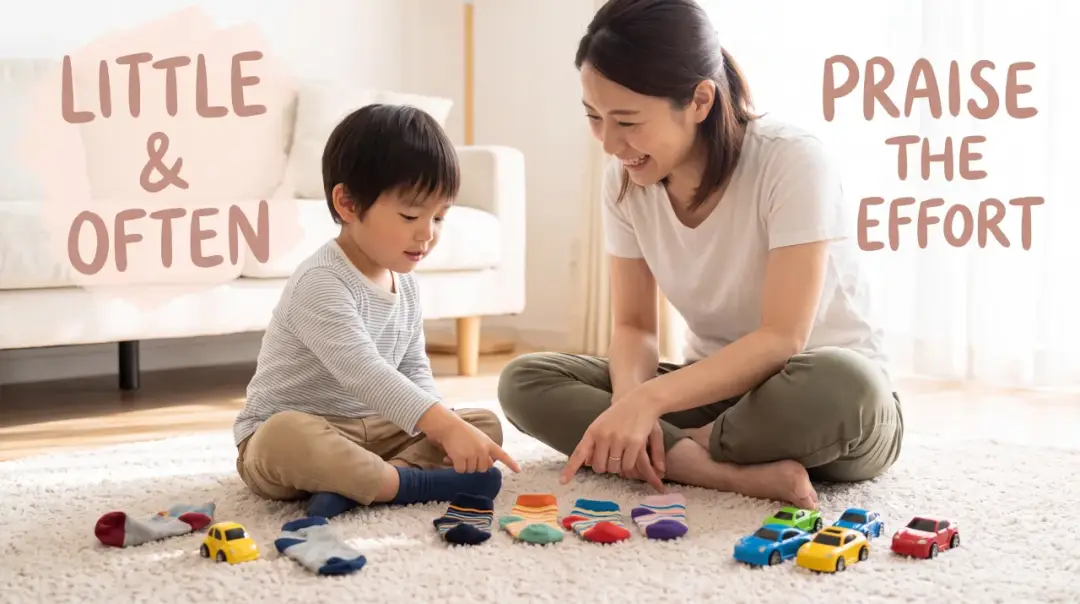
- Keep it short. The studies used sessions of 15 to 20 minutes. Two or three rounds, then stop while it is still fun.
Which games fit which age?
Treat the rows as a ladder rather than a schedule. Plenty of 4-year-olds are ready for the second row and plenty of 6-year-olds still love the first.
| Age (roughly) | Game | What it practises | Make it count |
|---|---|---|---|
| 3–4 | Homemade race game: 10 squares in a row, numbered 1–10, a die or spinner with only 1s and 2s | Number names in order, one step = one more, further along = bigger | Say the numbers on the squares as you move |
| 4–5 | A longer track (1–20 or 1–30) with an ordinary dot die; memory games pairing sets with digits | Reading a die without counting the dots, matching amounts to numerals, the teen numbers | Let your child count your moves too |
| 5–6 | Snakes and ladders or any 1–100 board; dominoes; "war" with number cards | Numbers to 100, which number is bigger, counting on from big numbers | Now and then ask "how far to 100?" |
| 6–8 | Two dice added together, card games collecting pairs that make 10, simple shop games with play money | Addition facts to 12, pairs that make 10, keeping a running score | Keep score on paper: real arithmetic with a real reason |
What about the games we already have at home?
Most family games practise something, just not all the same thing:
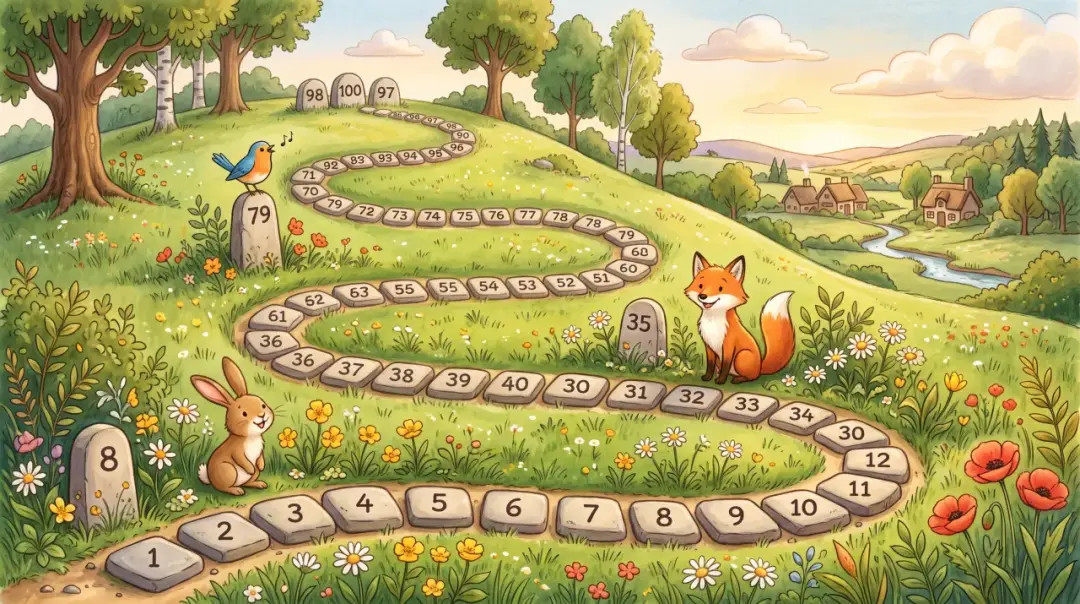
- Snakes and ladders is the classic closest to the studies: a track numbered 1 to 100, read in order. The rows wind back and forth, so point along each row as you count. The snakes and ladders give you something to talk about: "You went from 28 to 84. How far is that?"
- Race-around-the-cross games (the ones with four coloured homes) are good for reading a die and counting steps, but their track has no numbers. Fun and useful, just not the number-line effect.
- Dominoes are dot patterns. Matching ends trains children to recognise amounts at a glance, and older children can add the two halves of a tile.
- Card games such as war, where the higher card wins, practise comparing numbers quickly. A pairs game where you collect two cards that make 10 practises the number pairs every first grader needs.
- Memory with numbers, turning over a group of dots and hunting for the digit that matches it, joins counting to the written number.
None of this needs to be bought. A deck of cards and a single die cover half of the table above.
Can we make our own number board game?
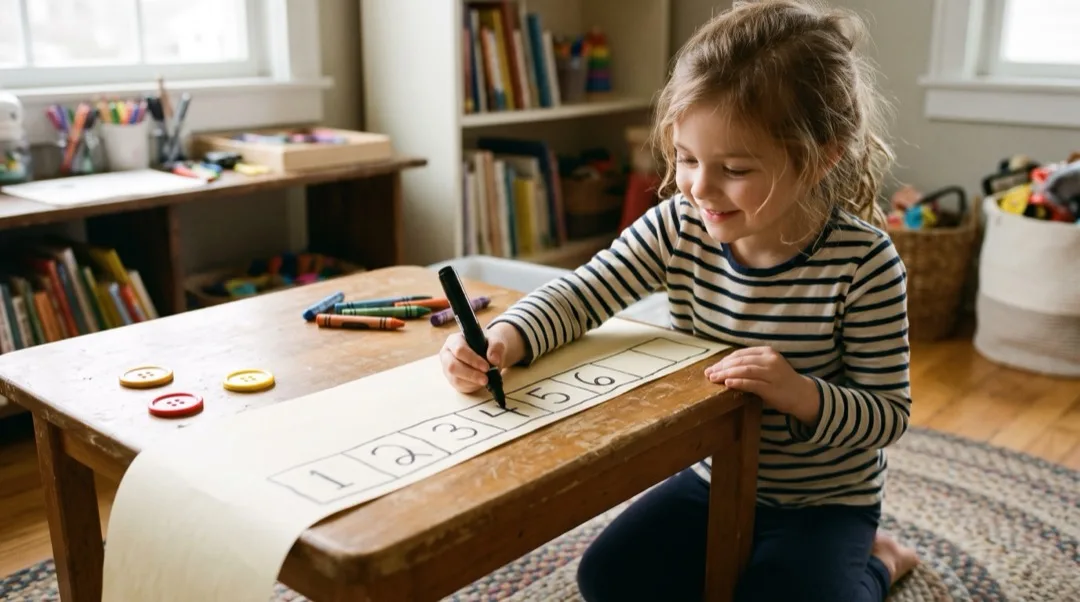
Easily, and the homemade version is the one closest to the research. Cut a long strip of card, draw ten equal squares in a row (twenty, once ten feels easy), and number them 1 to 10 from left to right, with a start before 1 and a finish after 10. Two buttons make the tokens. For the 1-and-2 spinner, draw a circle split in half, write 1 and 2, and spin a paper clip around a pencil point. Children love drawing the track themselves, and writing the numbers is practice in its own right.
Choosing a game as a gift: what should you look for?
If a game is on this year's list, the research gives a short checklist that works in any shop:
- Numbers on the board, in a clear order. Pictures and colours are lovely as decoration, not as the whole track.
- Dice with dots for children who are still counting; dice with numerals once they read them.
- Rounds under 15 minutes. Short games get played; long ones get abandoned halfway.
- No reading needed for the youngest players, so they can play without an adult reading every card.
- Something to count: coins, gems, cards, steps. Collecting and comparing is math too.
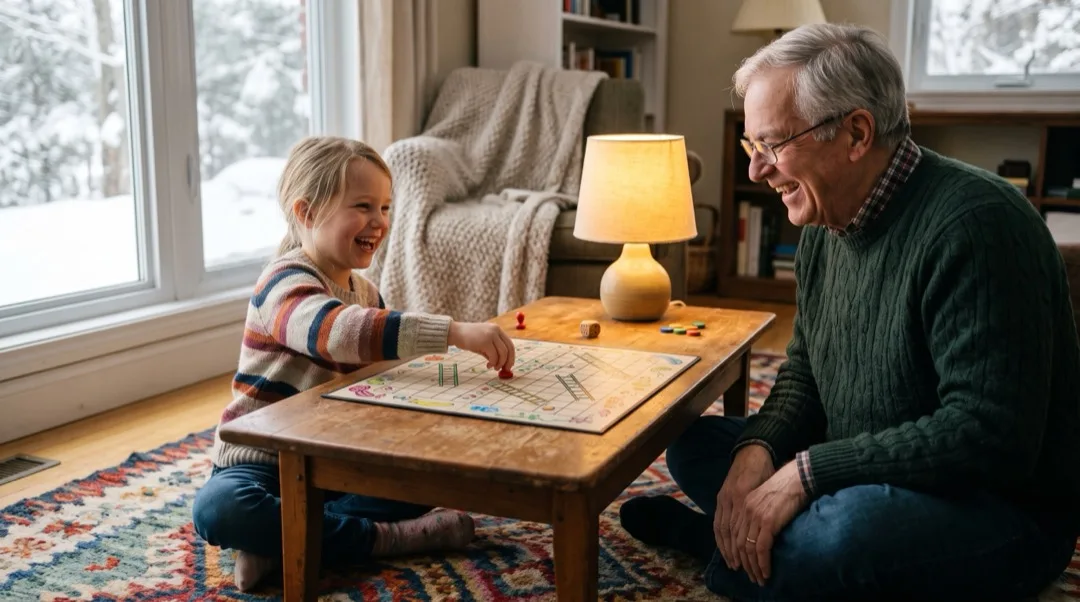
One honest note to go with the list: the games that worked in the studies were played with an adult who talked about the numbers. A game on the shelf teaches nothing. A game with you at the table is the whole effect.
Where does a math app fit?
An app can practise the same skills on your child's own time, and ours tries to: counting, reading numbers, adding with animals. But a board game does something we cannot. It puts you next to your child, taking turns, saying numbers out loud and learning to lose without a meltdown. If you have twenty minutes and a die, play the game. Keep the app for the minutes when you cannot.
Is there anything to watch for?
Not much. If a child of 5 or 6 still cannot move one square per number counted, or keeps losing track of which number comes next after many relaxed tries, mention it to their teacher; our guide to counting to 100 has the usual age ranges. And if your child hates losing, that is normal at 4 and 5. Shorter games and playing together against the game ("can we both get home before the sand timer runs out?") help more than letting them win every time.
Questions parents ask
Do board games really improve math skills?
Simple number board games do, modestly. In controlled studies, about an hour of a 1-to-10 race game improved preschoolers' counting, number reading and comparing, and a 2025 review of 18 studies found a small but reliable positive effect. The board needs numbers in order, and the child needs to say them while moving.
What is the best board game for math for a 4-year-old?
A plain race game on a straight track numbered 1 to 10 or 1 to 20, with a die or spinner showing small numbers. You can draw one on a strip of card in five minutes. Shop-bought games work too, as long as the squares are numbered in order and the moves are counted out loud.
Is snakes and ladders good for learning numbers?
Yes, it is one of the better classics for 5- to 7-year-olds, because the track is numbered from 1 to 100 in order. Count on from the square you are on, and point along the winding rows so the order stays clear.
How often should we play to make a difference?
The studies used a handful of 15- to 20-minute sessions over two or three weeks, and that was enough to see gains. A couple of short games a week is plenty. Stopping while it is still fun matters more than any schedule.