



My child can add, so why can't they do word problems?
In this article
- Why can my child do sums but not word problems?
- Are keywords like "in all" and "left" a good trick?
- What kinds of word problems do young children meet?
- How can I help with word problems at home?
- What is a bar model, and should my child draw one?
- What if my child can't read the problem yet?
- When should I worry?
- Where does a maths app fit?
Because a word problem is two jobs, not one. First your child has to work out what is happening in the story, and only then do the sum. Most children who "can add but can't do word problems" are fine at the second job and stuck on the first: they cannot yet turn "Mia has 9 stickers and Sam has 6" into a picture in their head, so they grab the two numbers and guess what to do with them.
Short answer: word problems test understanding a story as much as arithmetic. Children meet them at 5 or 6 and work on them all through first and second grade. Help by having your child retell the story in their own words, act it out or draw it, and only then write the sum. Skip keyword tricks: words like "more" and "left" point the wrong way too often.
It is one of the most common worries parents bring to teachers in the first school years: the child who rattles off 9 − 6 = 3 but freezes at "How many more stickers does Mia have than Sam?" Below: why this happens, why the keyword trick makes it worse, the few kinds of story young children actually meet, and a routine you can use at the kitchen table.
Why can my child do sums but not word problems?
A sum on a worksheet tells your child exactly what to do. A word problem hides it. Before any arithmetic happens, your child has to do three things:
- Understand the story. Who has what, what changes, and what the question is asking about. For a six-year-old that is a lot of language to hold at once, and some children are still decoding the words themselves.
- Choose the operation. Is this putting things together or taking them apart? Is the number we want the total, or one of the pieces?
- Write the number sentence. Turning "some birds flew away and 5 are left" into a sum is a skill of its own, separate from working out the answer.
Most practice at home trains only the last part, the arithmetic. That is why a child can be quick at sums and lost on story problems at the same time. It is not laziness, and it is usually not a maths problem: it is a missing link between language and numbers, and it can be taught.
Are keywords like "in all" and "left" a good trick?
Many children are taught to hunt for keywords: "altogether" and "in all" mean add, "left" and "fewer" mean take away. It works on the easiest problems and then turns on them. Try this one: "Mia has 9 stickers. That is 3 more than Sam has. How many stickers does Sam have?" The keyword is "more", so a keyword-trained child adds and writes 12. The answer is 6, because Sam has fewer.
Maths educators have warned about this for years; one well-known teachers' article is titled simply "Avoiding the Ineffective Keyword Strategy" (Karp, Bush and Dougherty, 2019). The US Department of Education's 2021 practice guide on helping children who struggle with maths recommends the opposite approach: teach children what kind of story a problem is, by its structure, and choose the operation from that. The good news is that young children only meet a handful of story types.
What kinds of word problems do young children meet?
Researchers sort early addition and subtraction problems into a few families. You do not need the names, but knowing them helps you see why some problems are much harder than others even when the numbers are the same:
| Kind of story | Example | Sum | Usually met |
|---|---|---|---|
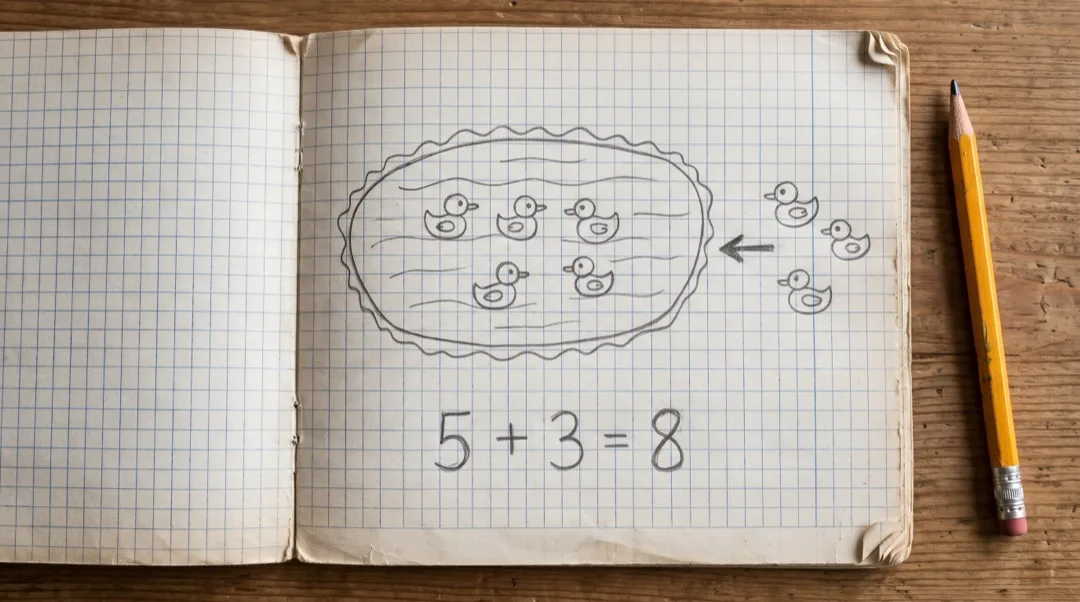
| Something is added | 5 ducks are on the pond. 3 more swim over. How many now? | 5 + 3 | Kindergarten (5–6) |
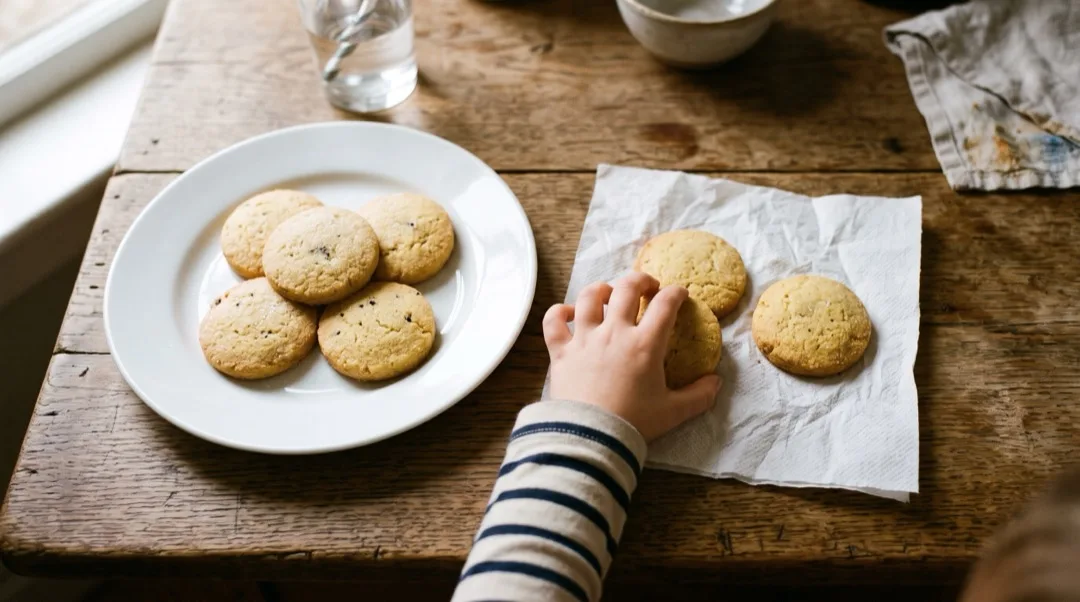
| Something is taken away | There are 8 cookies. Leo eats 3. How many are left? | 8 − 3 | Kindergarten (5–6) |
| Two parts, one whole | 4 red and 5 blue balloons. How many balloons? | 4 + 5 | Kindergarten–1st grade |
| Comparing | Mia has 9 cards, Sam has 6. How many more does Mia have? | 9 − 6 | 1st grade (6–7) |
| Missing start | Some birds sat on a branch. 4 flew away, 5 are left. How many were there? | 5 + 4 | 1st–2nd grade |
| Two steps | 12 children on a bus, 5 get off, 3 get on. How many now? | 12 − 5 + 3 | 2nd grade (7–8) |
The US Common Core standards expect first graders to handle all of these within 20, with the unknown in any position, and the English national curriculum asks Year 1 children to solve one-step problems using objects and pictures. Comparing and missing-start problems are the ones children get wrong most often, because the story says one thing ("more", "flew away") and the sum needs the opposite.
How can I help with word problems at home?
Use the same five steps every time, so your child starts to do them without being asked:
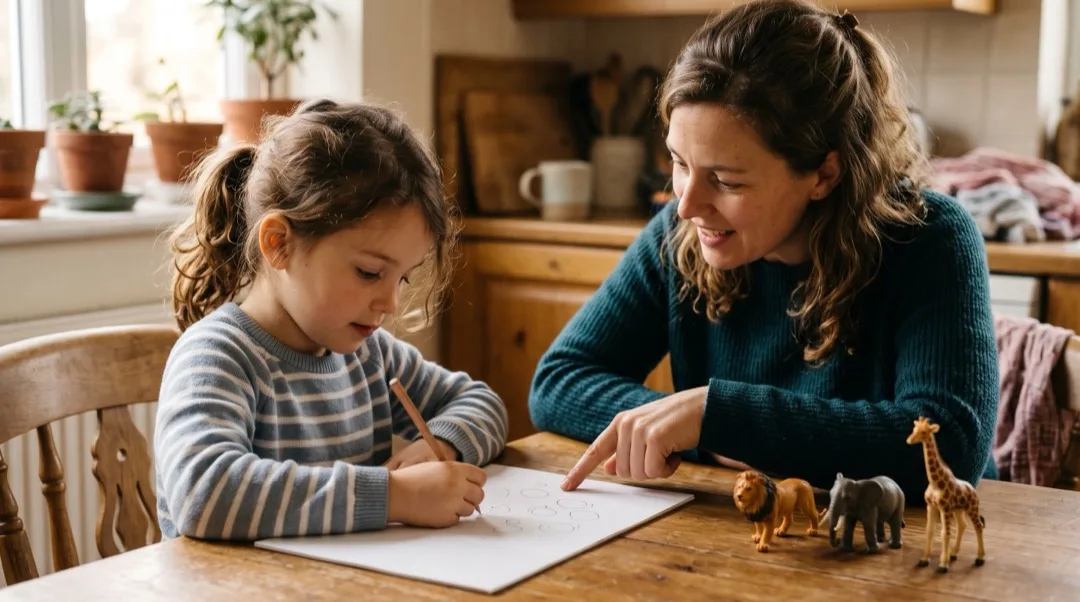
- Read it together, then ask for a retelling. "Tell me the story without the numbers." If your child can say "Mia has some stickers and Sam has fewer", the hard part is done.
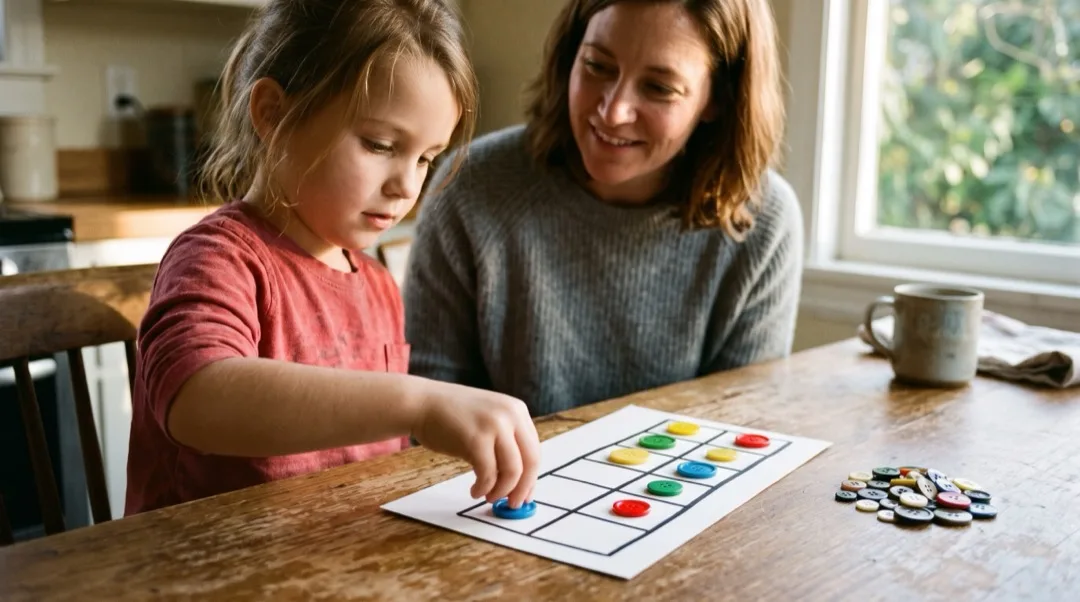
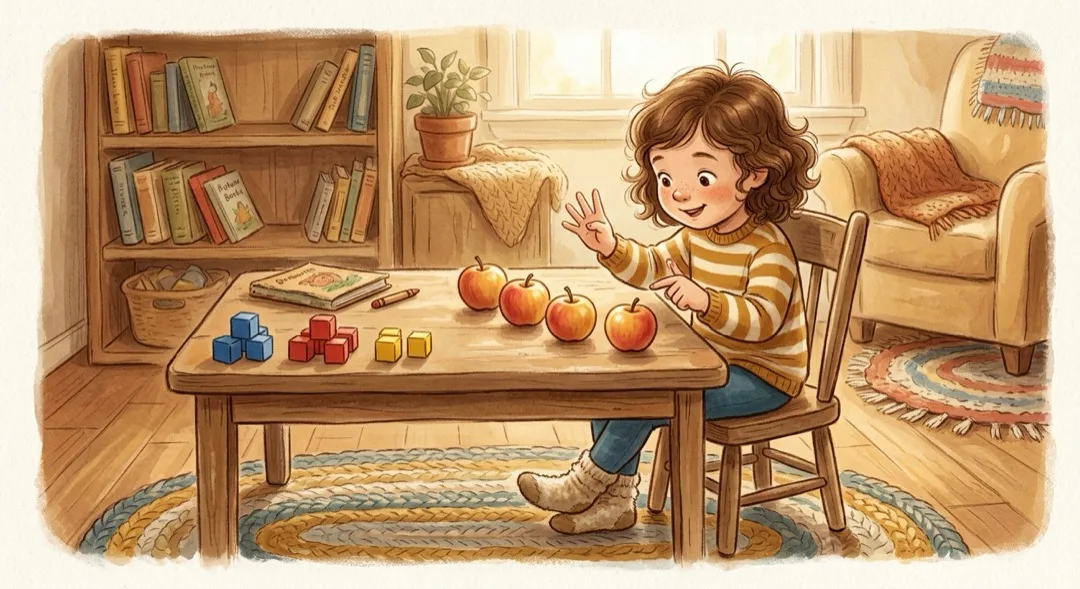
- Act it out or draw it. Cookies, toy animals, fingers or circles on paper. The drawing does not need to be pretty; dots and lines are faster than ducks.
- Ask what we are looking for. Is the answer the whole thing, or one of the pieces? Is it a difference between two amounts?
- Write the number sentence, then solve it. Let your child choose the operation. If it is wrong, do not correct it straight away: go back to the drawing and ask whether the answer fits the story.
- Check it against the story. "Sam has 12 stickers, but Sam has fewer than Mia. Does that make sense?" Catching their own nonsense answer is worth more than getting it right the first time.
Then flip it: give your child a sum, say 7 − 2, and ask them to invent a story for it. Children who can make up their own word problems understand them far better than children who only ever solve them. At the dinner table, in the car or at the shops, a story problem a day said out loud is enough.
What is a bar model, and should my child draw one?
Once dots and pictures get slow, many schools move to a bar model: the story drawn as rectangles. Singapore made it famous, Japan calls it a tape diagram, and English and French schools now teach it too. For a comparing problem you draw two bars, one for Mia's 9 and a shorter one for Sam's 6, and the missing piece at the end is the difference. Seeing that the question mark sits on the short bar is what makes 9 − 6 the obvious choice, even though the story says "more".
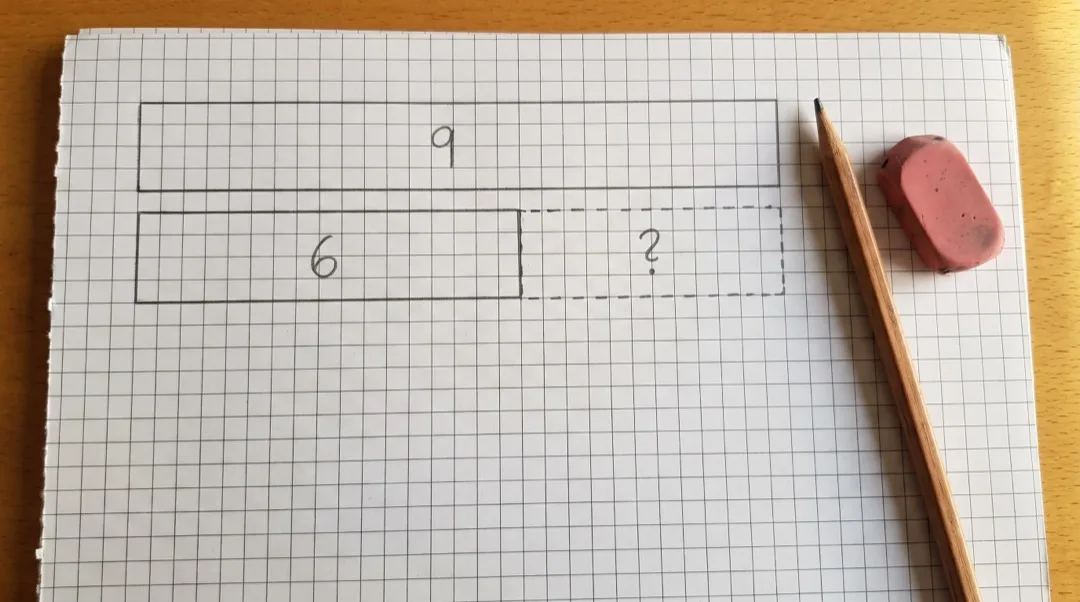
If your child's school uses bar models, use them at home too rather than teaching your own method. If it does not, do not force it on a five-year-old: objects and drawings come first, and bars are their tidier, faster version.
What if my child can't read the problem yet?
Then read it to them. That is not cheating: at 5 or 6 the point is the thinking, and reading is a separate skill that will catch up. Most kindergarten word problems are meant to be told, not read. If your child can read but reads slowly, read it once yourself and let them read it a second time, so they are not spending all their attention on decoding.
When should I worry?
Most children who struggle with word problems at 6 are simply new to them, and a few weeks of retelling and drawing make a visible difference. Talk to the teacher if your child cannot follow a two-sentence story read aloud even when there are no numbers in it, because that points to listening or language rather than maths. If simple sums without any story are also hard, start there; see when kids learn addition and subtraction for what is typical, and struggling with maths or dyscalculia if the difficulty is wider.
Where does a maths app fit?
Honestly, not very far. Our app practises counting and number facts, which makes the arithmetic part of a word problem quicker, but understanding a story is learned by talking about stories with someone. Ten minutes of you and your child acting out cookies on a plate will do more for word problems than any screen.
Questions parents ask
Why can my child add but not solve word problems?
Because a word problem asks for two skills: understanding the story and doing the arithmetic. Most children who struggle are fine with the sum but have not yet learned to turn the story into a picture of what is happening. Retelling the story and drawing it builds that link.
Should I teach my child keywords for word problems?
It is better not to. Keywords such as "more" or "left" work on easy problems and then mislead on comparing and missing-start problems, where "more" can mean subtraction. Teaching your child to picture the story and ask what is being looked for works for every problem.
At what age do kids start word problems?
Usually in kindergarten, at 5 or 6, with simple stories about adding and taking away, told aloud and solved with objects or drawings. Comparing problems and problems with a missing start come in first grade, and two-step problems in second grade.
How can I help my child understand word problems at home?
Read the problem together and ask your child to retell it without the numbers. Then act it out with objects or draw it, decide whether the answer is the whole or a part, write the number sentence, and check that the answer fits the story. Inventing stories for given sums helps too.