


Is Counting on Fingers Bad?
In this article
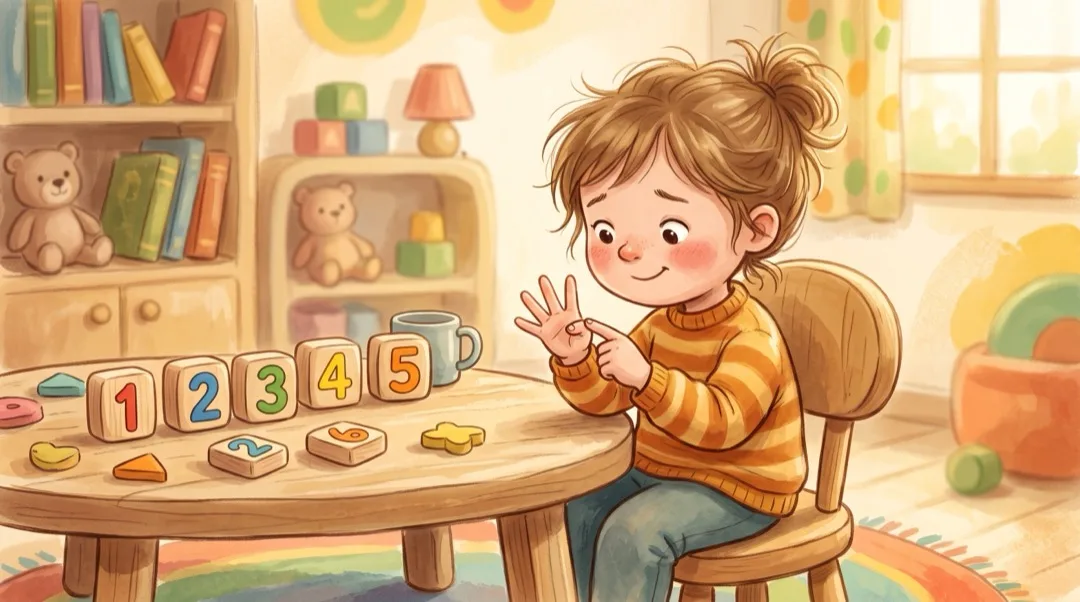
No, counting on fingers is not bad, and there is no age by which a child needs to stop.
Short answer: fingers are a normal, useful counting tool, not a crutch to be broken — brain-imaging research actually links finger representation to number sense, and rushing a child away from their fingers before they are ready tends to backfire rather than help.
The one real exception is narrow: a child who is stuck using fingers for the same small, over-practiced fact years after classmates have moved on may benefit from a nudge toward other strategies, not from having their fingers taken away.
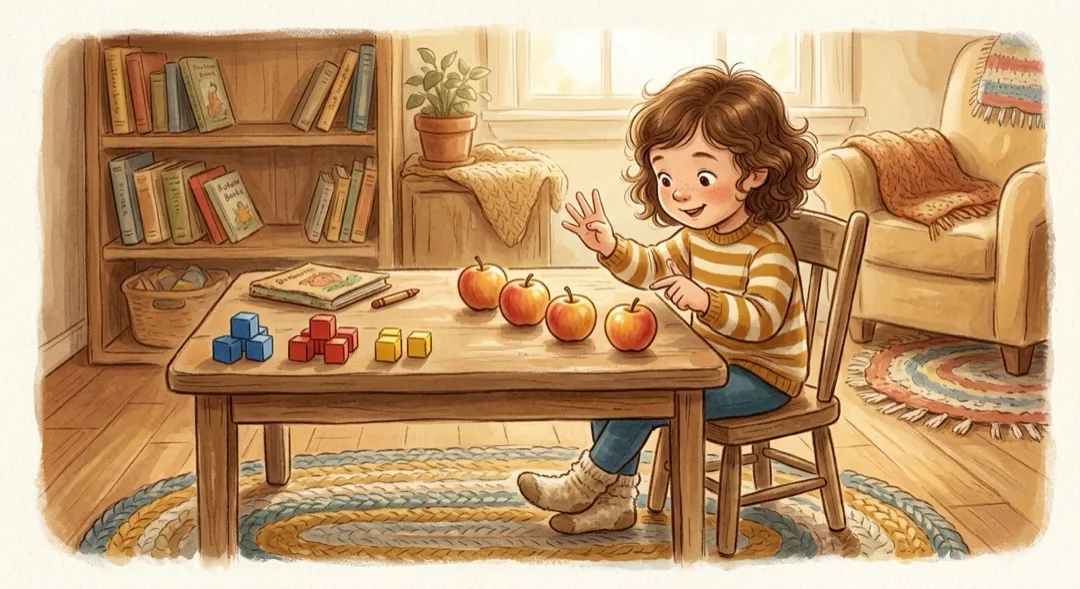
We build a counting app for young kids, and fingers show up constantly in the data we watch: children hold up fingers before they draw a digit, recount on them mid-answer, and keep using them well into the age when some parents start to worry it looks "babyish." Below is where the "fingers are bad" idea comes from, what the actual research says, and the one situation worth a gentle second look.
Where does the "fingers are bad" idea come from?
The worry usually comes from a reasonable-sounding but incomplete idea: that finger counting is a crutch, and a child who leans on it will never move to real mental math. Some teachers and parents actively discourage it, or tell a child to "do it in your head" before that child has another strategy ready to reach for. The intention is good — wanting a child to progress — but the assumption underneath, that fingers block progress rather than support it, is not well supported by the evidence.
What does the research actually say?
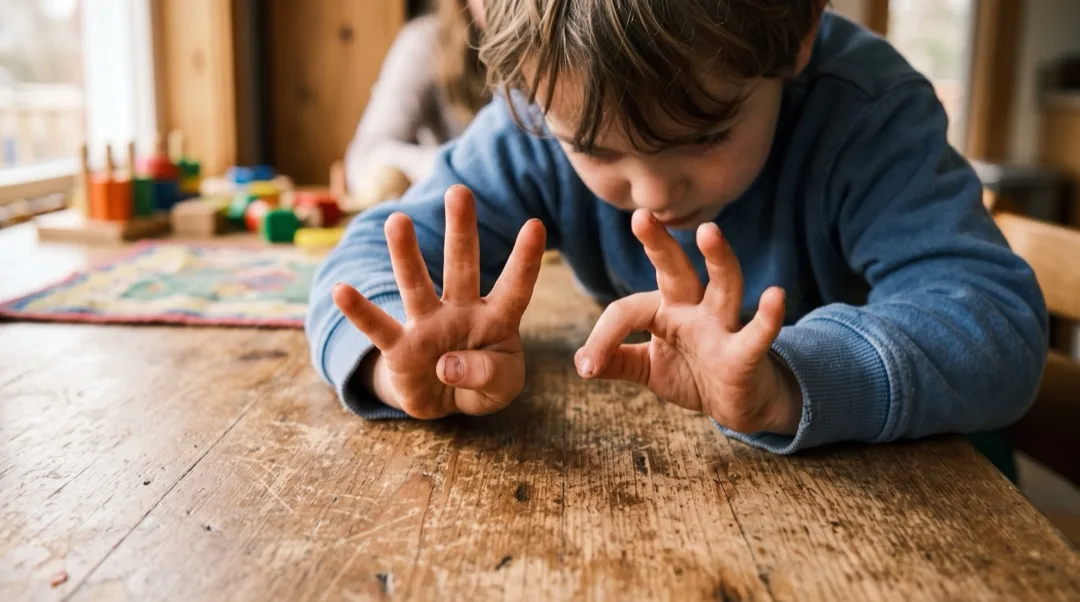
The picture from cognitive science points the other way. Researchers studying "finger gnosis" (a child's ability to sense and distinguish their own fingers without looking) have found it correlates with later math performance — strongly enough that some researchers have proposed finger-awareness exercises as an early numeracy support.
Brain-imaging studies have also found that areas involved in finger representation activate during number tasks in adults, including trained mathematicians doing calculations mentally with no fingers in sight. The interpretation many researchers draw is not that fingers are a workaround, but that the brain's sense of fingers is one of the scaffolds number sense is built on in the first place.
Stanford's Jo Boaler, who studies math education, has written and spoken widely on this evidence, arguing that discouraging finger use in young children removes a genuine tool for building number sense rather than accelerating anyone past a crutch. We are not researchers ourselves, so we would point you to her and the primary studies she cites rather than take our word for it — but the direction of the evidence is fairly consistent.
| Age | Typical use of fingers |
|---|---|
| Around 3 to 4 | Fingers used to show a number ("I'm 4!") more than to calculate; counting on fingers is still developing. |
| Around 5 to 6 | Fingers commonly used to count objects and small sums, often touching each finger in turn. |
| Around 6 to 8 | Fingers used for addition and subtraction within 10 or 20, often alongside newer strategies like counting on from the bigger number. |
| Around 8 to 10 | Many children use fingers less for very familiar facts and more for genuinely new or larger problems, as recall and other strategies take over gradually. |
So when, if ever, is it worth a second look?
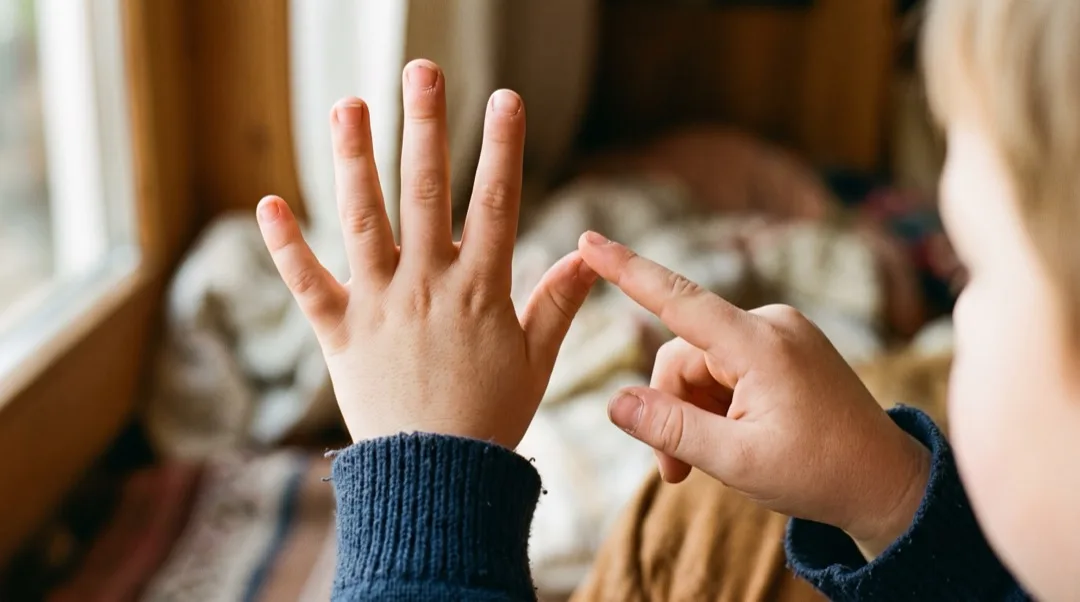
Not the fingers themselves — the narrowness. It is reasonable to gently introduce other strategies if a child relies on fingers as their only method for the same small, heavily-practiced facts (like 2 + 2) well past the age most classmates have moved on, and shows no interest in or awareness of quicker ways to get there. Even then, the fix is not removing the fingers; it is adding options alongside them, like skip-counting, doubling, or noticing a pattern, so the child has more than one route to an answer.
How to help fingers become a stepping stone
A few habits build new strategies alongside fingers, rather than trying to remove them before something else is ready to take their place:
- Let fingers be the default for as long as they are useful — there is no deadline to enforce.
- Model other strategies alongside fingers, out loud, rather than instead of them: "I know 5 plus 5 is 10, so 5 plus 6 is one more."
- Notice out loud when your child gets faster or skips a step, rather than pushing them to skip it before they are ready.
- Build automatic recall gently through games, not by banning the fingers that got them this far.
- If a teacher discourages finger use and your child is struggling because of it, it is fine to say so — the evidence genuinely favors letting fingers stay in the toolkit.
Does this apply to times tables too?
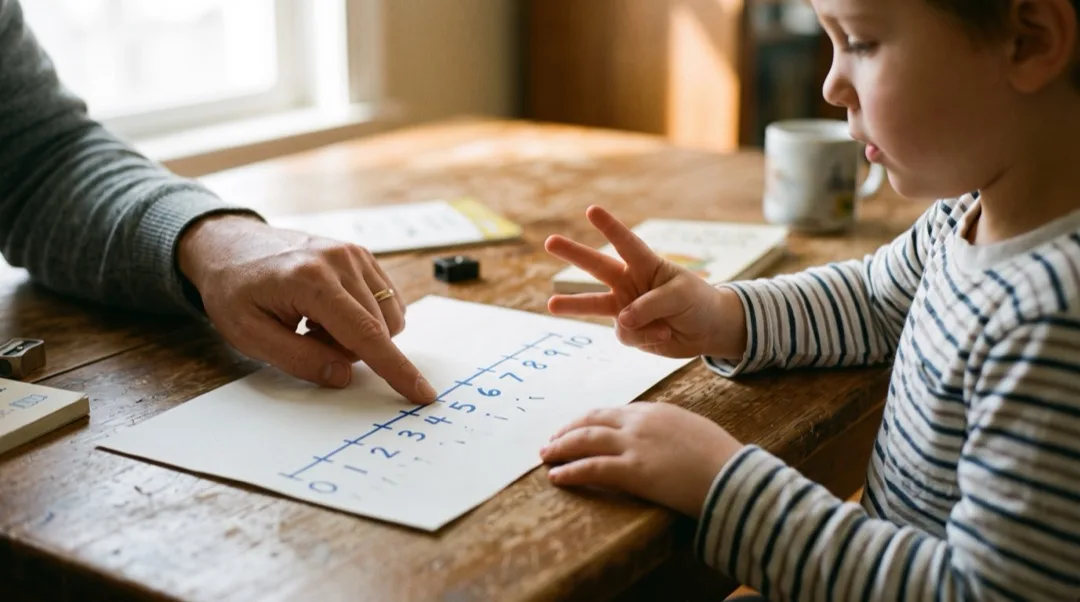
Yes, the same logic holds later on. Skip-counting on fingers is a completely reasonable way to reach a multiplication fact before it is memorized, and pushing a child away from it before recall is solid just adds pressure without adding speed. We cover the calm, evidence-based way to build multiplication recall in how to memorize times tables.
Is this ever a sign of a bigger difficulty?
Rarely, and not from finger use alone. A general and persistent struggle with number sense — not just a preference for fingers, but real difficulty with quantities, comparing amounts, or remembering basic facts even with plenty of practice — is worth mentioning to a teacher, who can compare your child against the wider class, or a pediatrician. Finger counting by itself, at any age, is not that signal.
Questions parents ask
At what age should a child stop counting on fingers?
There is no set age, and no need to force it. Many children use fingers well into the early school years for both addition and early multiplication, and gradually rely on them less as recall and other strategies develop naturally.
Does counting on fingers mean a child is behind in math?
No. Finger counting is a normal tool used by children, and even adults doing mental math, at every skill level. What matters more is whether new strategies are slowly joining it over time, not whether fingers are present at all.
Should teachers discourage finger counting?
Research on "finger gnosis" suggests fingers support number sense rather than block it, so most researchers who study this recommend allowing finger use rather than discouraging it, especially before a child has another reliable strategy.
Is finger counting bad for times tables?
No. Skip-counting on fingers is a reasonable bridge to a multiplication fact before it is memorized. It is worth adding other strategies over time, but there is no need to remove fingers before a child is ready.