


How to Teach a Child to Tell Time
In this article
- Does analog time-telling still matter if everything has a digital clock?
- What's the easiest order to teach it in?
- Where do kids usually get stuck?
- Does a moveable-hands clock actually help, or is that just a nice-to-have?
- How long does it usually take?
- My child can read o'clock and half past but nothing else — is that behind?
Most children start learning to tell analog time around age 5 to 7, usually right alongside — or just after — they get comfortable skip counting by 5s, since that's exactly the skill a clock face runs on.
Short answer: teach it in stages rather than all at once — o'clock, then half past, then quarter past/to, then five-minute increments, then exact minutes — and use a real analog clock or a teaching clock with hands you can move by hand, not just a poster. Digital clocks are everywhere now, which is exactly why analog reading doesn't happen automatically anymore; it has to be taught on purpose.
We make a counting app built on the same skip-counting foundation a clock face runs on, so time-telling is a skill we think about even though our app doesn't teach it directly. Below: why analog time still matters in a digital-clock world, the teaching order that goes smoothest, and where kids typically get stuck.
Does analog time-telling still matter if everything has a digital clock?
Yes, and mostly for a reason that has nothing to do with clocks specifically: reading an analog face is a genuine spatial and mathematical skill — it uses angles, halves and quarters, and skip counting by 5s, all in one glance — not just a fact to memorize like a digital readout.
It also still shows up constantly in real life: classroom wall clocks, watches, oven timers, and any older clock a child encounters. The honest shift is that kids get far less passive exposure to it than a generation raised without digital clocks did, so it needs to be actively taught rather than picked up by osmosis.
What's the easiest order to teach it in?
Roughly this sequence, each stage building directly on the last:
| Stage | What it covers | Leans on |
|---|---|---|
| O'clock | Hour hand only, minute hand straight up | Recognizing numbers 1-12 |
| Half past | Minute hand pointing down | Simple fractions (half) |
| Quarter past/to | Minute hand pointing left or right | Quarters, before/after |
| Five-minute steps | 5, 10, 15… around the face | Skip counting by 5s |
That last stage is exactly where skip counting by 5s pays off directly — a child who can already count 5, 10, 15, 20 around a room of blocks can apply the identical skill to the numbers around a clock face without learning anything new, just a new place to use it.
Where do kids usually get stuck?
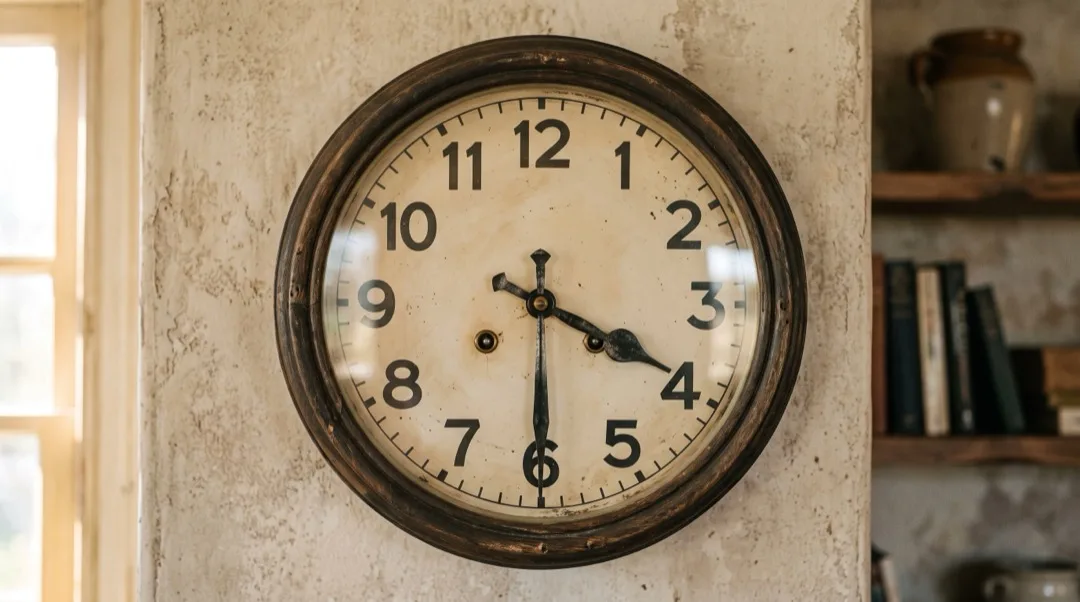
The hour hand's in-between position trips up almost everyone at first. At 3:45, the hour hand isn't sitting neatly on the 3 or the 4 — it's most of the way toward the 4, and reading that correctly, rather than defaulting to whichever number looks closest, is the single hardest part of the whole skill. It's worth pointing out explicitly and expecting it to take longer to click than the minute hand does.
Does a moveable-hands clock actually help, or is that just a nice-to-have?
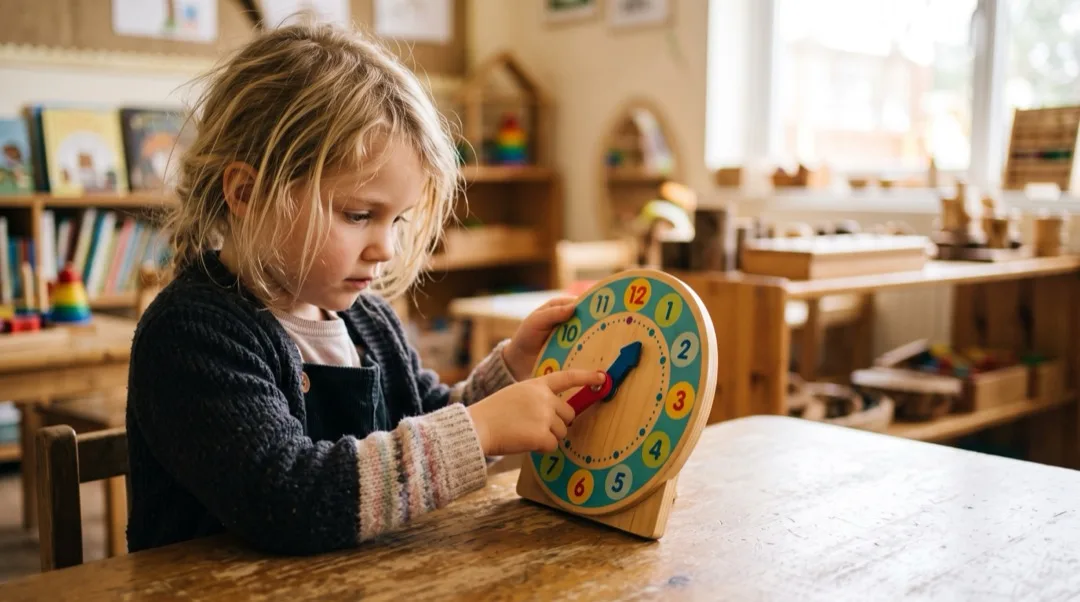
It helps more than a poster or a worksheet does. Being able to physically move the hands and see the relationship between them — turn the minute hand a full circle and watch the hour hand creep forward — makes the mechanism visible in a way a static picture can't. A cheap teaching clock with hands a child can turn by hand is worth the few dollars over a wall poster alone.
How long does it usually take?
Longer than most of the other individual number skills on this site, and that's normal — telling time stacks several skills at once (number recognition, skip counting, fractions, spatial reasoning) rather than being one clean idea. Expect the stages above to unfold over months, not days, with real fluency — reading any random time at a glance — often not solid until well after the concept is first introduced.
My child can read o'clock and half past but nothing else — is that behind?
No. That's exactly the expected middle of the sequence above, not a stopping point that shows something's wrong. The five-minute and exact-minute stages are meant to come later and lean on skills — skip counting in particular — that are often still being built at the same time.
Questions parents ask
What age do kids learn to tell time on an analog clock?
Most children start around age 5 to 7, typically once they're comfortable skip counting by 5s and recognizing numbers 1-12, and full fluency at reading any random time often takes well past when the concept is first introduced.
What's the best order to teach telling time in?
O'clock first, then half past, then quarter past and to, then five-minute increments, then exact minutes. Each stage leans on the one before it, and the five-minute stage specifically depends on being able to skip count by 5s.
Why do kids struggle with the hour hand specifically?
Because it isn't ever sitting neatly on a number except at the exact hour — at 3:45 it's mostly pointing toward the 4, not the 3. Reading its in-between position correctly is usually the hardest single part of learning to tell time.
Does a child still need to learn analog time if they mostly see digital clocks?
Yes — it's a genuine spatial and mathematical skill, not just a way to read a specific device, and it still shows up on classroom walls, watches, and older clocks. Digital clocks mean kids get less passive exposure to it than earlier generations did, which is exactly why it needs to be taught on purpose now.