


My 2-Year-Old Can Count to 10 — Is That Advanced?
In this article
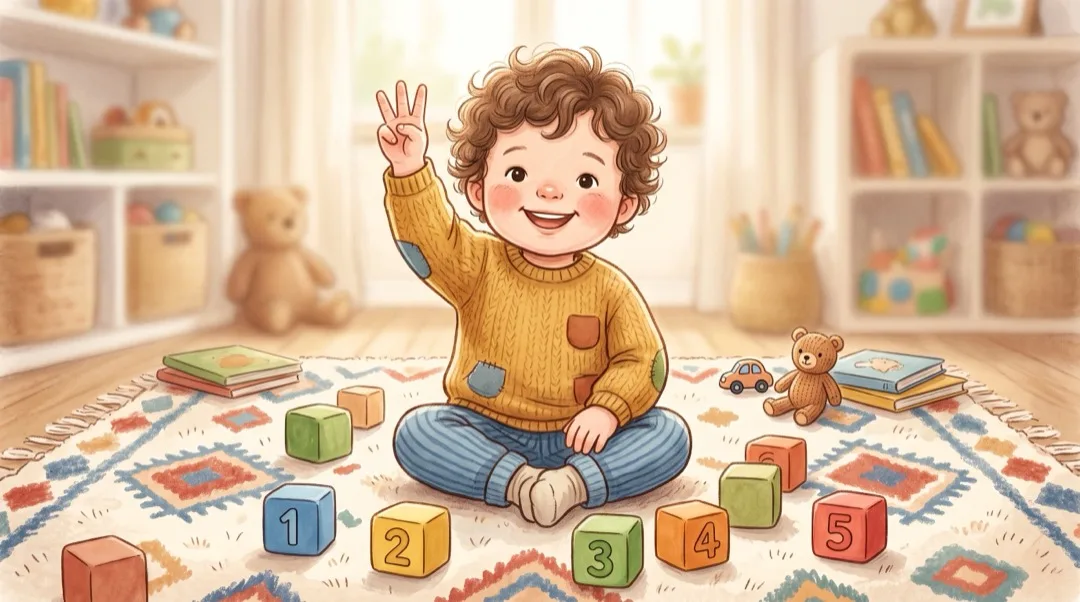
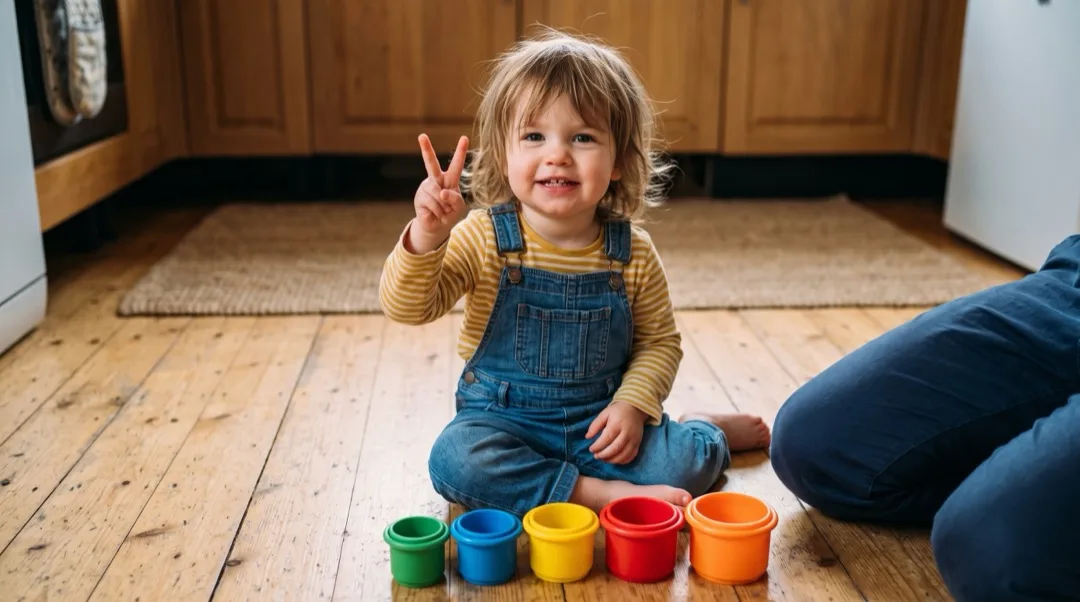
A 2-year-old who says "one, two, three… ten" in the right order is on the early side of the usual range, and what you are hearing is real — but in most cases it is a memorized sequence, not counting yet. That is neither a problem nor a sign of a prodigy. It is the ordinary first step, showing up a little ahead of schedule.
Short answer: most children recite to 10 somewhere between about 2½ and 3½, so a 2-year-old doing it is ahead of the middle but well inside normal. Reciting the words is memory; counting is knowing that each word stands for one more thing. Those arrive a year or more apart, and the second one is the one that matters — you can check for it in three questions.
We build a counting app for young children, so we watch a lot of two-year-olds rattle off numbers and then hand over the wrong number of crackers. Both halves of that are normal. Below: what "early" actually means at this age, a quick way to tell a rhyme from real counting, what early reciting does and does not predict, and what to do next that is not a flashcard.
Is counting to 10 at 2 advanced?
A little, yes. The typical window for reciting the number words to 10 runs from roughly 2½ to 3½, so a child doing it at 24 months — or at 18 or 23 months, which we hear about too — is on the earlier side. It usually reflects exposure more than anything else: counting songs, stairs counted on the way up, an older sibling who counts everything. Number words heard often get learned early, the same way the names of the family pets do.
What it does not automatically mean is that your child understands ten. Researchers who study this draw a firm line between rote counting (saying the words in order) and cardinality (knowing that the last word said tells you how many there are). Almost every child recites first and understands later; the gap is often a year or more. A 2-year-old who recites to 10 is typically a year or so from understanding what "five" means — exactly like a 3-year-old who started reciting last month. We wrote up the full 2-to-4 order in when do kids learn to count to 10; this article is about the child who got to the first step early.
Memorized or real counting? The three-question test
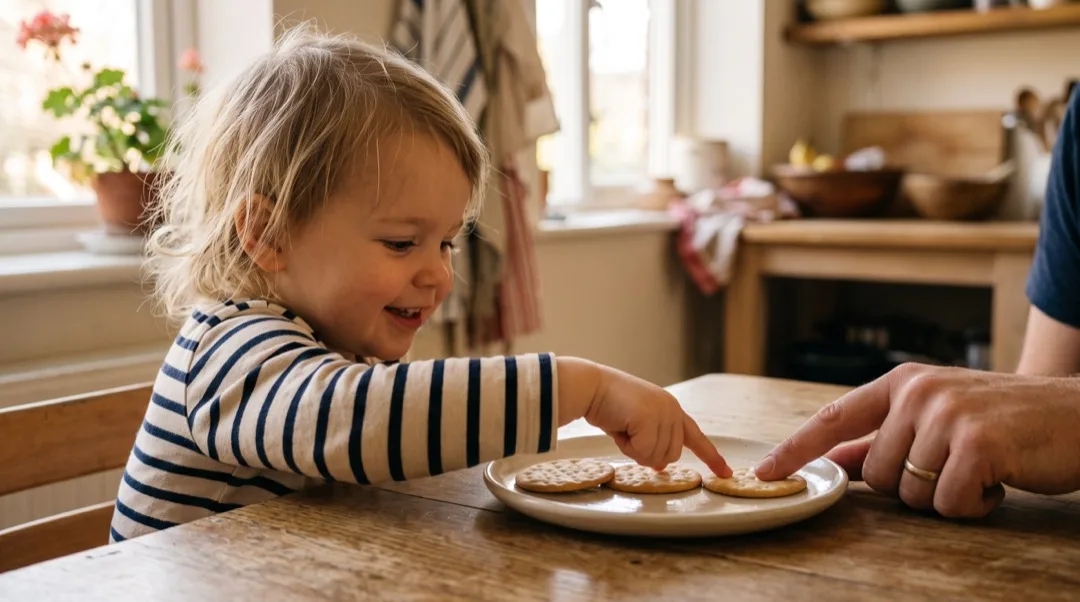
You do not need a worksheet for this. Put five small things on the table — grapes, blocks, crackers — and try these in order. Each one checks a different piece of what "counting" actually is:
| Ask your child | What a memorized-only child does | What a counting child does |
|---|---|---|
| "Count these." (five objects) | Says the words to ten in a rush while the finger skips, doubles back, or waves at the pile; the words and the touches drift apart. | One touch, one word, in order — even if it stalls at three or four. The touch and the word stay together. |
| "How many are there?" (right after counting) | Counts again from the start, or answers with a random number, or the last number of the song ("ten!") regardless of the pile. | Says the last number they landed on without recounting. That is cardinality — the whole point. |
| "Give me three." (from a bowl of more) | Hands over one, or a fistful, or the whole bowl. Most 2-year-olds do this, and it is completely normal. | Counts out exactly three and stops. Typically shows up closer to 3½ or 4, months after reciting is solid. |
If your 2-year-old fails all three, they are behaving exactly like a typical 2-year-old with an early rhyme. If they pass the first one, you are watching the next stage begin. If they pass all three, that is genuinely unusual at 2 — and still nothing you need to do anything about.
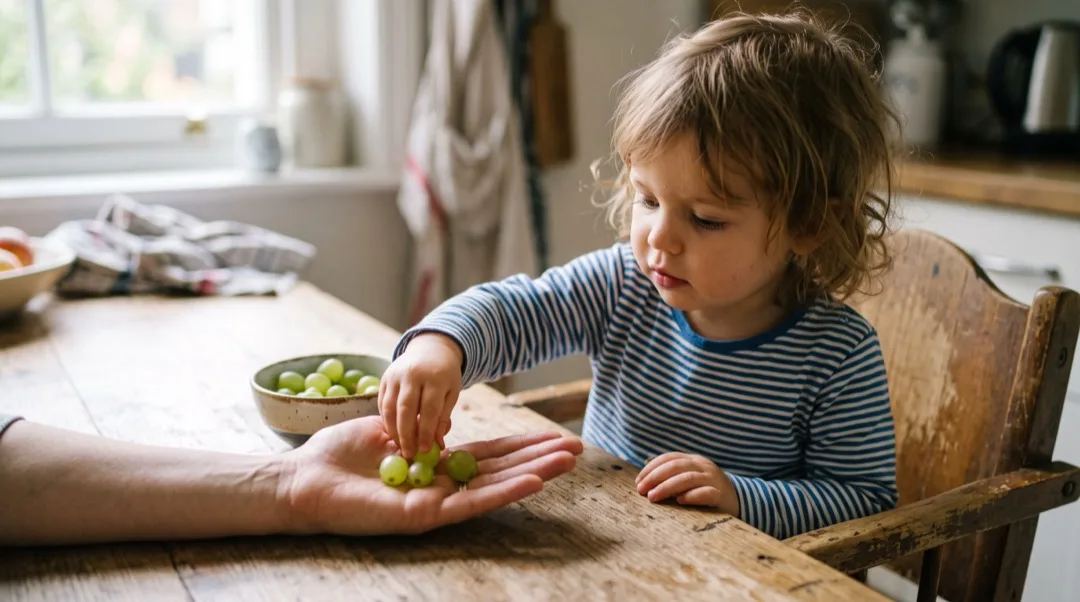
Why does my toddler recite to 10 but hand me the wrong number of crackers?
Because the number words arrive long before their meanings do, and the meanings arrive one at a time. Researchers describe children passing through stages with names like one-knower (understands "one" but treats every other number as "some"), then two-knower, then three-knower — each step taking months — before, usually somewhere between 3½ and 4, the idea suddenly generalizes and every number word means a specific amount. A child can be a fluent reciter and a one-knower at the same time. That is not a contradiction; it is the standard order.
So the cracker moment is not your child forgetting how to count. It is your child showing you precisely which number they understand so far, which is a far more useful thing to know than how high the song goes.
Does early counting mean my child is gifted at math?
Honestly: on its own, no. Early rote counting is one of the weaker predictors of later math — it mostly tells you the child has heard a lot of numbers and has a good memory for sequences, both of which are lovely and neither of which is arithmetic. What does seem to matter, in the research on early number knowledge, is how much number talk children hear in everyday life — "you have two shoes, one, two" — because that is what builds cardinality, and cardinality is what school math is built on.
So the honest reframe is this: your child's early reciting is a sign that the number-rich environment is already working. Keep doing what produced it. Do not add pressure to it.
What to do next (that isn't flashcards)
The skills that come after reciting are all about meaning, and they are built in ordinary moments rather than lessons. A handful of things that help, all of them short:
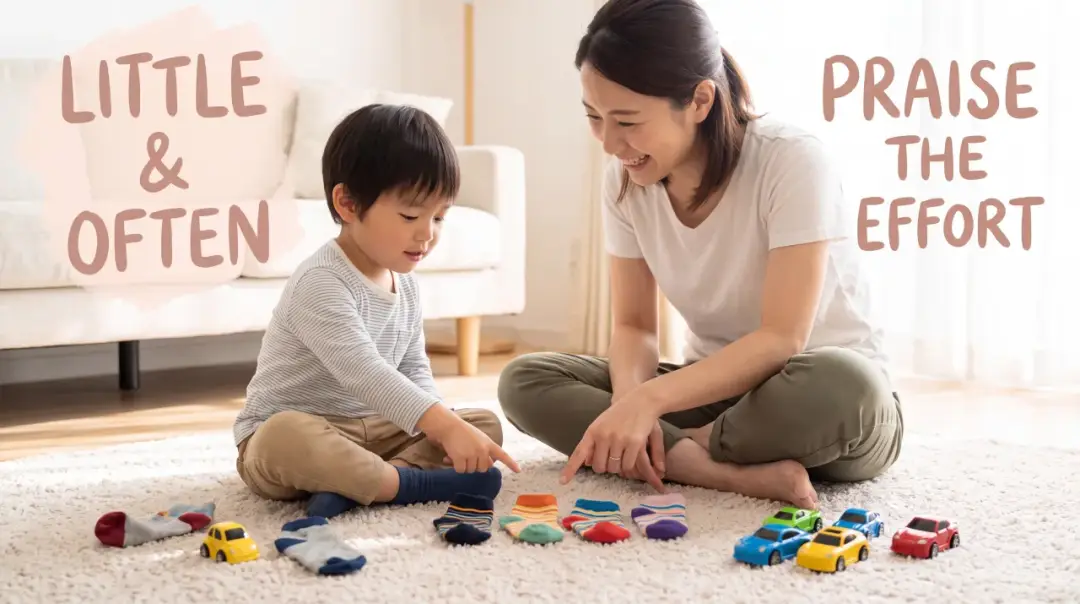
- Count small, real things, then ask "how many?" Stairs, grapes, socks. The question after the count is what teaches that the last number is the answer.
- Play "give me N." Ask for two, then three, from a bowl of more. Praise the stop, not the number. Move up only when the current number is easy.
- Slow the touch down. If the finger races ahead of the voice, gently hold each object still until the word catches up.
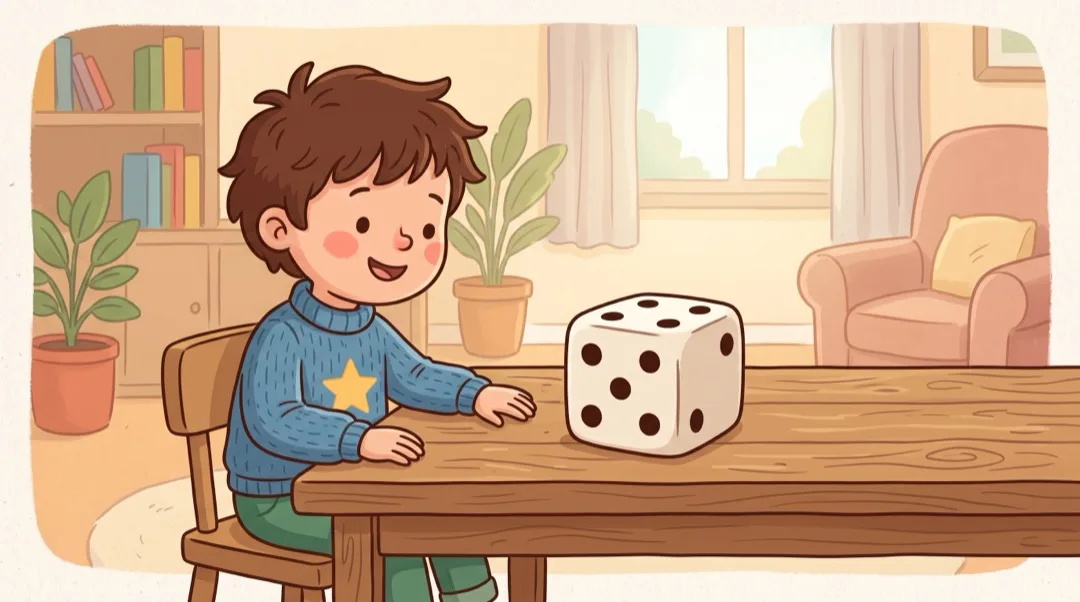
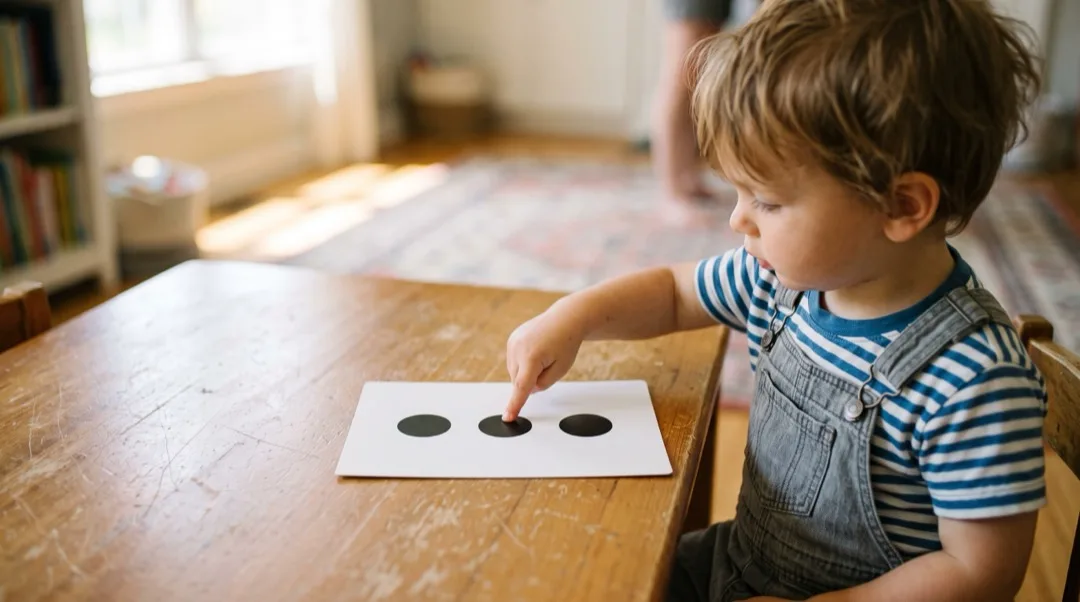
- Show amounts, not just words. Dice, dot cards, fingers: seeing three without counting it (called subitizing) is the other half of number sense — see what is subitizing.
- Talk in numbers as you go. "Two shoes." "One more cup." "You have four, I have one." This is the number talk the research keeps pointing at, and it costs nothing.
- Try counting backward once forward is easy. "Three, two, one, go!" is secretly harder and secretly useful.
What comes after 10?
Not 20 — meaning. The order most children move through between 2 and 4 is reciting, then one-to-one touching, then cardinality, and we lay out the whole stretch with ages in when do kids learn to count to 10. Recognizing the written digits is a separate skill with its own timeline, covered in when do kids recognize numbers. Reciting to 100 and counting by tens is a much later milestone, usually around 6, and lives in when do kids learn to count to 100.
Is there anything to watch for?
Early reciting by itself is not something to worry about, and loving numbers is not a red flag. The things worth a calm conversation with your pediatrician are about the whole child rather than the counting: if the numbers are most of what your 2-year-old says and other words are slow to come, if they rarely point things out to you or look to share what they notice, or if they seem not to respond to their name. Those are general developmental questions, not counting questions — and a child who both recites to ten and chatters, points, and plays is simply a child who likes numbers.
Questions parents ask
Is it normal for a 2-year-old to count to 10?
Yes. It is on the early side — the typical window for reciting to 10 is about 2½ to 3½ — but well within the normal spread, and usually reflects lots of counting songs and number talk at home. In most 2-year-olds it is a memorized sequence rather than counting with understanding, which is the expected order.
Can most 2-year-olds count to 10?
Most cannot yet — at 2 the typical picture is a few number words, often out of order, with "one, two, three" becoming reliable around 2 to 2½. Reciting all the way to 10 is more common by 3. A 2-year-old who does it is ahead of the middle, not outside the range.
My 18-month-old or 23-month-old can count to 10 — is that gifted?
It is early and it is real, but reciting is memory, not math, and on its own it is a weak predictor of later math ability. Enjoy it, keep the number talk going, and do not push toward bigger numbers. The skill that matters next — knowing that "three" means three things — arrives on its own timeline, usually between 3 and 4.
Should a 3-year-old be able to count to 10?
Many 3-year-olds can recite to 10, and it is also normal for a 3-year-old not to yet — the range runs to about 3½. Counting ten real objects accurately, with the right total, is a separate skill that usually settles closer to 4. A 3-year-old who recites well but miscounts five blocks is exactly on schedule.